I want to talk about Ennio Morricone’s later-period music. I was a true, passionate admirer of his work. I tried to imitate his beautiful harmonies and even copied his orchestration techniques to use in my own compositions. Through that process, I came to understand the real difference between what I thought sounded good while composing and what actually sounded good in performance. Strangely enough, I also learned the unique character and color of each instrument by studying his scores. To all of us who compose music, he was far more than a great composer — he was a true maestro and a genuine teacher who taught us through his own creations.
From the late 2000s, Ennio Morricone began holding concert tours around the world under his own name. I first saw him conducting through video footage of his performance at the Roman Arena. I carefully watched the shapes his hands made when giving signals to the orchestra. I even tried to copy those incredibly musical hand gestures and make them my own. His restrained yet powerful conducting style and the charisma with which he led hundreds of musicians and choristers were simply the best.
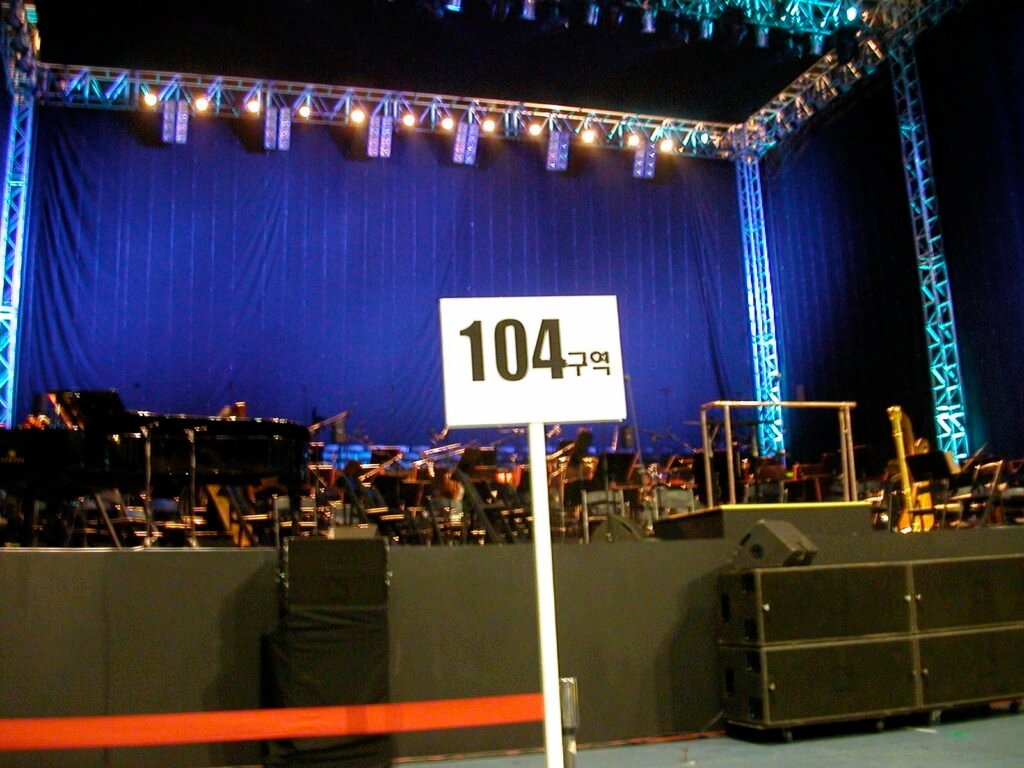
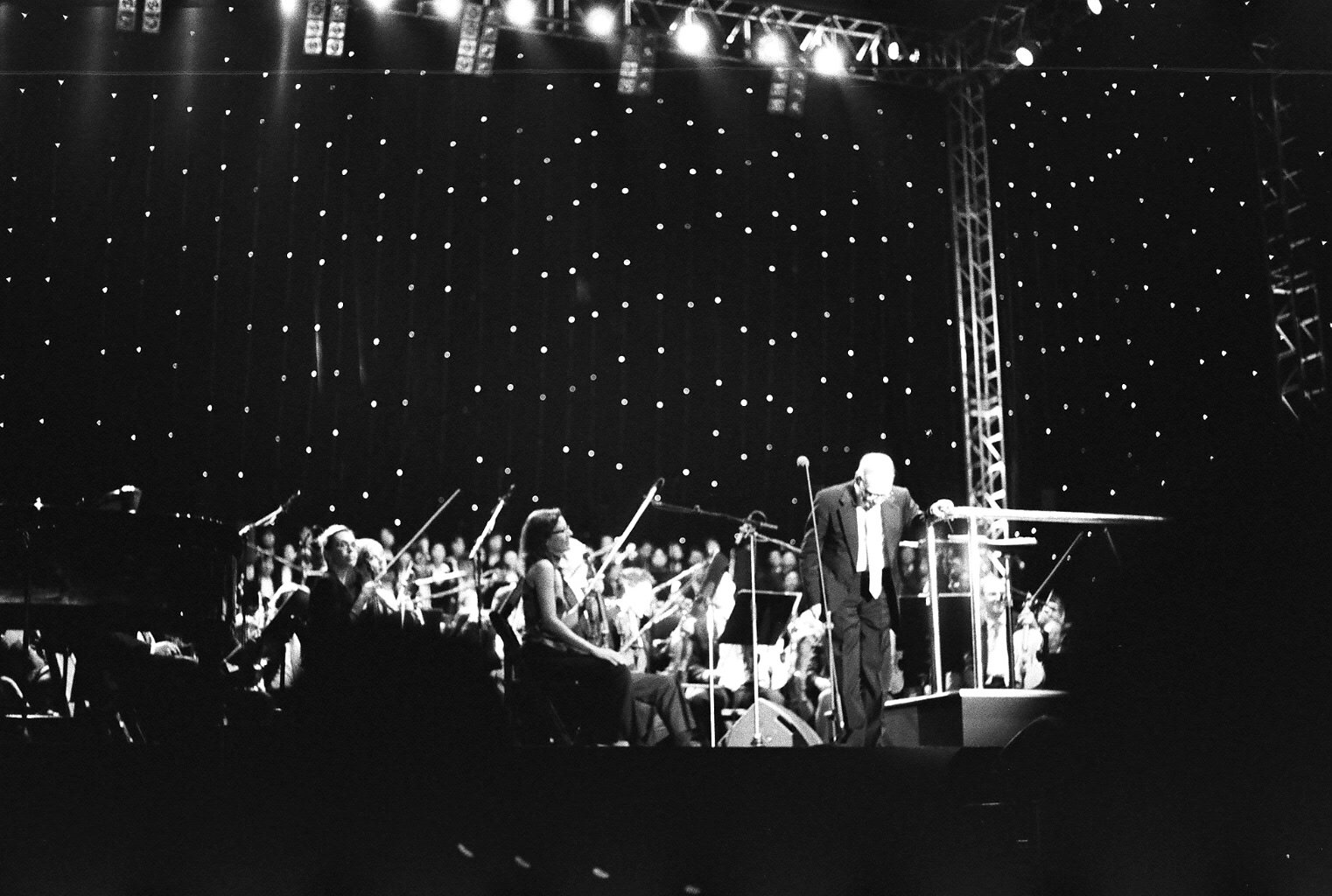
In 2007, he actually came to Korea with his Italian orchestra and performed at the Olympic Gymnastics Arena in Seoul. At that time, even though I was a broke university student, I bought a ticket that cost nearly 300,000 KRW without a moment’s hesitation. It was both the first and the last opportunity. My two university friends and I were lucky enough to sit in the fourth row, right in front of the stage. Seeing him perform up close was far beyond what words like “moving” or “emotional” could describe.
He was already in his late 70s, and I knew it would realistically be difficult to see him that close again. Even though I was broke, I made that big investment, and to this day, I still consider it one of the best decisions of my life. Human life is both short and long — Morricone lived another 13 years after that concert. I can never forget the image of him walking gracefully across the stage, holding his score in hand. That day, I learned that even at a refined classical concert, Koreans shout and cheer wildly when they are truly moved. We were screaming and going absolutely crazy. I believe that concert must have been unforgettable for him too, because I still remember the grandfatherly figure smiling in slight embarrassment as he walked across the stage. I’m still deeply grateful that photos and videos from that day remain.
The people who contacted me with the news of his passing were the two friends who attended the concert with me that day. Because we had shared that unforgettable moment with Ennio Morricone, his death brought us back in touch after a long time. Together, we shared our sorrow, regret, and sense of loss as we mourned the great composer and our musical mentor. Yet for us, that one day at the concert and our encounter with him became an even bigger, shared memory that will stay with us forever.

To all the students in our department during university, Morricone was a true hero. Our school leaned more toward practical music rather than pure classical tradition. For us, his orchestration — painting with rich, vivid colors like a master painter — was the absolute best. His use of counterpoint and harmony stayed true to the fundamentals while never feeling boring. His music felt like an ideal model. Moreover, working across genres with film while still protecting the essence of pure music was, in our eyes, the perfect format. He became the best in that field, and his music can truly be called 21st-century classical music.
From a technical perspective, when he used polyphony in his orchestration, the main melodies were nothing short of fantastic. In choral pieces, he employed homophony beautifully, and he even used heterophony — a technique often found in Korean traditional music — making it feel fresh and new in orchestration. He was a genius at creating tension in film scenes through syncopation and irregular rhythms, then naturally releasing it. Sometimes his music felt close to contemporary music because of these various techniques. In the end, he took all the modern techniques we learned in school and used them in his own way, grounded in classical foundations, to make music shine as one essential element of the drama. It sounds simple, but producing such results is incredibly difficult.
If I were to talk about the musical aspects, I could go on forever. One of his characteristics is the completely free use of strings, woodwinds, and brass without any restrictions. Because he understood the character of each instrument so well, he placed them exactly where they needed to be and wrote melodies accordingly. However, looking at his later years chronologically, his own distinct style became fully established. His signature pattern of using sustained bass lines while layering harmonies and voices, along with creating mood through high strings, continued even in his final work, The Hateful Eight. Building a unique color and pattern recognized by the world means he had reached completion as a musician.
I once dreamed of studying in Italy. I thought that if I could learn music directly from Morricone, I would have no regrets in life. I even studied Italian with a friend named Yoon-mi and met a broker in Rome. Looking back now, Morricone was already an old Italian man with too much on his plate to teach us. If we had gone, our study-abroad life might have ended quickly… Still, he was the person who made Yoon-mi and me think of all sorts of ways to reach him. Exploring Italian music became a catalyst that led me to listen to music from all over the world. That later led me to fall in love with tango and eventually to encounter Argentina.
Anyway, there are many of his works I still remember fondly. Films like The Legend of 1900, Love Affair, Malèna, Bugsy, and Lolita came to me during the most sensitive times of my life, along with their unforgettable music. Those themes were painful, beautiful, and sad — they were the kind of music that made you truly lose yourself in the film.
In 2007, seeing that grandfather on stage like that…
That memory still lives warmly inside me.
Grazie, Maestro Ennio Morricone
Leave a Reply