
The question I get asked more than almost any other: “Do you need Spanish to live in Buenos Aires?” After eight years in Palermo Chico — navigating banks, government offices, hospitals, and everything in between — I have a real answer. Not the diplomatic “it helps!” version. The honest one.
Here it is: you can survive without Spanish, but your life will be noticeably harder and more limited than it needs to be. If you arrive with even A2-level Spanish, daily life becomes dramatically smoother. At B1, you can handle almost everything. At B2, Buenos Aires opens up in ways that are genuinely difficult to describe until you experience them.
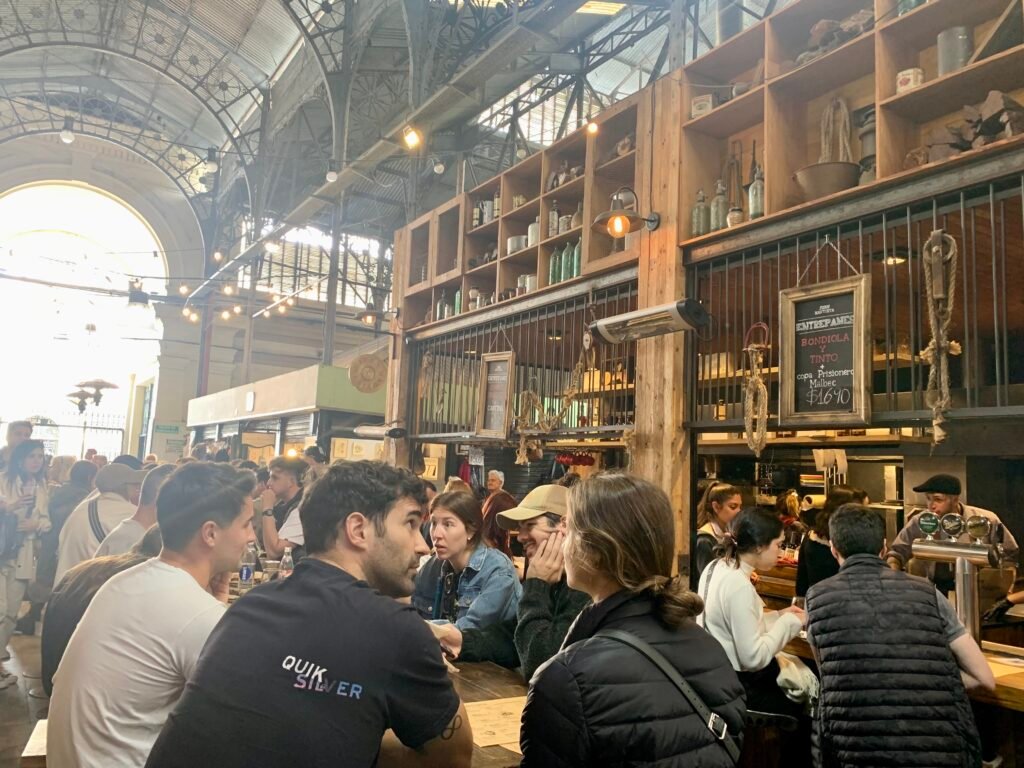
Do You Need Spanish in Buenos Aires in 2026? The Reality Check
The short version: it depends entirely on what you’re trying to do. Buenos Aires in 2026 is more internationally connected than ever — coworking spaces, trendy cafés, and tourist areas in Palermo and Recoleta are genuinely navigable in English. But the moment you need to deal with anything administrative — a bank, a government office, a lease, a medical situation — the city becomes almost entirely Spanish-only.
Milei’s economic reforms changed a lot about Argentina. This part didn’t change at all.
Where English Works — and Where It Doesn’t (Buenos Aires 2026)
English Is Usually Enough
- Trendy cafés and restaurants in Palermo Soho and Recoleta — young staff frequently speak at least conversational English
- Coworking spaces — especially in Palermo, where staff and other nomads often default to English
- Airports and upscale hotels — standard hospitality English throughout
- Some upscale bars — particularly in areas like Costa Salguero where upper-class porteños congregate; English is often comfortable here
- Uber — the app handles everything, and many drivers can manage basic English
English Is Not Enough
- Government offices (Migraciones, AFIP, Registro Civil) — almost entirely Spanish-only. Even staff who understand English often won’t use it in a busy office environment. This is where you genuinely need Spanish, or someone who has it.
- Banks — one of the hardest environments. Occasional staff speak some English, but explaining account issues, understanding paperwork, or navigating a dispute requires Spanish. Banking in Argentina is already complicated in Spanish; in English it borders on impossible.
- Local markets, small clinics, older neighborhood stores — older generations rarely speak English, and they don’t need to
- Regular taxis — unlike Uber, street taxis operate almost entirely in Spanish
- Emergency situations — hospitals have basic English capability in some cases, but accurately describing symptoms, understanding diagnoses, and following medical instructions in English is genuinely risky. This is one situation where you don’t want to be guessing.
Spanish by Situation: How Much Do You Actually Need?
| Situation | Minimum Spanish Needed | Reality |
|---|---|---|
| Café / restaurant order | A1 | Often manageable in English in Palermo |
| Uber / ride apps | None required | App handles it; basic English often works |
| Regular taxi | A2 | Address + number is enough |
| Grocery shopping | A1 | Pointing works; apps help |
| Coworking space | None required | English usually fine in Palermo |
| Signing a lease | B1 | You need to understand what you’re signing |
| Bank / AFIP / Migraciones | B1–B2 | Critical — no shortcuts here |
| Medical appointment | B1 | Important for accurate communication |
| Making local friends | A2–B1 | Young porteños often help with English, but depth requires Spanish |
| Nightlife / dating | A2+ | English works in expat circles; Spanish opens up the rest |
My Honest Experience: What Changed When My Spanish Improved
I arrived in Buenos Aires with functional Spanish — around B1 level, enough to get through most daily situations. Watching friends who arrived with little or no Spanish showed me the difference clearly.
What I saw with English-only friends:
- Bank and government visits became multi-hour ordeals requiring a bilingual friend or hired help
- Real conversations with locals stayed permanently shallow — polite but never deep
- Price negotiations at local markets always went worse — vendors who sensed a foreign accent often adjusted their opening price accordingly
- Small moments of confusion accumulated into real stress — not dramatic incidents, just a constant low-level friction with daily life
What changed as my Spanish improved: the city opened up. Not just practically — the entire emotional texture of living here shifted. Buenos Aires has a very specific cultural rhythm, a way of talking around things, a humor that doesn’t translate well. When your Spanish gets good enough to catch it, you stop feeling like a guest and start feeling like you live here.
That’s the part no language learning app will tell you about.
Realistic Spanish Recommendations Before You Move
Here’s what each level actually means for daily life in Buenos Aires:
- A1: Basic greetings, numbers, ordering food. You can survive brief interactions. Everything else is hard work.
- A2: You can follow 60–70% of simple conversations. Daily errands become manageable. This is the realistic minimum for living here comfortably.
- B1: You can handle banks, offices, and medical situations with effort. Conversations with locals become genuinely rewarding. Quality of life improves significantly.
- B2+: You can live and work in Spanish without meaningful friction. Buenos Aires starts to feel like home rather than an extended visit.
Strong recommendation: arrive with at least A2. Three months of consistent study — 30 minutes a day on Duolingo plus 2–3 sessions weekly on italki — will get most people to A2 from zero. It’s one of the best investments you can make before arriving.
What Actually Works for Learning
- italki — best return on investment. Two to three sessions per week with a community tutor gets you to A2 in about 3 months. More effective than apps for actual speaking ability.
- Duolingo / Babbel — good for vocabulary and building a daily habit, but don’t confuse app streaks with actual speaking ability. Use as a supplement, not a primary method.
- Language exchange in Buenos Aires — one of the most underrated options. Young porteños who want to practice English are genuinely common, and swapping an hour of English for an hour of Spanish costs nothing. Apps like Tandem, HelloTalk, or local Facebook expat groups connect you with partners quickly.
- Local Spanish classes in Palermo — several schools offer intensive courses aimed at expats. Immersion learning in-country is faster than anything you’ll do from home.
10 Essential Spanish Phrases for Buenos Aires Daily Life
Even at A1 level, these phrases will handle a surprising number of daily situations:
| Spanish | English | When to Use |
|---|---|---|
| ¿Cuánto cuesta? | How much does it cost? | Markets, small shops, taxis |
| ¿Dónde está…? | Where is…? | Navigation, asking for directions |
| Una mesa para uno / dos, por favor. | A table for one / two, please. | Every restaurant |
| La cuenta, por favor. | The bill, please. | Every restaurant, every time |
| ¿Tiene WiFi? | Do you have WiFi? | Cafés, hotels, coworking spaces |
| Habla más despacio, por favor. | Please speak more slowly. | Any time you’re lost in a conversation |
| No entiendo. | I don’t understand. | Constantly, until you do |
| ¿Habla inglés? | Do you speak English? | Before important conversations |
| Quiero esto. | I want this. | Pointing at menus, market items |
| ¿Dónde está el baño? | Where is the bathroom? | Everywhere, always |
Argentine Spanish has one important quirk: porteños use vos instead of tú, with different verb conjugations. Don’t panic — locals understand tú forms perfectly, but you’ll sound noticeably more local once you pick up vos. It comes naturally after a few weeks of living here.
Final Verdict: Do You Need Spanish to Live in Buenos Aires?
Can you live in Buenos Aires without Spanish? Yes. Plenty of expats do. Palermo and Recoleta are genuinely international enough that you can build a life in English, especially if you stay within the expat bubble and outsource anything administrative.
Should you? No — not if you have any choice in the matter. Every level of Spanish you acquire directly translates into a better quality of life here. Not in a vague “it’s nice to communicate” way, but in concrete, practical terms: less stress at the bank, better prices at the market, deeper friendships, and a relationship with the city that goes beyond being a well-fed tourist with a long-term visa.
Buenos Aires rewards people who meet it halfway. Learning Spanish is how you do that.
FAQ: Spanish in Buenos Aires 2026
Can you live in Buenos Aires without speaking Spanish?
Yes, but with significant limitations. English works well in Palermo and Recoleta’s expat-facing businesses, coworking spaces, and tourist areas. It breaks down completely in banks, government offices, local markets, and medical situations. Most long-term expats who try to live on English alone eventually hit a point where the friction becomes unsustainable.
How much Spanish do you need to live in Buenos Aires?
A2 is the realistic minimum for a comfortable life in Buenos Aires. At A2, you can handle daily errands, follow simple conversations, and manage most non-administrative situations. B1 is the level where life genuinely becomes smooth — you can handle banks, understand leases, and have real conversations with locals.
Do people in Buenos Aires speak English?
Some do, especially young people in Palermo and Recoleta. Argentina has a relatively high rate of English education compared to its South American neighbors, and you’ll find English speakers in cafés, coworking spaces, and international environments. Outside these areas — government offices, banks, older neighborhoods, emergency services — Spanish is essential.
Is Argentine Spanish different from other Spanish?
Yes, notably. Porteños use vos instead of tú, speak with a distinctive Italian-influenced accent, and use local slang (lunfardo) that can confuse even fluent Spanish speakers at first. The good news: locals understand standard Spanish perfectly, and your ear adjusts to the Buenos Aires accent faster than you’d expect. Within a month of living here, it starts to sound normal.
This article reflects personal experience from 8 years living in Palermo Chico, Buenos Aires. Language situations vary by neighborhood, context, and individual — use this as a guide, not a guarantee.
Related Reading: