If you’re a foreign entrepreneur looking to set up in South America, the first question isn’t what to sell — it’s where to incorporate.
Tax rates, regulations, corporate structures, and the general attitude toward foreign business owners vary dramatically across the continent. And within the same country, choosing the right regime can mean the difference between paying 1% in taxes or 23%.
This guide compares the two most attractive systems for export-oriented foreign businesses in South America: Paraguay’s Maquila regime and Chile’s Zona Franca (Free Trade Zones). Both offer powerful incentives, but they’re built for different kinds of businesses.
I haven’t personally set up a company under either regime, but after spending over a decade in South America and watching both systems evolve firsthand, I’ve done the research so you don’t have to start from zero.
The Quick Comparison
| Paraguay Maquila | Chile Zona Franca | |
|---|---|---|
| Core tax rate | 1% single tax (on domestic value-added or export invoice, whichever is higher) | 0% customs duty + 0% VAT inside the zone; corporate income tax exempt for qualifying exports |
| Standard corporate tax (comparison) | 10% (general IRE) | 27% (Kast government pushing to cut to 23%) |
| Foreign ownership | 100% allowed | 100% allowed (must set up Chilean entity) |
| Domestic sales | Max 10% of production (duties apply) | Possible, but 6% duty + 19% VAT when goods leave the zone |
| Geographic restriction | None — anywhere in Paraguay | Only in Iquique, Arica (north), Punta Arenas (south) |
| Benefit duration | Up to 20 years (renewable) | Varies by zone legislation |
| Best for | Export manufacturing, service outsourcing | Trade/logistics hubs, Asia-LatAm intermediation |
| Investment grade | BBB- (S&P), Baa3 (Moody’s) — double investment grade | A (S&P), A2 (Moody’s) — highest in South America |
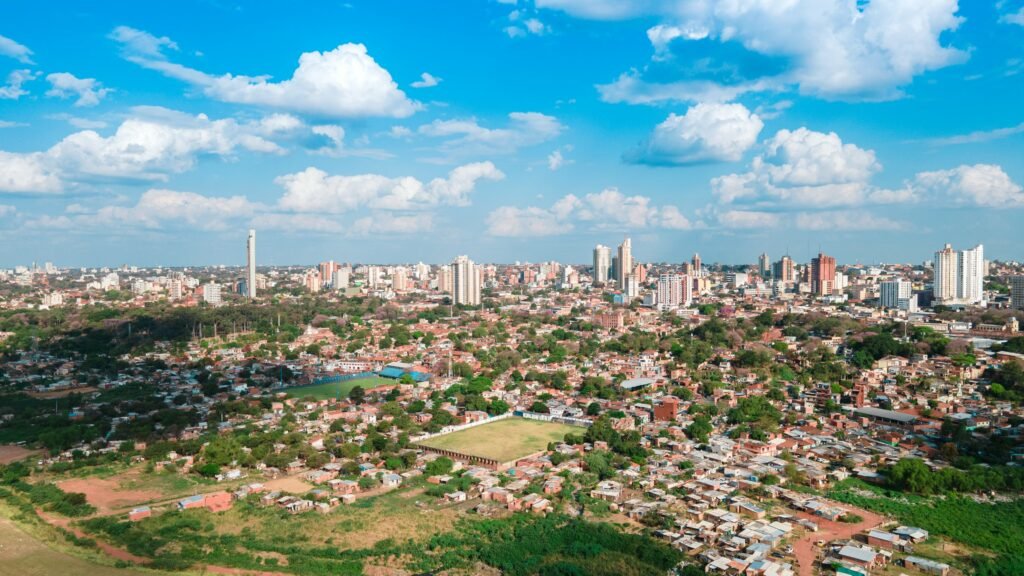
Paraguay’s Maquila — The 1% Tax Advantage
How It Works
Paraguay’s Maquila regime imposes a single tax of 1% on export-oriented production and services. That 1% is applied to either the domestic value added in Paraguay or the export invoice amount — whichever is higher.
Raw materials and equipment enter duty-free. The finished product is exported. Standard corporate income tax (10%), dividend tax, and non-resident income tax are all waived. The regime was modernized in 2025 under Law 7547, adding digital processes, a formal services maquila category, and a maximum 20-year benefit window.
Who Is It For?
Paraguay’s law places no restrictions on the types of products or services eligible for maquila. Over 200 maquila companies currently operate in Paraguay (Brazil-based firms alone account for 200+) across manufacturing (auto parts, textiles, plastics), services (call centers, IT outsourcing), and more. The regime has created over 35,000 jobs and generated over $1 billion in exports.
Three core requirements apply: a contract with a foreign parent company, incorporation of domestic value-added (local labor, materials), and approval from CNIME (the national maquila authority).
Tax Breakdown
What a maquila company actually pays:
- Corporate income tax (IRE): Exempt
- Dividend tax (IDU): Exempt
- Non-resident income tax (INR): Exempt
- Import duties/VAT on inputs: Exempt
- Export taxes: Exempt
- Single tax: 1% on the higher of domestic value-added or export invoice
For comparison, a standard Paraguayan company pays an effective rate of roughly 17–23% (corporate + dividend combined).
Strengths
- 1% tax — among the lowest in the world, competitive even against Asian manufacturing hubs
- No geographic restrictions — operate anywhere in Paraguay
- 100% foreign ownership with full capital and profit repatriation
- World’s cheapest electricity (Itaipú hydroelectric) — massive advantage for energy-intensive operations
- Double investment grade (S&P BBB-, Moody’s Baa3) as of 2026
Watch Out For
- Domestic sales capped at 10% — not suitable for businesses targeting Paraguay’s internal market
- Foreign parent company contract required — independent domestic ventures don’t qualify
- Infrastructure gaps — logistics, roads, and ports lag behind Chile; landlocked country adds export costs
- Institutional weakness — corruption, slow dispute resolution, weak judicial independence
- Tightened AML compliance — Source of Wealth documentation now mandatory as of 2026
Chile’s Zona Franca — Stability Meets Global Access
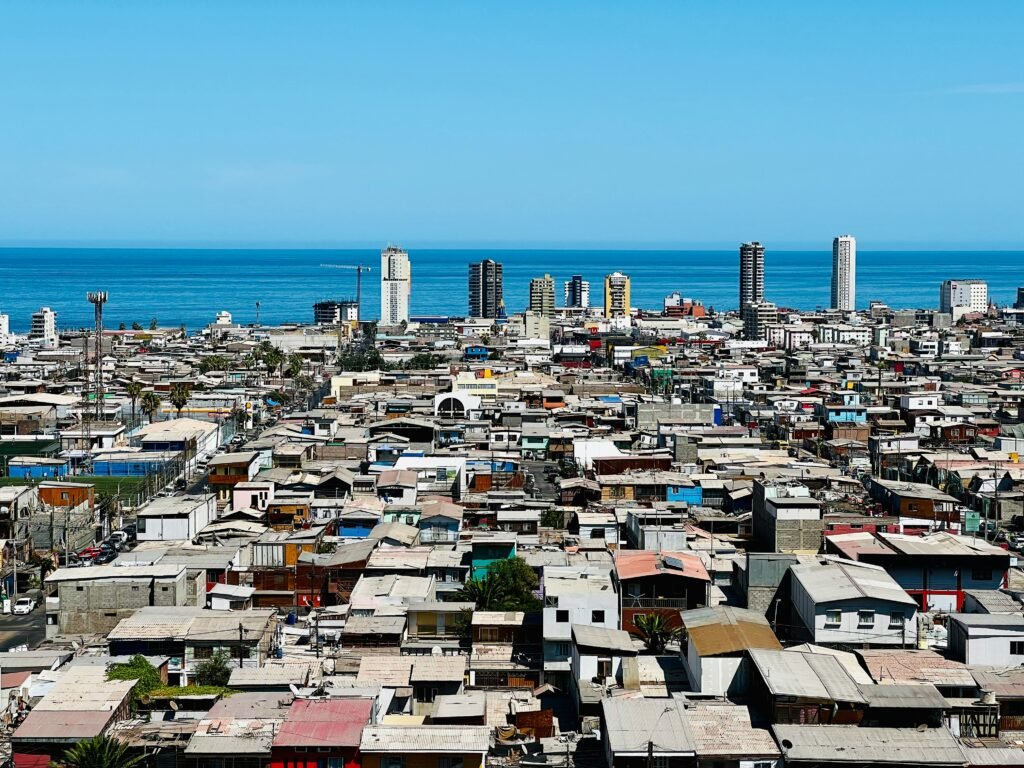
How It Works
Chile’s Free Trade Zones (Zonas Francas) are legally treated as foreign territory for customs purposes. Goods entering the zone are exempt from Chile’s standard 6% customs duty and 19% VAT. For qualifying industrial and export activities, corporate income tax can also be exempted.
Chile has three active Zonas Francas: Iquique (ZOFRI) in the north (1,700+ companies, gateway to Mercosur and Asia), Arica (border trade with Peru/Bolivia), and Punta Arenas (ZonAustral) in the extreme south (960 companies, 9.7 million annual visitors).
Who Is It For?
The Zona Franca model excels at trade, logistics, assembly, and distribution. The classic use case: import components from Asia duty-free, assemble in the zone, and re-export across South America. Iquique’s strategic Pacific coast location makes it the gateway between Asia and the Southern Cone.
Note: mining and financial services are excluded from Zona Franca benefits.
Tax Breakdown
Inside the Zona Franca:
- Customs duty: Exempt (0.52% registration tax applies, usable as future credit)
- VAT: Exempt on transactions within the zone
- Corporate income tax: Exempt for qualifying export industrial activities
- Foreign shareholder income tax: Reduced from 35% to 22.5%
When goods leave the Zona Franca for the Chilean domestic market:
- Standard 6% duty + 19% VAT applies (treated as an import)
- This makes the Zona Franca most advantageous for re-export operations
Strengths
- Highest credit rating in South America (S&P A, Moody’s A2) — lowest financing costs
- World-class infrastructure — ports, airports, roads among the best in Latin America
- Asia-to-South America gateway — Pacific coast location, CPTPP accession in progress
- Kast government’s pro-business agenda — corporate tax cut from 27% to 23% proposed, streamlined permitting
- 65+ free trade agreements — one of the world’s largest FTA networks
- Predictable rule of law — OECD member, strong institutions
Watch Out For
- Geographic limitation — Zonas Francas only exist in Iquique, Arica, and Punta Arenas; none in Santiago
- Domestic sales trigger full taxation — selling into Chile eliminates the tax advantage
- Higher operating costs — wages, rent, and living costs significantly above Paraguay
- Chilean entity required — must establish a local company or branch to operate in the zone
- Zone entry costs — Chilean company formation itself can cost as little as $1 (SpA), but Zona Franca user agreements involve separate fees (signing fee ~$300, monthly fee ~$40, guarantee deposit ~$2,000)
Real-World Scenarios: Which One Wins?
Scenario 1: Assemble Asian components and export across South America → Chile Zona Franca wins. Pacific port access, continent-wide FTA network, world-class logistics.
Scenario 2: Low-cost manufacturing base for US/European export → Paraguay Maquila wins. 1% tax, cheapest energy in South America, low labor costs.
Scenario 3: IT services / call center outsourcing → Paraguay Maquila wins. Services maquila officially launched in 2025, same 1% tax applies.
Scenario 4: Global trade intermediation / logistics hub → Chile Zona Franca wins. Duty-free storage and distribution, Asia-LatAm gateway positioning.
Scenario 5: Selling into Paraguay’s domestic market → Neither. Maquila caps domestic sales at 10%; Zona Franca is in Chile. Standard Paraguayan incorporation (10% IRE) is the right path.
Company Formation Comparison
| Paraguay | Chile | |
|---|---|---|
| Common entity types | SRL, SA | SpA (most popular), SRL, SA |
| 100% foreign ownership | Yes | Yes |
| Setup time | ~2–4 weeks | ~1–2 weeks |
| Minimum capital | Effectively none | None (SpA) |
| Local representative | Required | Required |
| Residency needed | Cédula required (for RUC) | RUT required |
| Language barrier | High (Spanish + Guaraní) | Medium (Chilean Spanish dialect) |
| Digital incorporation | Partially available | Available (e-signatures) |
Local Labor Force — The Reality Behind the Numbers
Tax rates don’t run a business. People do. Here’s what hiring actually looks like in each country.
| Paraguay | Chile | |
|---|---|---|
| Minimum wage (monthly, 2026) | ~$370 (PYG 2,899,408) | ~$570 (CLP 539,000) |
| Average salary (monthly) | $520–560 | $1,100–1,400 (skilled roles) |
| Legal work week | 48 hours | 42 hours (from April 2026; reduced from 45, no pay cut) |
| Employer social security | ~16.5% (IPS) + 1–2% accident insurance | ~5% (pensions and health mostly employee-funded) |
| 13th month pay | Mandatory (Aguinaldo, December) | Legal profit-sharing (Gratificación Legal) |
| Probation period | 30–60 days | None (indefinite contract default) |
| Severance cost | 15 days’ pay per year of service | 30 days’ pay per year (capped at 11 years) |
| Workforce profile | Young, affordable, low-to-mid skilled, high informal sector | Skilled, tech-savvy, 2nd highest minimum wage in South America |
| Languages | Spanish + Guaraní (bilingual country) | Chilean Spanish (fast, heavy slang) |
| English availability | Limited (growing in BPO/call centers) | Better (tech and finance sectors) |
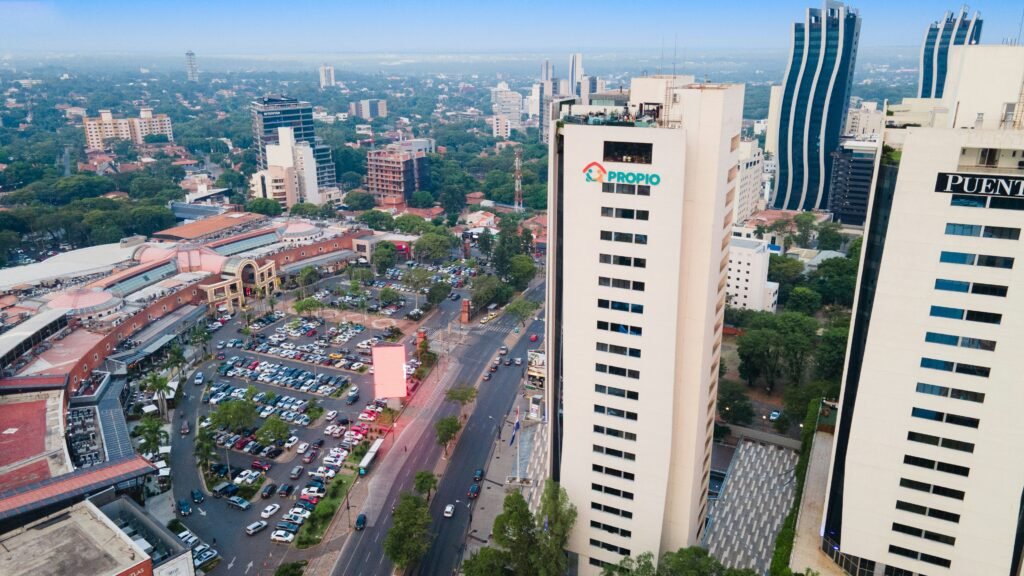
Paraguay: Cheap and Young, But Talent Is Hard to Find
Paraguay’s labor advantage is pure cost. At $370/month minimum wage — 65% of Chile’s — it’s one of the cheapest workforces in South America. Call center workers average $376/month, roughly one-tenth of equivalent US wages.
The workforce is young. The government is expanding vocational training through the SNPP (National Professional Training Service) in agriculture, manufacturing, and tech. However, only about 30% of workers hold tertiary degrees, limiting the high-skill talent pool.
And here’s what the data doesn’t tell you: finding good talent in Paraguay is still genuinely difficult. The cost is low, yes — but the pool of qualified, reliable workers with professional experience is shallow. If you’re used to hiring in developed markets and expect the same level of readiness, you’ll be disappointed. Training and retention require more investment than the headline wage numbers suggest.
Important caveat: informal employment rates remain high, which means labor law compliance culture is still maturing. Maquila companies must follow all Paraguayan labor laws — consult a local labor attorney.
Chile: Skilled but Expensive — And Not Where You Think
Chile has one of the most skilled workforces in South America. Tech-literate, well-educated, with strong talent pools in IT, finance, and engineering centered around Santiago.
But here’s the critical nuance most guides miss: Chile’s Zonas Francas are not in Santiago. They’re in Iquique, Arica, and Punta Arenas — remote cities in the extreme north and south of the country. The infrastructure and talent you associate with Chile’s reputation largely reflects Santiago. In these Zona Franca locations, the reality is different. Don’t assume you’ll have access to the same caliber of workforce or the same level of urban infrastructure. Hiring specialized talent may require relocation packages or remote arrangements, which adds cost and complexity.
On the cost side: Chile’s minimum wage of $570 is second only to Uruguay in South America. Starting April 2026, the legal work week drops to 42 hours (from 45) with no corresponding pay reduction — effectively raising hourly labor costs further.
Severance is also steeper: 30 days’ pay per year of service (capped at 11 years) versus Paraguay’s 15 days. Hiring in Chile is easy; firing is expensive.
The labor and talent landscape in both countries deserves a much deeper dive — I’ll cover this in a dedicated post.
Recommended Businesses by Country
Best Businesses for Paraguay
1. Call Centers / BPO The #1 opportunity since services maquila was formalized in 2025. Labor costs at 1/10th of the US, bilingual Spanish/Portuguese workforce near the Brazilian border, 1% tax rate.
2. Agricultural Processing & Export World’s 4th largest soy exporter. Add value locally through processing (beef, sesame, corn) and export under maquila benefits.
3. Auto Parts / Light Manufacturing Growing as a subcontracting base for Brazil and Argentina’s automotive industries. Low energy + labor costs, Mercosur market access.
4. Green Hydrogen / Energy-Intensive Industries World’s cheapest electricity via Itaipú hydroelectric. The Atome green hydrogen mega-project is already underway.
5. Textiles & Garment Manufacturing Low labor costs + 1% maquila tax + duty-free exports. Adjacent to Brazil and Argentina’s consumer markets.
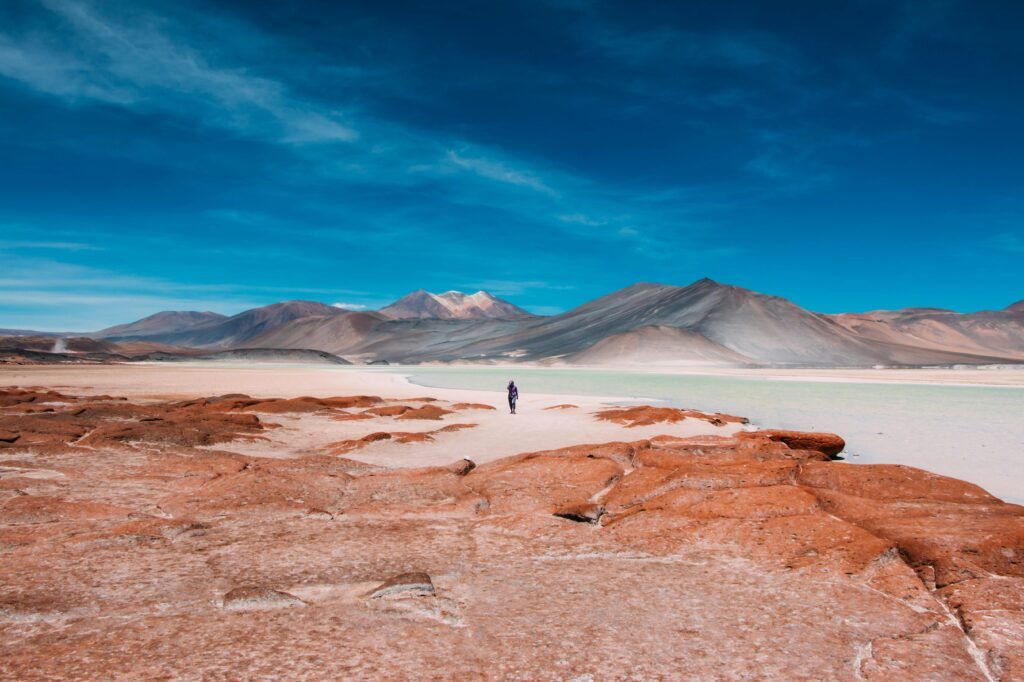
Best Businesses for Chile
1. Asia-to-South America Trade & Logistics Use Iquique’s Zona Franca as a hub: import from Asia duty-free, distribute across South America. 65 FTAs provide unmatched market access.
2. Solar / Renewable Energy Equipment Assembly The Atacama Desert has the highest solar irradiance on Earth. Import components duty-free into Zona Franca, assemble, export.
3. Copper & Lithium Services / Equipment $14.8B in copper projects + $83B mining pipeline. Massive demand for mining equipment, tech services, water treatment.
4. Medical Devices / Biotech Chile is emerging as a South American medtech hub alongside Costa Rica. Skilled workforce + OECD standards + FTA network.
5. IT Services / Software Development Santiago is one of South America’s top startup ecosystems. Strong tech talent, stable infrastructure, access to international VC.
The Bottom Line: Don’t Just Look at Tax Rates
On paper, Paraguay’s 1% is almost impossible to beat. And for pure export manufacturing or services, it genuinely is one of the best deals on the continent.
But tax is one factor among many.
Chile costs more to operate in, but offers better infrastructure, stronger legal protections, higher international credibility, and access to global markets through an unmatched FTA network. Paraguay is cheap but landlocked, institutionally fragile, and logistically challenging.
Your business model determines the answer:
- Cost optimization, manufacturing, service exports → Paraguay Maquila
- Stability, logistics, global trade access → Chile Zona Franca
Starting a business in South America isn’t just about registering a company. It’s about choosing which system you’ll operate within for the next 10–20 years. Choose carefully.
Disclaimer: This article is based on publicly available legal and tax information as of March 2026. Always consult qualified local legal and tax professionals before making business decisions.
Leave a Reply