
Argentina investment in 2026 is moving faster than most people realise. From Palermo, Buenos Aires, where I’ve lived for eight years, two projects stand out as the clearest signals of where things are heading: Satellogic, the Argentine-founded satellite company now listed on Nasdaq, and Stargate Argentina — OpenAI’s $25 billion AI data center project announced in Patagonia in October 2025. Neither of these is abstract news. Together, they represent something I’ve been watching develop from Palermo for eight years: Argentina slowly but genuinely repositioning itself as a place where serious technology investment happens. This post is my attempt to explain what these projects actually mean — not just as headlines, but as signals for expats, entrepreneurs, and anyone thinking about Argentina’s direction under Milei.

The Policy Foundation: Why This Is Happening Now
None of this is accidental. Since 2024, the Milei government has built a policy framework specifically designed to attract this kind of investment:
- RIGI (Régimen de Incentivo para Grandes Inversiones) — 30-year tax stability, import duty exemptions, and free profit repatriation for investments of $200M+. Extended through July 2026.
- Capital control removal (Cepo) — significantly loosened currency controls making it easier for foreign companies to move money in and out
- Import liberalization — reduced barriers for technology equipment and components
- US-Argentina trade agreement (signed February 2026) — investment protection and tariff reduction across 200+ categories
RIGI in particular is the direct mechanism enabling both projects discussed in this post. It’s what makes $25 billion in Patagonia financially viable for OpenAI, and it’s part of what makes Argentina’s technology sector attractive to international capital more broadly.
Satellogic: The Argentine Satellite Company Now on Nasdaq
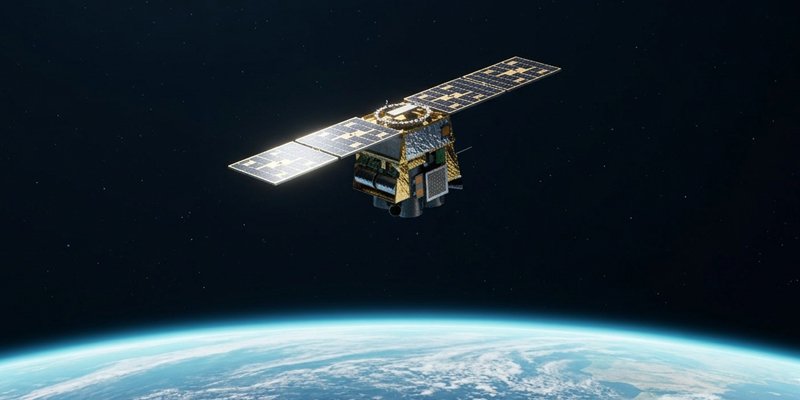
Satellogic is the story of what Argentine deep tech actually looks like. Founded in Buenos Aires, the company builds and operates Earth observation satellites — currently 53 in orbit — capturing multispectral and hyperspectral imagery used for agriculture, energy, defense, and environmental monitoring. R&D is still based in Buenos Aires and Córdoba. The company redomiciled to Delaware in 2025 and trades on Nasdaq under the ticker SATL.
The 2025 numbers are notable: 38% revenue growth year-on-year, reaching $17.7 million, alongside a 25% reduction in operating expenses. As of December 2025, the company held $94.4 million in cash, further reinforced by a $35 million direct offering in January 2026. These are not numbers that suggest a struggling startup — they suggest a company executing a real pivot.
What’s coming next is more significant. Satellogic is building Merlin, an AI-first satellite constellation designed to deliver near real-time Earth observation alerts with onboard AI processing. First satellite launches are planned for Q4 2026, with full operational capacity in the first half of 2027. The NextGen platform offers 30cm-class resolution — a step-change improvement — with sovereign-ready mission capabilities for government clients.
What This Means From a Palermo Perspective
Satellogic is proof that world-class deep tech can be built in Argentina. The R&D talent is here — Buenos Aires and Córdoba produce strong engineering graduates, and the cost structure for a technology company with Argentine operations is attractive by global standards.
For expats working in technology or considering Argentina as a base for tech-adjacent work: this is the kind of local player worth knowing about. It represents a tier of Argentine company that isn’t just a regional service business — it’s competing internationally on technology.
Stargate Argentina: OpenAI’s $25 Billion Bet on Patagonia

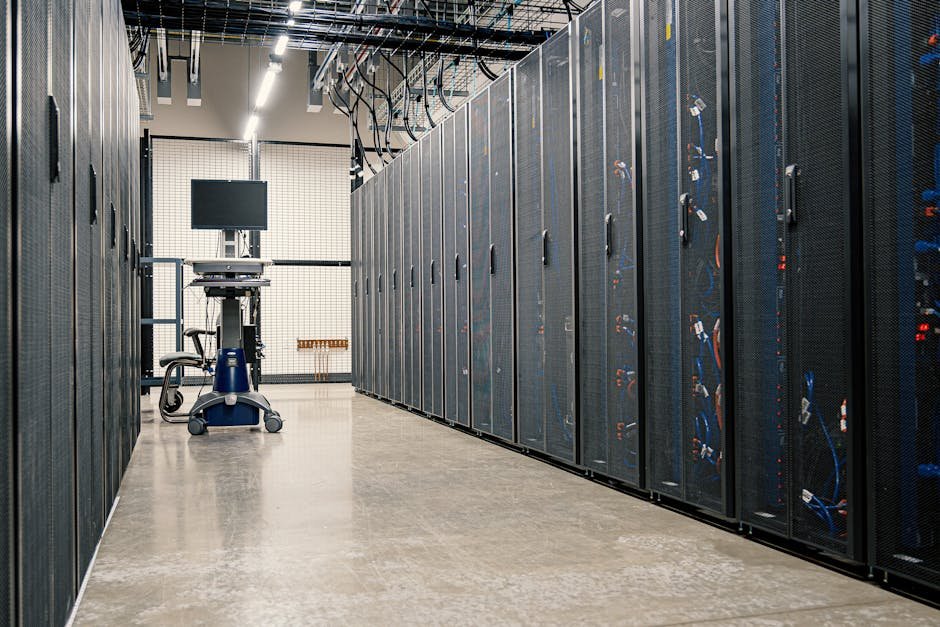
In October 2025, President Milei and OpenAI announced Stargate Argentina — a joint project with Sur Energy, a clean energy company founded by Argentine entrepreneurs in the US, to build a 500MW AI data center in Patagonia. The total investment: up to $25 billion.
The scale of this is worth pausing on. $25 billion is not a speculative early-stage announcement. The initial phase alone represents $7–10 billion, targeting 100MW of capacity by end of 2027, with construction beginning in 2026. The entire project is structured under RIGI — qualifying for Argentina’s maximum investment incentive package.
Why Patagonia for an AI Data Center?
The location choice is not arbitrary. Patagonia offers a specific combination of advantages that few places on Earth can match for this type of infrastructure:
- Natural cooling — the cold, consistently low temperatures reduce cooling costs dramatically for high-density AI compute
- Renewable energy abundance — Patagonia has among the best wind resources in the world, plus significant hydroelectric capacity. A 500MW data center powered almost entirely by renewables is viable here in a way it isn’t in most locations.
- Geographic position — for serving South American, African, and Oceanic AI compute demand, Patagonia offers lower latency than US or European data centers
- Available land and low population density — the physical footprint of a 500MW facility requires space that’s genuinely available in Patagonia
What Stargate Argentina Actually Signals
When OpenAI commits $25 billion to a country, it’s not making that decision lightly. They ran the geopolitical, infrastructure, regulatory, and economic analysis. The conclusion was that Argentina — specifically under the current policy framework — is a viable and attractive location for critical AI infrastructure.
This is a different kind of signal than a manufacturing plant or a consumer business entering the market. AI data centers are long-lived, capital-intensive infrastructure with 20-30 year time horizons. OpenAI is making a generational bet on Argentine stability and policy continuity.
What This Means for Expats and Foreign Entrepreneurs
Argentina Is No Longer Just a “Cheap Place to Live” Story
For years, the expat narrative about Buenos Aires centered on cost of living — and it still does for many people. But the Satellogic and Stargate stories represent something different: Argentina is developing a credible argument as a location for technology work, investment, and serious business, not just affordable lifestyle arbitrage.
For expats who work in tech, data, AI, energy, or related fields, the local ecosystem is becoming more interesting. There are now Argentine companies competing at international levels, global infrastructure being built here, and a policy environment explicitly designed to attract more of it.
The Business Opportunity Lens
Large infrastructure projects create derivative opportunities that are often more accessible to individual entrepreneurs and small companies than the headline investment itself. A $25 billion data center project in Patagonia creates demand for local services, logistics, engineering support, housing, food service, and more throughout its construction and operation phases. The same dynamic applies to Satellogic’s growing Córdoba and Buenos Aires operations.
None of this requires being an AI company or a satellite manufacturer. The point is that serious capital investment in a country creates business ecosystems around it — and those ecosystems have room for foreign entrepreneurs who are paying attention.
The Realistic Caveat
Eight years in Argentina has taught me to hold two things simultaneously: genuine optimism about the direction of change, and clear-eyed realism about what hasn’t changed. Currency risk, bureaucratic complexity, political uncertainty, and execution gaps between announced projects and ground reality are all still present.
OpenAI announcing $25 billion and OpenAI actually deploying $25 billion are different things. Project timelines in Argentina historically slip. The RIGI framework is real, but it’s also new and untested at this scale. Anyone making business decisions based on Stargate Argentina should treat it as a directional signal, not a guaranteed outcome.

The Bottom Line
Satellogic and Stargate Argentina are not isolated stories. They’re data points in a pattern: a policy environment designed to attract serious investment, an engineering talent base that can support technology companies, and natural resources (in Patagonia’s case, literally wind and cold air) that make Argentina relevant for 21st-century infrastructure in ways it wasn’t previously.
From Palermo Chico, watching this unfold is genuinely interesting. Argentina has been a country of potential for as long as I’ve been here — the difference now is that some of that potential is beginning to convert into concrete investment and real projects. Whether the conversion continues depends on policy consistency and execution that, frankly, Argentina has historically struggled with. But the direction, for now, is the clearest it’s been in years.
This is the first post in what I expect will become a longer series on Argentina’s technology and investment landscape. More to come.
Related Reading:
- Buenos Aires Cost of Living 2026: Real Monthly Budget From 8 Years in Palermo
- Argentina Business Opportunities 2026: Milei Opens the Door
- Buenos Aires Safety 2026: Real Expat Experience in Palermo Chico
Sources: