
When I first arrived in Argentina in 2019, finding imported snacks at a Palermo supermarket was extremely limited. Korean or Japanese ramen? It existed, but at absurd prices. Foreign skincare brands? Mostly restricted to pharmacy labels — or you asked someone to bring things over from abroad.
That was Argentina. High tariffs, complex ANMAT(National Administration of Drugs, Food and Medical Devices) and National Service of Agri-Food Health and Quality (SENASA)
regulations, endless paperwork. Importing anything wasn’t a business — it was an ordeal.
In April 2026, the imported snack section at Palermo supermarkets has visibly grown. Cosmetics shops are stocking foreign brands I’d never seen here before. The numbers confirm it: Argentina’s consumer goods imports reached $11.4 billion in 2025 — up 54% year-on-year, the highest figure ever recorded.
Milei opened the door. Not all the way — but for the first time in eight years, the environment actually makes you think: I could build an import business here. These are the Argentina business opportunities in 2026 that are worth considering, along with the traps that can still catch you out.

1. What Milei Actually Changed: Key Policies as of April 2026
Import Liberalization: The Numbers
Since taking office, the Milei administration has cut tariffs on hundreds of product categories and dismantled the import permit quotas and approval requirements that made doing business in Argentina so painful. The results are visible in the data:
- Consumer goods imports 2025: $11.4 billion — up 54% vs 2024, up 43.6% vs 2023
- Courier/parcel imports: $894 million — up 274% year-on-year
- Imports from China alone: $8.3 billion — up 79.4%
The courier threshold was raised from $1,000 to $3,000 per shipment in November 2024, with an annual $400 personal tax exemption. This is why Shein, Temu, and Amazon purchases exploded — Argentines could finally access them without prohibitive costs.
One important context point: despite the import surge, Argentina ran a trade surplus of $11.3 billion in 2025 — 25 consecutive months of trade surplus coinciding exactly with Milei’s presidency. The opening hasn’t broken the trade balance.
ANMAT Regulatory Simplification
For anyone importing food or cosmetics, the ANMAT changes are the most significant development.
Cosmetics (from July 2025): This is the biggest shift. Cosmetics, household hygiene products, oral hygiene items, and personal care products no longer require prior import approval from ANMAT. A process that previously took months has been replaced with an electronic sworn declaration system. The regulatory wall is essentially gone for this category.
Food (Decreto 35/2025, January 2025): Import procedures simplified across the board. ANMAT fees restructured to a flat 0.5% of declared FOB value — replacing a complex, opaque bracket system. Over 300 administrative procedures eliminated entirely.
US-Argentina Trade Agreement (Signed February 5, 2026)
The U.S.-Argentina Agreement on Reciprocal Trade and Investment was signed in Washington on February 5, 2026. Key terms:
- The US eliminates tariffs on 1,675 Argentine export products
- Argentina removes barriers on 200+ categories of US goods: pharmaceuticals, chemicals, machinery, medical devices, vehicles
- US quadruples its Argentine beef import quota to 100,000 tons/year
EU-Mercosur Agreement (Provisional Application from May 1, 2026)
After over 25 years of negotiations, the EU-Mercosur Partnership Agreement was signed on January 17, 2026. Argentina ratified on February 26. The Interim Trade Agreement enters provisional application on May 1, 2026, beginning the phased reduction of tariffs on European goods (vehicles, machinery, pharmaceuticals, chemicals).
RIGI: Large Investment Incentive Regime
RIGI (Régimen de Incentivo para Grandes Inversiones) was introduced in 2024 and extended through July 2026 (Decree 105/2026). As of April 2026, 10 projects have been approved with a combined investment value of $25.48 billion. Approved projects span lithium mining (Catamarca, Jujuy, Salta), copper (San Juan, Mendoza), gold (Santa Cruz, Chubut), and oil and gas.
- Minimum investment: $200 million+
- Benefits: 30-year tax stability, import duty exemptions, free profit repatriation, accelerated depreciation
- Sectors: Energy (Vaca Muerta), lithium and copper mining, infrastructure, technology, oil and gas
2. The Markets Actually Opening Up

Food and Specialty Grocery
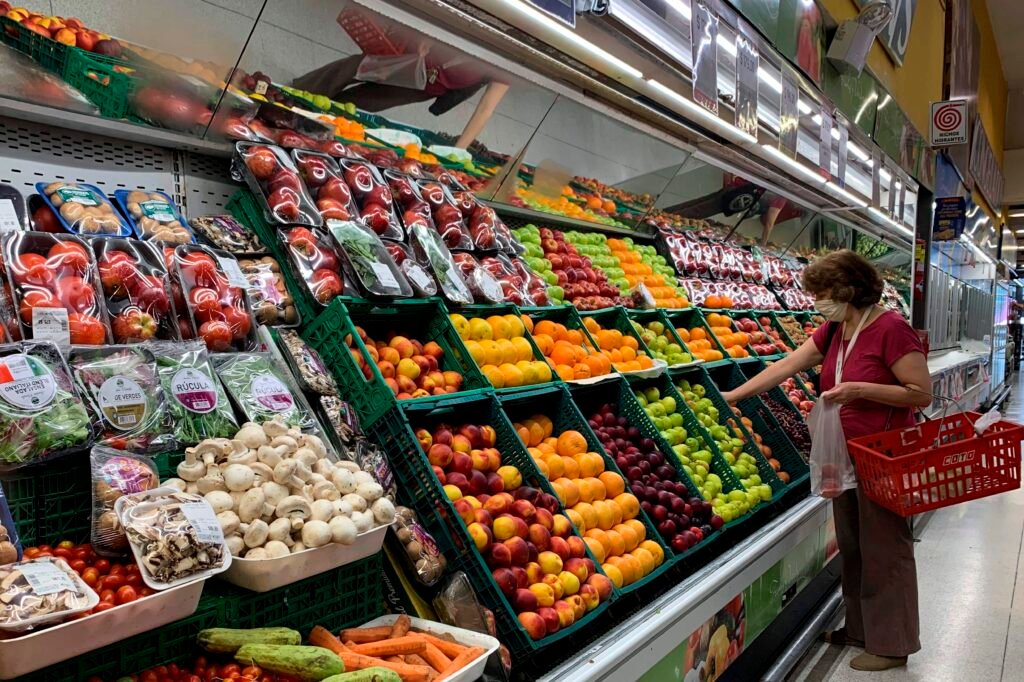
Walk through Disco or Jumbo in Palermo or Recoleta today and the imported food section is noticeably bigger than two years ago. Health supplements, premium snacks, specialty dairy, instant foods, processed fruit products — the shelf space has grown.
The interesting opportunity is in categories where upper-middle-class Argentine demand exists but supply hasn’t caught up yet. Organic products, protein bars, specialty dietary foods, and niche international brands are still underrepresented relative to the interest.
Cosmetics and Beauty
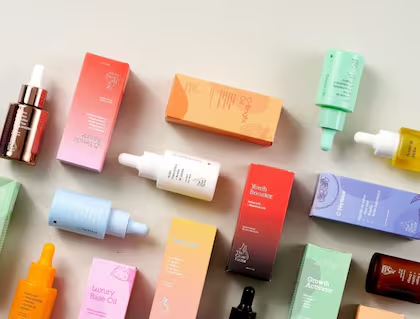
This is where ANMAT’s regulatory rollback creates the clearest opening. With prior approval no longer required, the time-to-market for cosmetics has collapsed from months to weeks. Skincare, sheet masks, hair care, and color cosmetics are all arriving faster than before.
From eight years in Palermo Soho and Recoleta: K-beauty style skincare — lightweight, multi-step, ingredient-focused — has genuine consumer interest here that isn’t fully served by the current market. This isn’t hypothetical trend-chasing; it’s something I’ve watched develop on the ground.
Other Consumer Goods
Electronics, fashion, sportswear — all growing. But these categories are already being filled quickly by large distributors. The window for individual operators to carve out space is narrower.
Large-Scale: Energy, Mining, Infrastructure
Vaca Muerta, lithium, copper, infrastructure projects. This is where the big foreign capital is going via RIGI. Not directly relevant to small business operators, but the macro effect — a growing economy with recovering purchasing power — shapes the consumer market everyone else is working in.
3. How Foreigners Can Actually Start a Business in Argentina 2026
Choosing Your Business Structure
For most foreign individuals starting an import or distribution business in Buenos Aires, the realistic options are:
| Structure | Best For | Key Features |
|---|---|---|
| SAS (Sociedad por Acciones Simplificada) | Solo foreign operators, small-to-medium business | 1-person foreign setup possible, low minimum capital, 2–4 week registration, fully online process |
| SRL | Partnerships with Argentine co-founders | More flexible profit-sharing, requires local partner |
| SA | Large-scale operations, investor structures, RIGI projects | More complex, suited for raising investment |
For the vast majority of small import and distribution operations, the SAS is the right choice. It was specifically designed to make business formation easier, and it works.
The Setup Process, Step by Step
- Register the SAS with IGJ (Inspección General de Justicia) — approximately 2–4 weeks via the online platform
- Obtain CUIT (Código Único de Identificación Tributaria) — your tax identification number, registered with AFIP
- Open a corporate bank account — requires DNI or Argentine residency documentation
- ANMAT/SENASA certification — required for food products; no longer required for most cosmetics and personal care products as of July 2025
Practical Business Strategies for Small Operators
Food import and distribution: Start with a focused category — health supplements, premium snacks, or a specific niche. Combine online (MercadoLibre, Instagram) with offline (Palermo weekend markets, specialty stores) to test before scaling. The cost of a small test run here is low enough to validate before committing.
Cosmetics import and retail: The regulatory barrier is genuinely lower now. The challenge is that competition is growing quickly. Successful entry requires a clear niche — vegan products, sensitive skin formulas, a brand story that resonates locally — rather than generic product lines.
4. Opportunities vs. What Can Still Go Wrong
| Opportunity | Realistic Assessment |
|---|---|
| Food import and distribution (health foods, snacks) | Genuine opening. ANMAT still requires registration but process is faster and cheaper than before. |
| Cosmetics import and retail | Strong opportunity. Prior ANMAT approval gone. Competition growing fast — niche focus required. |
| Exclusive distribution rights for foreign brands | Underexplored. Argentine market is large enough that international brands want local partners. |
| RIGI large-scale investment (energy, mining) | Real, but $200M+ minimum. Not a small business play. |
What Can Still Catch You Out
Currency volatility and inflation. The peso has stabilized significantly under Milei, but Argentina’s structural monetary risks haven’t disappeared. Build your business model in dollars. Minimize peso exposure wherever possible. This isn’t paranoia — it’s the lesson eight years here has taught me.
Remaining protectionist regulations. Not everything is liberalized. Certain agricultural categories, textiles, and other sectors still carry protective measures. Always verify the current regulatory status of your specific product category — don’t assume the general liberalization applies.
RIGI is not for small operators. The $200M minimum is real. If you’re a small or medium operator, the SAS route is what’s available to you. Don’t confuse the big investment headlines with the actual landscape for individual entrepreneurs.
You need local legal and accounting support. Argentina’s regulatory environment changes frequently and the documentation requirements are genuinely complex. Operating without a trusted local lawyer and certified public accountant (contador público) is a significant risk. Budget this as a fixed cost from Day 1.
FAQ: Doing Business in Argentina 2026
Can a foreigner start a business in Argentina without being a resident?
Yes. The SAS structure allows a foreign individual to be the sole shareholder without Argentine residency. You will need a CUIT (tax ID), which can be obtained through AFIP with your passport and visa documentation. However, opening a corporate bank account typically requires a DNI or residence permit, which adds a practical delay. Many operators work around this initially with a local accountant as an authorized representative while their residency is processed.
Do I still need ANMAT registration to import cosmetics into Argentina?
For most cosmetics, personal care products, and household hygiene items: as of July 2025, prior import approval from ANMAT is no longer required. Companies must register and file an electronic sworn declaration, but the months-long pre-approval process has been eliminated. Higher-risk categories (certain medical devices, prescription products) still require full registration. Always verify your specific product category before proceeding.
Is it worth starting an import business in Argentina given the economic instability?
The honest answer: it depends on your structure and risk tolerance. The macroeconomic environment is genuinely better than it was in 2023. Trade surplus for 25 consecutive months, inflation falling, capital controls loosened. But Argentina is not a stable, low-risk market. The people who do well here consistently are those who operate in dollars, start small to test before scaling, maintain local legal support, and don’t get overexposed to the peso. It is a market with real opportunity and real risk — not one or the other.
What is RIGI and how do I apply?
RIGI is Argentina’s large investment incentive scheme, offering 30-year tax stability, tariff exemptions, and free profit repatriation for projects of $200 million or more. The application window has been extended to July 2026 (Decree 105/2026). Applications are submitted through the Secretaría de Industria y Comercio. If you’re operating at this scale, you’ll need specialized Argentine legal counsel — the documentation and compliance requirements are substantial.
What’s the best neighborhood in Buenos Aires to test a retail import concept?
Palermo Soho and Palermo Hollywood for cosmetics, specialty food, and lifestyle products — the demographic there has international exposure and discretionary spending. Recoleta for premium and higher-priced products. Belgrano for a more local, family-oriented consumer base. For initial validation, pop-up market formats (the weekend fairs in Palermo are well-attended) let you test product-market fit before committing to a retail lease.
The Bottom Line
Milei’s opening policies have created real changes in the Argentine market. The import numbers aren’t projections — they’re 2025 actuals. The ANMAT cosmetics approval requirement being eliminated isn’t a proposal — it took effect in July 2025. The US and EU trade agreements are signed.
But this is not an easy market. It has never been an easy market. The people who succeed here consistently are those who understand the local environment, start with a validated niche, manage currency exposure carefully, and build the local support network before they need it. Eight years in Palermo Chico has shown me that Argentina rewards preparation more than enthusiasm.
The door is more open than it has been in a long time. What you walk through it with still matters.
Related Reading: