
Last updated October 25, 2026. Prices are in US dollars first, with pesos in parentheses. Pesos are converted at the official Banco Nación (BNA) selling rate of 1,545 per dollar on October 20, 2026, unless a source gives its own dollar figure. Prices change quickly, so please treat them as a guide.
There’s a small moment I remember from my years in Buenos Aires: picking up a decent pair of jeans in a mall, doing the dollar maths in my head, and quietly putting them back on the rail. Clothes were the one thing I never quite got used to paying for there.
So when Mango reopened in Argentina at Alto Palermo in early October 2026, I was curious in a very practical way. Is it actually cheaper? Who is it for? And where does it sit now that Shein parcels, Decathlon and, next year, H&M are all part of the picture?
Quick answer: Mango is back, trading as MNG, in a single store on the ground floor of Alto Palermo. Everything is imported. Basic tees start at about USD 26 (ARS 40,000) and jeans run about USD 78–91 (ARS 120,000–140,000). In one like-for-like comparison, a three-piece look cost about 54% more than in Spain but roughly 36% less than at four well-known Argentine mall brands.
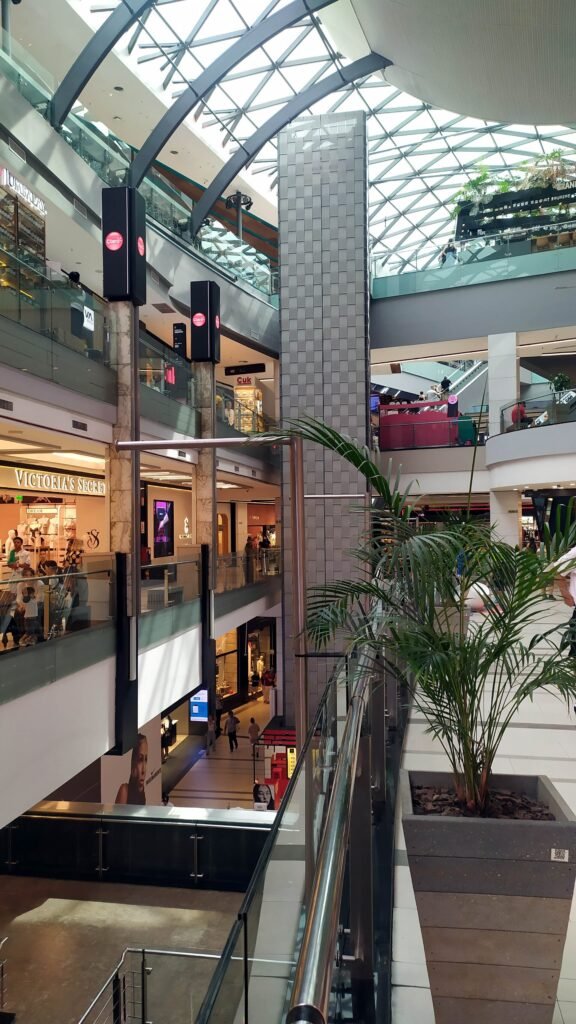
Mango Argentina in 2026: what has actually opened
If you go looking for a big “Mango” sign, you might walk straight past it. In Argentina the store trades as MNG, the initials the company uses in countries where the Mango name was already registered by someone else. Same company, same clothes.
The store is a little over 500 m² on the ground floor (planta baja) of Alto Palermo, on Avenida Santa Fe, and it sells womenswear and menswear only; kids and home lines aren’t part of this first stage. It’s run by Grimoldi, the long-established Argentine shoe retailer, as Mango’s franchise partner. The doors opened on Thursday, October 1, with the official opening on Monday, October 5. The plan is five stores in five years, with a second one targeted for the first half of 2027, and Grimoldi said it was talking to Unicenter and Alto Rosario (Forbes Argentina, Sept 10, 2026).
An online store was announced alongside the opening. As of October 25, 2026, I couldn’t confirm that you can actually order for delivery in Argentina yet, so check the brand’s official channels before you count on it.
100% imported, and that matters
This is the detail I find most telling. Hernán Grimoldi told Forbes Argentina the business would be “100% imported” and that “Mango has no interest in producing in Argentina”. He also linked the pace of expansion to the economy staying open to imports, which is why the plan is gradual: one store this year, another next year.
Third time lucky?
Mango isn’t new to Argentina. It first arrived in 1998, during the one-peso-one-dollar years, and closed its stores in 2003 after the 2001 crisis and devaluation. Later, its clothes were sold inside the Chilean department store Falabella, until Falabella left Argentina in 2021. So this is Mango’s first stand-alone store in more than two decades (El Cronista, Oct 6, 2026).
Mango Argentina prices: what things cost
These are prices reported in the first week by iProfesional and El Cronista (iProfesional, Oct 6, 2026). They’re a snapshot, not an official price list.
| Item | Price (early October 2026) |
|---|---|
| Basic T-shirt | from about USD 26 (ARS 40,000) |
| Men’s cotton T-shirt | about USD 58 (ARS 90,000) |
| Top | about USD 52 (ARS 80,000) |
| Jeans | about USD 78–91 (ARS 120,000–140,000) |
| Short dress | from about USD 78 (ARS 120,000) |
| Basic white linen shirt | about USD 97 (ARS 150,000) |
| Faux-leather jacket | about USD 117 (ARS 180,000) |
| Women’s jacket | about USD 162 (ARS 250,000) |
| Handbags | from about USD 84 (ARS 130,000) |
| Sandals | about USD 71–123 (ARS 110,000–190,000) |
| Linen blazer | about USD 194 (ARS 300,000) |
The first Saturday brought in about USD 78,000 (ARS 121 million, VAT included), which Hernán Grimoldi called a very good day for a Saturday. I didn’t find reports of long queues, though, so it may take a few months to know whether that was pent-up demand or opening-week curiosity.
More than in Spain, less than local mall brands
El Cronista priced the same three Mango pieces in Buenos Aires and in Spain, then compared them with similar looks from four Argentine mall brands (Kosiuko, Tucci, Markova and Jazmín Chebar). The Spanish prices are the paper’s own peso conversions; the dollar figures are mine, at 1,545.
| Item (same model) | Alto Palermo | Spain | Difference |
|---|---|---|---|
| Jeans | about USD 91 (ARS 140,000) | about USD 45 (ARS 69,300) | about 2x |
| Top | about USD 52 (ARS 80,000) | about USD 34 (ARS 52,360) | about +53% |
| Faux-leather jacket | about USD 117 (ARS 180,000) | about USD 90 (ARS 138,600) | about +30% |
| Three-piece look | about USD 259 (ARS 400,000) | about USD 168 (ARS 260,260) | +54% |
| Similar look, average of four local brands | about USD 407 (ARS 628,250) | — | 57% more than Mango |
Among the local brands, the cheapest look (Markova) came to about USD 333 (ARS 515,000) and the priciest (Jazmín Chebar) to about USD 570 (ARS 880,000). In the same article, the textile foundation Pro Tejer estimated that manufacturing is only about 8.5% of the final price of a premium Argentine garment, with taxes around 50%, rent and financing around 30%, and logistics, marketing and margin the remaining 12% or so. That’s an industry group’s estimate, but it helps explain why “imported” doesn’t automatically mean “cheap”.
Grimoldi has said Mango will price itself in line with Zara, as it does in other countries. For comparison, iProfesional found Zara women’s jeans at ARS 119,990 in November 2025, which it put at about USD 83 at the official rate at the time.
Why Mango Argentina still costs more than abroad
Part of the story is the 2025 tariff cut. In March 2025, Decreto 236/2025 lowered the import duty on clothing and footwear from 35% to 20% (Argentine government). That helped, but duty is only one layer. IVA (21%), provincial gross-income tax, mall rents, instalment financing and the franchise margin all sit on top, so a 15-point cut moves the shelf price far less than you’d hope.
So who is Mango Argentina really for?
Because so many people already know the name, I doubt Mango needed much of a push to get noticed; the brand had done most of that work over the years. The harder part is the price. With jeans at about USD 78–91 (ARS 120,000–140,000) and jackets well over USD 100, I think it realistically ends up as a brand for the middle class and up: something people plan for, or spread over a few cuotas, rather than an everyday place for basics.
Spain adds another layer. For Argentines who travel to Spain often, Mango is simply a familiar high-street name, so there’s no psychological barrier at all. The barrier that remains is a practical one. Import duty, IVA and everything stacked on top still push the shelf price well above what they’ve seen in Madrid or Barcelona; in El Cronista’s comparison, the same jeans cost about twice as much. Knowing the Spanish price tag can make the Buenos Aires one harder to accept, not easier.
The alternatives: H&M, Decathlon and the parcels
H&M: same mall, in 2027
H&M has confirmed its first Argentine store for 2027, also at Alto Palermo, run by a franchise partner. I’ve written that story up separately, so I won’t repeat it all: H&M is coming to Argentina covers the dates, the location and where its prices are likely to land.

Decathlon: already open
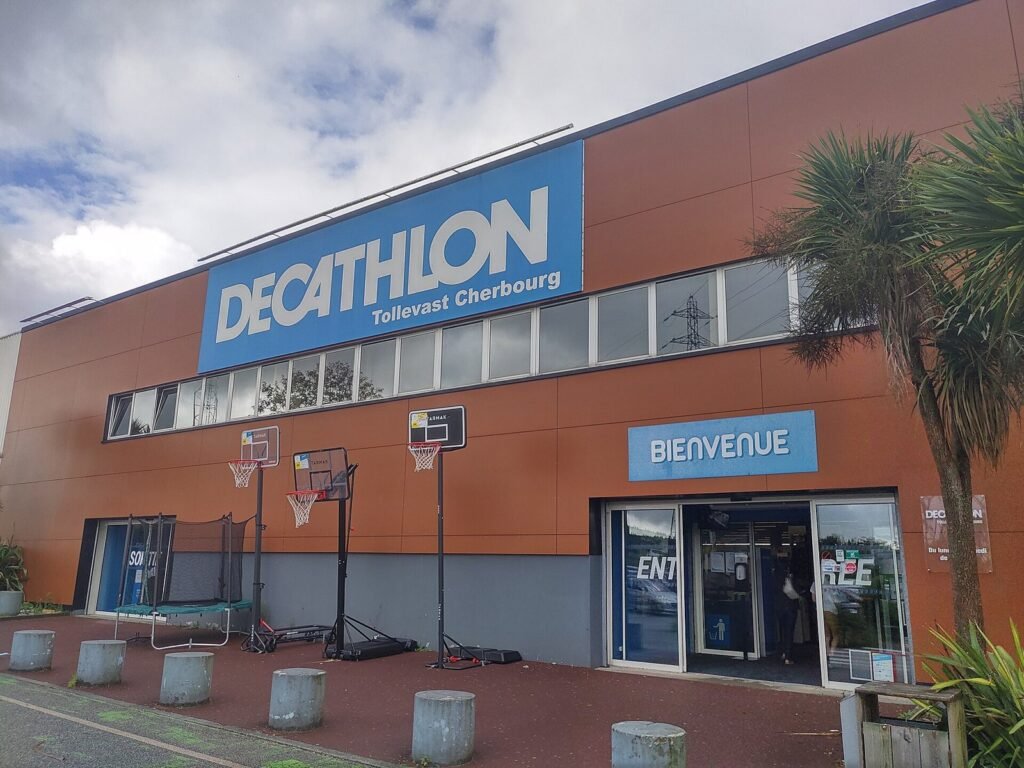
For sportswear, the big international arrival has already happened. Decathlon opened its first Argentine store at the Al Río complex in Vicente López in November 2025, a second in Córdoba in May 2026, and on October 17, 2026 its first store inside the city: about 2,470 m² on the second floor of Abasto Shopping, with its entrance on Agüero street. Portal Rosario is next, in November. The operator, Grupo One, talks about more than 20 stores and over USD 100 million of investment in five years (iProfesional, Oct 19, 2026), and El Cronista reported that an Alto Palermo store is planned for the first half of 2027.
It’s a different model from Mango. Decathlon sells mostly its own brands (Quechua, Domyos, Kipsta and others) at beginner to advanced price levels, so it competes more with multi-brand sports chains than with fashion. Like Mango, though, it sells imported goods. If you’re heading to Abasto, the Subte B line stops at Carlos Gardel; my guide to getting around Buenos Aires has the basics.
Shein and Temu: a different starting line
The real competition for any mall store may be the box at the doorman’s desk. Under the courier regime, personal shipments up to USD 400 FOB each pay IVA but no import duty or statistics fee, for up to five shipments a year per person (ARCA courier rules). Since July 2026, Decreto 604/2026 has applied the same rule to Correo Argentino postal imports.
So a personal Shein order under USD 400 pays no import duty at all, while Mango, H&M and Decathlon import formally, pay the 20% duty and then pay mall rent on top. Courier imports came to about USD 894 million in 2025 and had already reached USD 855 million between January and August 2026, according to the consultancy Analytica (La Nación, Sept 22, 2026). That’s the backdrop every new store opens into.
| Where | Basic T-shirt | Jeans | Source and date |
|---|---|---|---|
| Shein (men’s) | about USD 6–15 (ARS 9,837–22,649) | about USD 35–45 (ARS 54,135–69,575) | Tiempo de San Juan, Sept 14, 2026 |
| Temu (men’s) | about USD 9–10 (ARS 13,486–16,153) | about USD 25–26 (ARS 38,778–40,071) | Tiempo de San Juan, Sept 14, 2026 |
| H&M capsule at Coto supermarkets | about USD 12 (ARS 19,000) | about USD 26 (ARS 40,000) | La Nación, Dec 2025 |
| Mango, Alto Palermo | from about USD 26 (ARS 40,000) | about USD 78–91 (ARS 120,000–140,000) | iProfesional and El Cronista, Oct 2026 |
| Zara Argentina | — | about USD 83 (ARS 119,990), women’s | iProfesional, Nov 2025 (its own dollar figure) |
| Top local brand shops in San Juan | about USD 49–71 (ARS 75,000–109,000) | about USD 105–135 (ARS 162,000–209,000) | Tiempo de San Juan, Sept 14, 2026 |
Pesos are as reported on each date, and the dollar figures use 1,545, except Zara’s, which is iProfesional’s own conversion. Dates and garments differ, so read it as a rough map. The overall picture is clear enough, though: imported chain stores sit above parcels and supermarket labels, and below the top local brands. For how clothes fit into a monthly budget, my Buenos Aires cost of living breakdown puts them next to rent and food.
The other side: local makers
It would feel wrong to talk about cheaper imports without mentioning the people who made Argentina’s clothes for decades. Around Avenida Avellaneda in Flores, and in the fabric shops of Once, wholesalers and small workshops have been going through a hard time. Pro Tejer’s September 2026 bulletin counts 28,322 registered jobs lost in textiles, clothing, leather and footwear between December 2023 and June 2026, and 1,042 companies closed (Pro Tejer, Sept 2026). The industry points to weaker spending as well as imports, and I suspect both are true at once. I don’t think anyone has a tidy answer yet.

Practical tips for shopping at Mango Argentina
- Look for MNG, not Mango, on the ground floor of Alto Palermo.
- Try fit-critical pieces in store. Jeans and jackets are where a fitting room saves you the most regret, and returns are simpler than with a parcel.
- Ask about cuotas sin interés. Interest-free instalments, usually with an Argentine card, are a big part of why people still buy in malls.
- Basics may still be cheaper by courier if you have an Argentine tax ID. Your five duty-free shipments a year go further if you combine orders. Many people order through Mercado Libre too; my guide to Mercado Libre and Mercado Pago explains how buying and paying there works.
- Check how a foreign-currency charge is paid. If a purchase shows up on an Argentine card statement in dollars and you pay it in pesos, a 30% tax perception is added; paying the dollar balance with dollars avoids it. My guide to exchange rates, cards and cash explains the options.
- Visiting briefly? The courier regime needs a CUIL, CUIT or CDI, so it isn’t built for short trips. If you love a Mango piece, compare it with the price back home before you buy.
Mango’s clothes are fairly simple, and in Buenos Aires the outfits I admired most were usually plain clothes with one good piece of jewellery: a pair of earrings or a thin necklace that caught the light at dinner. If you want that finishing touch, Bonheur Jewelry makes gold, silver and crystal earrings, necklaces, bracelets and rings for everyday wear as well as evenings out, with free US shipping on orders over $150 (check the current terms on its site). That’s an affiliate link, so I may earn a commission at no extra cost to you.
If you’re visiting, mobile data makes it much easier to find your way around the mall, check the day’s exchange rate or compare a price tag with what Mango charges back home. If roaming on your home plan is expensive, a data-only travel eSIM is an easy fix (it gives you no local +54 number). I’d look at Simsima’s Argentina plans. That’s an affiliate link too. Check that your phone is unlocked and eSIM-capable first.
Rules, tax rates, exchange rates and prices in this post were checked between October 20 and 25, 2026, unless another date is given. In Argentina they can change quickly, so check ARCA, the Boletín Oficial and the store’s own channels before you buy.
FAQ: Mango in Argentina
Where is the Mango store in Buenos Aires?
As of October 2026 there is one store, on the ground floor of the Alto Palermo mall on Avenida Santa Fe. It trades as MNG and is run by Grimoldi. A second store is planned for the first half of 2027.
Is Mango cheaper in Argentina than local brands?
In El Cronista’s comparison, a three-piece Mango look cost about 36% less than similar looks from four well-known Argentine mall brands, but about 54% more than the same pieces in Spain.
Can I buy Mango online in Argentina?
An online channel was announced with the opening, but as of October 25, 2026 I couldn’t confirm that orders for delivery in Argentina are working. Check the official channels.
Is Mango made in Argentina?
No. According to its franchise partner, the business is 100% imported, and Mango has no plans to produce locally.
Related reading: H&M is coming to Argentina · Buenos Aires Cost of Living 2026 · Argentina Exchange Rates 2026 · Mercado Libre and Mercado Pago guide