
Meta Description: Buenos Aires pizza is a 140-year-old tradition born from Italian immigration — and it’s nothing like pizza anywhere else. An 8-year resident’s honest guide to fugazzeta, the best pizzerias on Corrientes, and why this is a pizza city first.
I need to come clean about something. When people ask me what I miss most about Buenos Aires, I don’t say the tango, the steak, or the wine. I say the pizza.
That answer usually gets a confused look. Pizza? In Argentina?
Here’s the thing. In July 2011, fresh off a flight and barely able to order in Spanish, the first meal I had in Buenos Aires was a slice of fugazzeta at Güerrín on Corrientes. It was thick, absurdly cheesy, covered in sweet caramelized onion, and nothing like any pizza I’d ever eaten. My first thought was genuinely: “Is this even pizza?”
Over the next eight years of living in Palermo Chico, I’d come to understand that Buenos Aires pizza isn’t trying to be Italian pizza or New York pizza. It’s its own thing entirely — a 140-year-old food tradition born from mass immigration, shaped by economic booms and busts, and so deeply embedded in porteño culture that it’s impossible to separate from the city itself.
If you visit Buenos Aires and only eat steak, you’ve seen half the city. This guide is about the other half.
How Italian Immigrants Created a Completely New Pizza
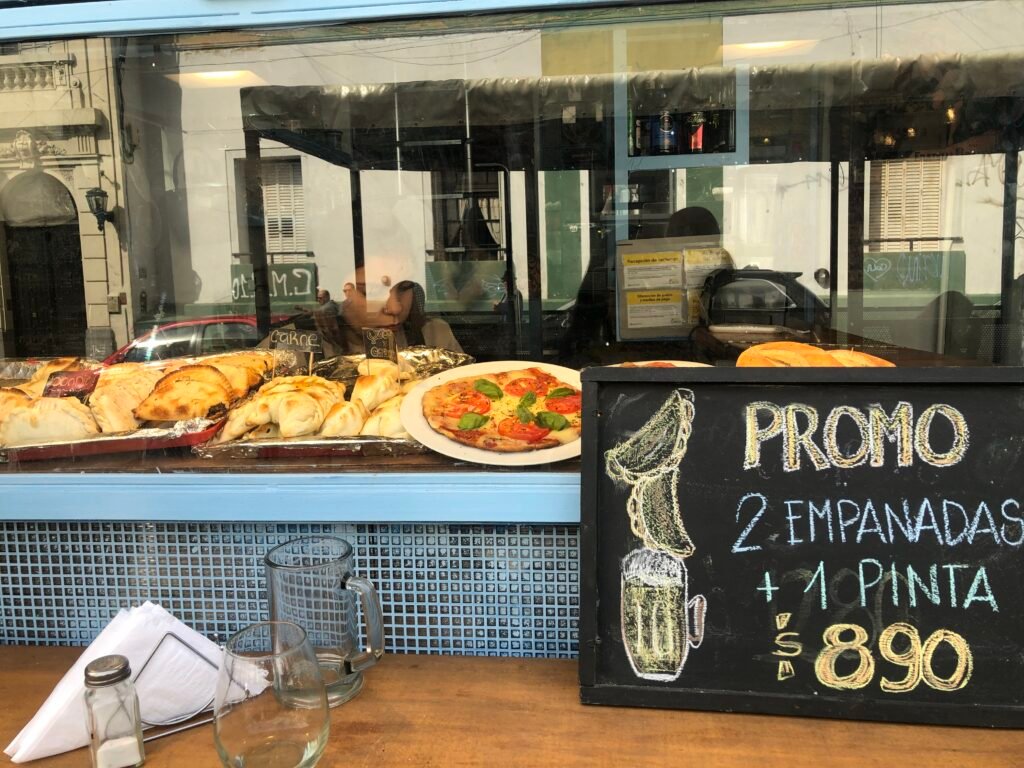
Between 1880 and 1920, millions of Italians — mostly from Genova and Napoli — emigrated to Argentina. They brought their recipes, but Argentina had something Italy didn’t: abundant, cheap ingredients. What started as poor immigrants’ bread evolved into something far more generous.
The first recorded Argentine pizza was made in 1882 by Nicolás Vaccarezza, a Neapolitan immigrant in La Boca. Without a proper pizza oven, he baked his dough in bread molds (moldes). That workaround became the foundation of Buenos Aires pizza: thick, pan-baked dough loaded with an almost reckless amount of cheese. They call it pizza de molde, and it’s the ancestor of everything you’ll eat on Corrientes today.
Netflix captured some of this magic in their Street Food: Latin America series — the Buenos Aires episode features fugazzeta from La Mezzetta, and watching the cheese pull from that oven is the closest you can get to the experience without being there. If you want to understand what makes this pizza different before you arrive, that episode is essential viewing.
The Styles You Need to Know (And What to Skip)
Fugazzeta — The One You Came Here For
Two layers of dough with cheese stuffed between them, topped with caramelized onion. It was invented by Juan Banchero (son of the founder of the legendary Banchero pizzeria in La Boca), and it’s the single most Buenos Aires thing you can eat. Thick, indulgent, the kind of food that makes you understand why Argentines don’t eat dinner until 10 PM — you need hours to recover from lunch.
If you’re only going to try one thing, this is it. Fugazzeta con jamón (with ham) adds another layer of richness that’s either perfect or too much, depending on your relationship with cheese.
Fugazza — The Underrated Original
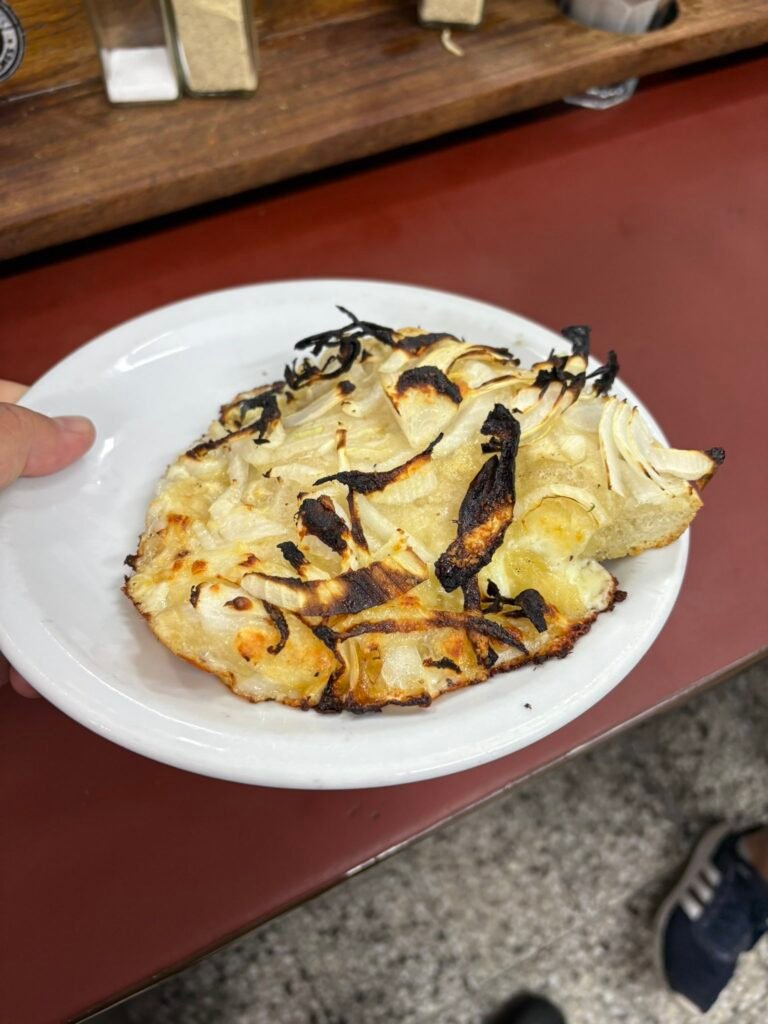
Dough topped with onion, oregano, and salt — no cheese. The name comes from Genovese dialect for focaccia. It’s humble and addictive. When I lived in BA, this was actually my most frequent order, not the fugazzeta. There’s something about the simplicity — sweet slow-cooked onion on pillowy dough — that never gets old.
Muzzarella — The Safe First Order
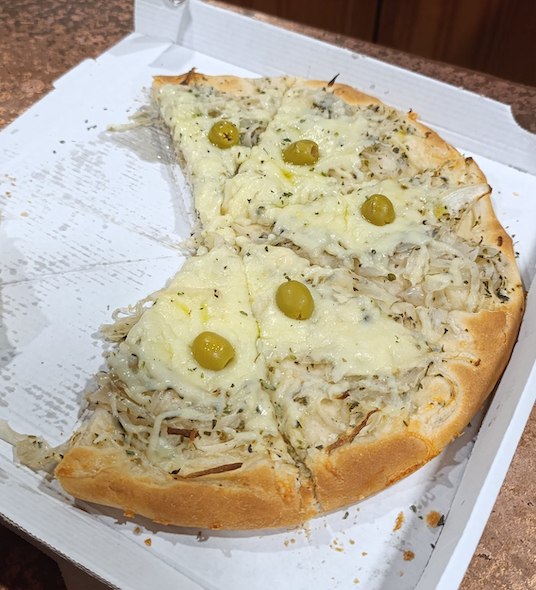
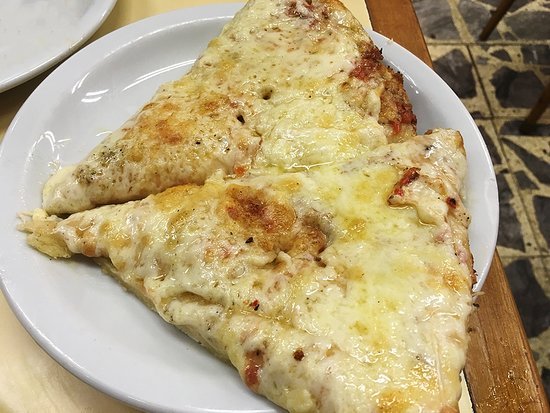
Just mozzarella cheese on dough. Sounds boring; isn’t. The sheer volume of cheese they use would be considered excessive anywhere else in the world. Here it’s the baseline. If you’re arriving in Buenos Aires and aren’t ready to commit to the onion-and-cheese intensity of a fugazzeta, start here.
Pizza a la Piedra — The Thin Exception
Stone-oven baked, thin crust, closer to what an Italian would recognize. Most traditional Buenos Aires places offer three thickness options: al molde (thick), media masa (medium), and a la piedra (thin). If you prefer Neapolitan-style pizza, you’ll gravitate here — but honestly, you can get good thin-crust pizza in a lot of cities. You can’t get a proper fugazzeta outside of Buenos Aires.
My Honest Take on Toppings
Skip the loaded specialty pizzas. You can get a BBQ chicken pizza or a four-cheese with arugula anywhere in the world. What you can’t get is a proper fugazza, a real fugazzeta, or a muzzarella with that specific Buenos Aires cheese-to-dough ratio. Stick to the originals. Maybe pepperoni if you must. But the classics are the reason you’re here.
The Fainá Question
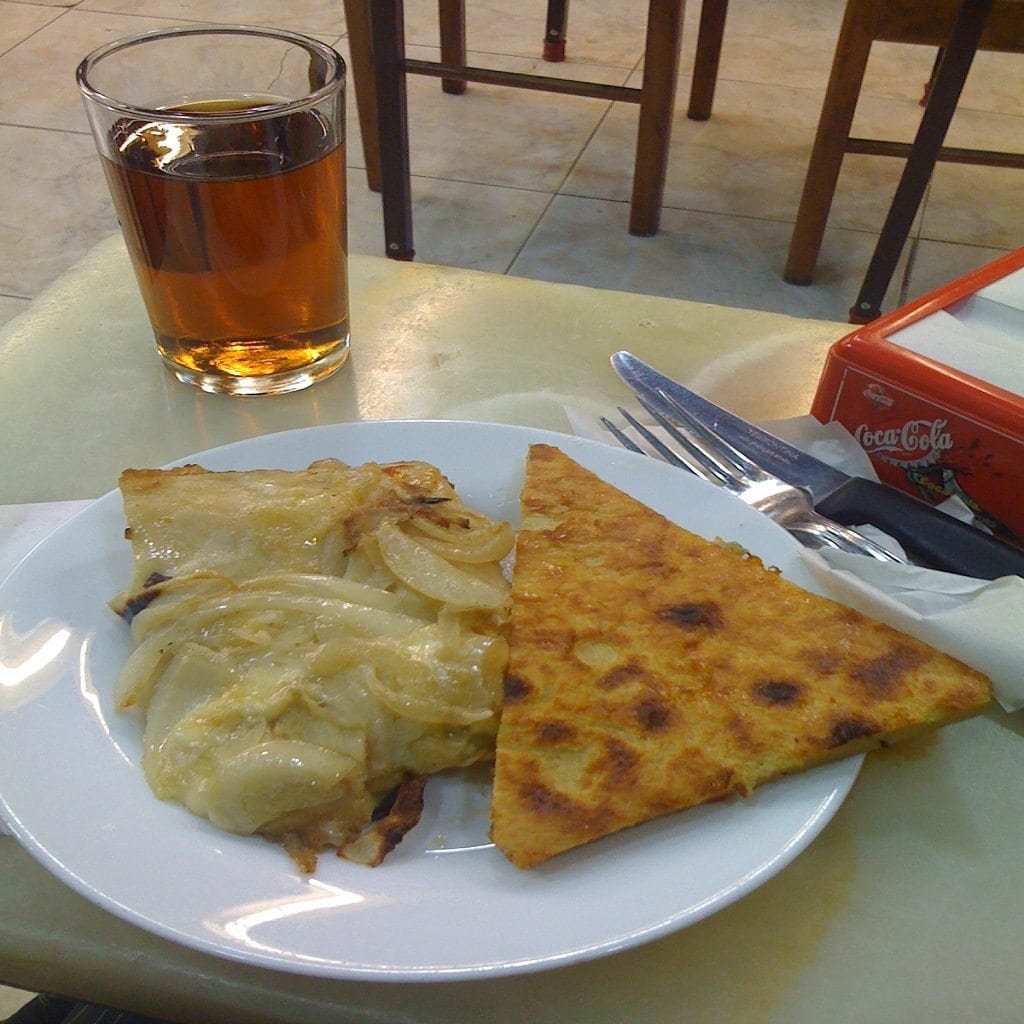
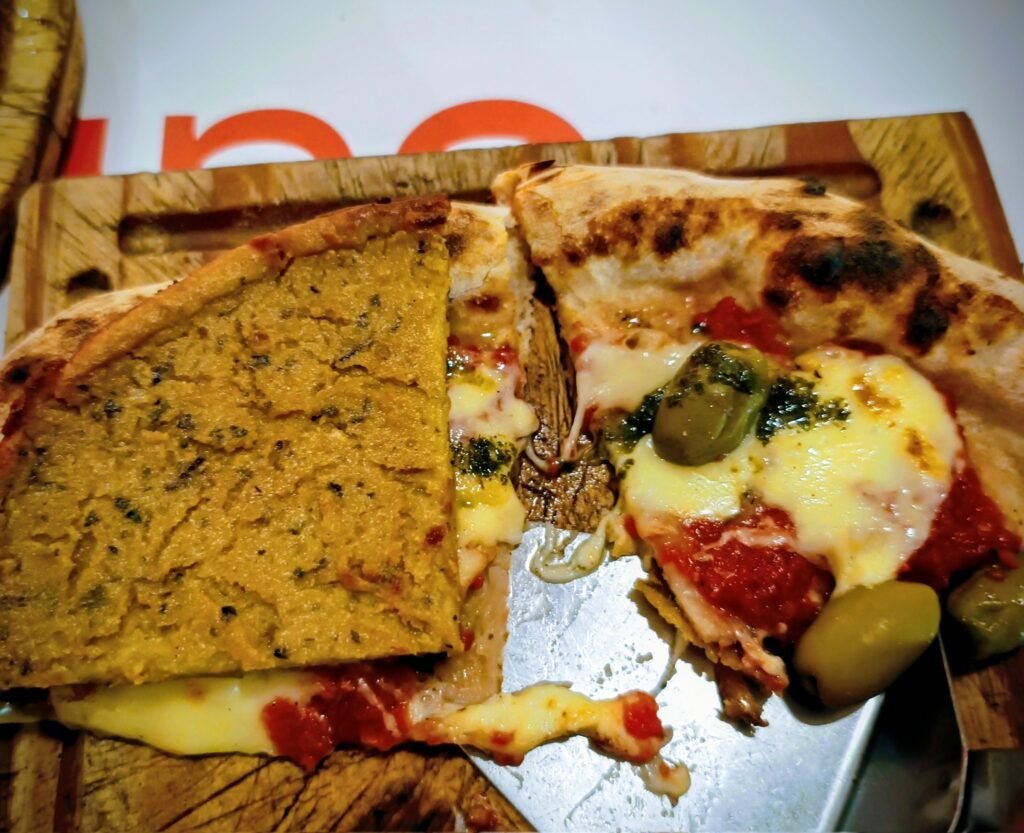
At some point during your pizza meal, you’ll notice locals ordering fainá — a flat chickpea-flour bread — and stacking it on top of their pizza slice. The classic Buenos Aires combo is a slice of pizza + a slice of fainá + a glass of moscato wine.
I’ll be honest: after eight years, I still don’t fully get it. The logic is that the fainá cuts through the richness of the cheese. But in practice, you’re putting something dry and dense on top of something already thick and heavy. It’s… a texture choice.
But here’s the thing — I’d still tell you to order it once. Not because you’ll love it (you might not), but because trying fainá at a standing counter on Corrientes with locals doing the exact same thing is one of those moments where you stop being a tourist and start participating. And worst case, you’ve got a great story.
Corrientes Avenue: Where Pizza Meets Theater
Here’s something most travel guides bury or miss entirely: almost all of Buenos Aires’ legendary pizzerias are clustered on a single street — Avenida Corrientes. And that’s not a coincidence.
Corrientes is Buenos Aires’ Broadway — a long avenue lined with theaters, bookstores, and cinemas. The pizza-and-theater connection runs deep: grab a quick slice standing at Güerrín before an 8 PM show, or sit down at Las Cuartetas with a beer after the curtain falls at 11 PM. I used to do this every time I went to Corrientes for a show, and it became one of my favorite rituals in the city.
If you’re planning a Buenos Aires trip, build a “Corrientes evening” into your itinerary: pizza, then a show (or a show, then pizza). It’s the most porteño thing you can do that doesn’t involve a soccer stadium.
The Pizzerias: Where to Actually Go
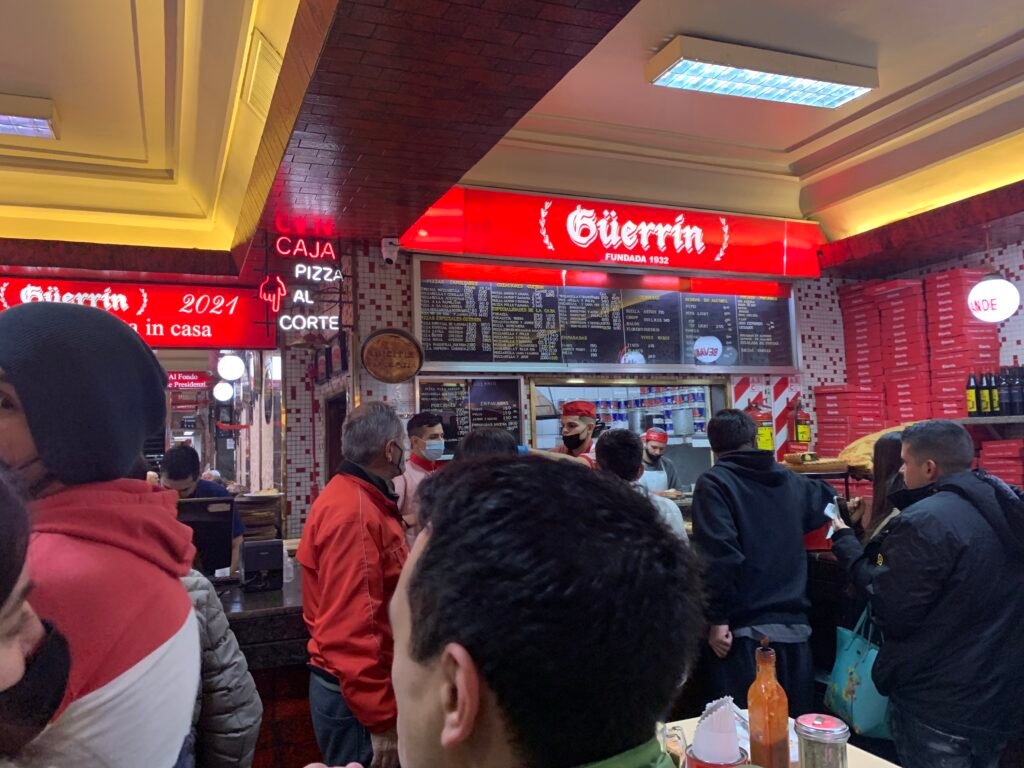
Güerrín (Corrientes 1368) — The One That Matters Most
Open since 1932. Over 70 varieties of pizza. Recognized by the Buenos Aires City Government in 2024 for 90 years of cultural legacy. This is the pizzeria that defines the city.
The real Güerrín experience is al mostrador — standing at the counter, shoulder to shoulder with office workers, taxi drivers, tourists, and grandmothers, eating a slice of fugazzeta that was pulled from the oven 30 seconds ago. It’s loud, it’s crowded, and it’s one of the best food experiences in South America.
They do have a sit-down dining room in the back if you’re with a group, but standing at the counter is the move. Trust me on this.
Hours: Daily, 10 AM – 2 AM. Order: Fugazzeta or muzzarella al mostrador.
El Cuartito (Near Teatro Colón) — The Atmosphere Play
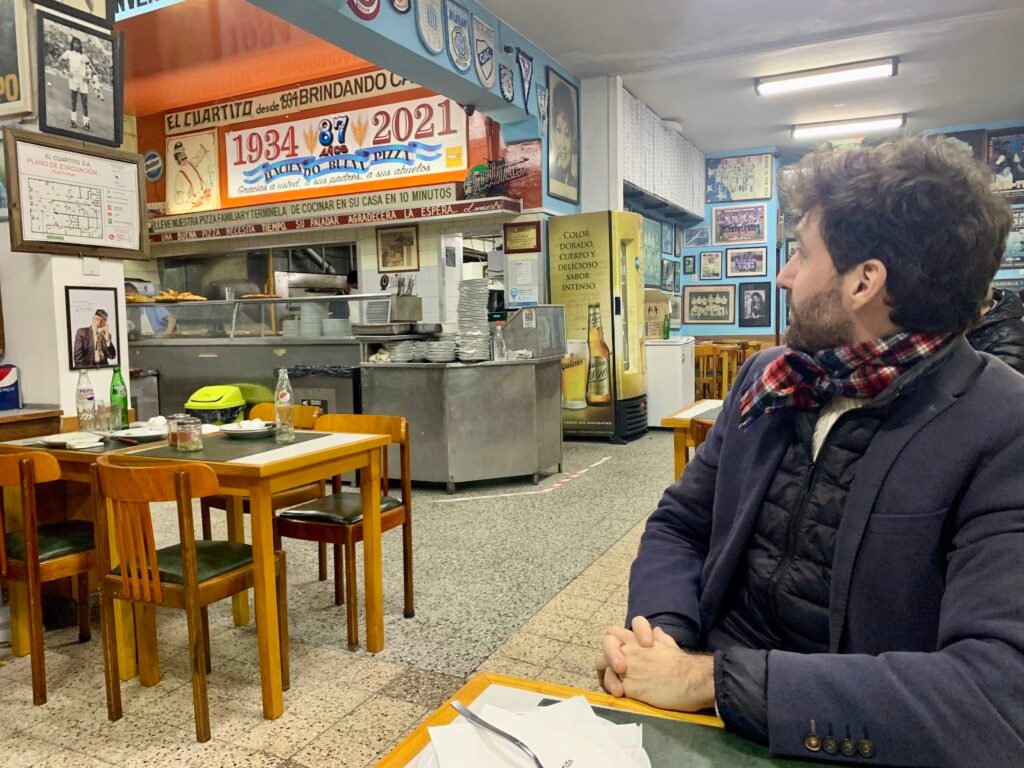
Open since 1934. The pizza is good but not life-changing — what makes El Cuartito special is the vibe. Blue walls covered in soccer memorabilia, vintage posters, a TV permanently tuned to whatever match is on. It feels like eating pizza inside a Buenos Aires time capsule. Located near Teatro Colón, it’s perfect for a pre-opera slice (yes, opera and pizza go together here).
Las Cuartetas (Corrientes 838) — The Value Pick
The big wood-fired oven greets you as soon as you walk in. Affordable, consistently good, and one of the few places where you can order all three thickness options (molde, media masa, a la piedra) for comparison. If you’re eating with friends and want to do a proper taste test of Argentine pizza styles, this is the place.
Banchero (La Boca) — The Historical Detour
The birthplace of fugazzeta — declared a site of cultural interest by the Buenos Aires City Government in 2022. Located in La Boca, so you’ll likely visit when exploring that neighborhood. The pizza itself is decent but not spectacular; the historical significance is the draw. If you’re the kind of traveler who wants to eat at the place where an iconic dish was invented, make the trip.
Kentucky (Multiple Locations) — The Late-Night Savior
A Buenos Aires franchise with 22+ locations and over 70 years of history. Quality varies by location, but it’s reliable for a solo late-night slice. I’ve seen porteños eating pizza here at 6 AM on a Sunday morning. That tells you everything about this city’s relationship with pizza — it’s not a meal, it’s a 24/7 institution.
Standing vs. Sitting: Two Different Experiences
| Standing (Al Mostrador) | Seated (En el Salón) | |
|---|---|---|
| Price | Cheaper (per-slice pricing) | More expensive (whole pizza + service) |
| Speed | Fast — eat and go | Full sit-down meal pace |
| Vibe | Energetic, local, authentic | Relaxed, conversational |
| Best for | Solo travelers, quick bites, the “real” experience | Groups of 4+, pairing with beer/wine |
My recommendation: Do both, but do the standing counter first. It’s the experience you can’t replicate anywhere else.
Buenos Aires Pizza on Screen
If you want to see this pizza culture before you experience it in person, a few things worth watching:
Netflix’s Street Food: Latin America — The Buenos Aires episode is probably the best visual introduction to Argentine pizza. It features fugazzeta from La Mezzetta and captures the sensory overload of a Buenos Aires pizzeria better than any photo or blog post can. Watch the cheese pull scene and try not to book a flight immediately.
Pizza, Birra, Faso (1998) — An iconic Argentine film whose title literally translates to “Pizza, Beer, Smokes.” It follows young drifters through the streets of Buenos Aires, and the title alone tells you how central pizza is to the city’s identity. It’s not a food documentary — it’s a raw, gritty drama — but it captures the late-night pizza-and-beer culture of Buenos Aires better than anything else I’ve seen. Available with English subtitles on several streaming platforms.
There’s no dedicated pizza documentary about Buenos Aires (someone should make one), but these two captures the culture from completely different angles — one through food, one through the streets.
2026 Prices (Yes, They Change Fast)
Argentina’s inflation means prices shift constantly. These are approximate as of March 2026, converted at the MEP rate:
| Item | Price (USD) |
|---|---|
| One slice standing (muzzarella) | $1 – $2 |
| One slice standing (fugazzeta) | $1.50 – $3 |
| Whole pizza seated (8 slices) | $8 – $15 |
| Fainá (one slice) | $0.50 – $1.50 |
| Draft beer | $2 – $4 |
A pizza lunch standing at Güerrín will cost you under $5. For context, a comparable slice in Manhattan would run you $4–6 for something significantly less interesting. Buenos Aires remains one of the best food-value cities in the world.
5 Tips From 8 Years of Buenos Aires Pizza
1. Make Corrientes your pizza base camp. Güerrín, Las Cuartetas, and several other legendary spots are all on one avenue. Combine a pizza crawl with a theater show for the quintessential Buenos Aires evening.
2. Go off-peak. Popular spots like Güerrín get packed during standard lunch (12–2 PM) and dinner (8–10 PM) hours. Hit them at 3–5 PM or after 10 PM for a more relaxed experience.
3. Carry small bills. While most sit-down restaurants accept cards, standing-counter service often works best with cash. Keep small peso bills on hand — you don’t want to fumble with a credit card while holding a dripping slice of fugazzeta.
4. Don’t overthink the order. Fugazzeta, fugazza, muzzarella. That’s the Buenos Aires pizza trinity. You don’t need to explore the full 70-item menu at Güerrín on your first visit. Nail the classics first.
5. Try fainá once, judge it fairly. You might love it, you might not. But eating a slice of pizza topped with fainá while standing at a counter on Corrientes is a cultural experience regardless of whether it becomes your new favorite food.
Final Thought
Every travel guide about Buenos Aires leads with steak, and for good reason — the beef here is extraordinary. But Buenos Aires is a pizza city first. The Italian immigrants who built this place made sure of that. It’s in the 1932 ovens at Güerrín, in the soccer-covered walls at El Cuartito, in the 6 AM Sunday slices at Kentucky, and in the title of one of Argentina’s most important films.
A standing slice of fugazzeta on Corrientes at midnight, with theater crowds spilling out around you — that’s Buenos Aires in one bite.
Related Reading
- Buenos Aires 4-Day Itinerary 2026: What an 8-Year Resident Actually Recommends
- Palermo Neighborhood Guide 2026: Where to Actually Live in Buenos Aires
- Buenos Aires Cost of Living 2026: Real Monthly Budget From 8 Years in Palermo
- Buenos Aires Cultural Scene 2026: What Survived Macri, Milei, and 10 Years of Austerity
Prices are approximate as of March 2026. Argentina’s inflation means they shift frequently — use these as a reference range, not a guarantee.