
At some point during your time in Buenos Aires, you’ll need to see a doctor or visit a pharmacy. It might be something minor — a stomach bug, a cut that needs stitches, a prescription refill. Or it might be something more serious. Either way, figuring out how healthcare in Buenos Aires works before you need it is one of the smartest things you can do as an expat.
I’ve been in Palermo for eight years and used the medical system here more times than I’d like — including an emergency room visit for a hand laceration. Here’s what I’ve learned about how the system actually works, which hospitals are genuinely expat-friendly, and what everything costs in 2026.
How the Argentine Healthcare System Works
Argentina runs a dual public-private healthcare system. Understanding the difference matters before you ever set foot in a clinic.
Public Hospitals
Public hospitals in Buenos Aires are free — including for foreigners. The care quality is often better than you’d expect from a free public system. The serious drawbacks are wait times (which can be very long, especially in emergency departments) and English language support (which is minimal to nonexistent). For non-urgent situations or if you’re uninsured, public hospitals are a viable option. For most expats with private insurance, they’re a last resort.
Private Clinics and Hospitals
Private healthcare in Buenos Aires is genuinely good — and one of its less-discussed advantages over US healthcare is speed. You are not waiting three weeks for a specialist appointment. In most private clinics, you can see a general practitioner same-day and a specialist within a few days. If you’re coming from the United States, this feels almost surreal.
Private care is paid — either out of pocket or through private health insurance. The costs are reasonable by North American or European standards (more on this below).
Private Health Insurance in Buenos Aires
Most expats planning to stay in Buenos Aires for more than a few months enroll in Argentine private health insurance (called “prepaga” or “obra social prepaga”). The main providers used by expats are OSDE, Swiss Medical, and Galeno.
| Plan Level | Monthly Cost (USD, 2026) | What’s Covered |
|---|---|---|
| Basic plan | $80–$130 | General practitioners, basic specialist access, emergencies |
| Mid-to-upper plan | $150–$250+ | Better specialist network, dental, higher coverage limits |
Critical practical point: paying for insurance is not enough. You need to actively register your preferred clinic with your insurer before you need care. Don’t wait until you’re sick to figure out which clinics are on your network — get the list, identify the ones near you, and register in advance. This one step makes a significant difference in how smoothly the system works when you actually need it.
The Best Hospitals in Buenos Aires for Expats
Hospital Alemán — Top Recommendation
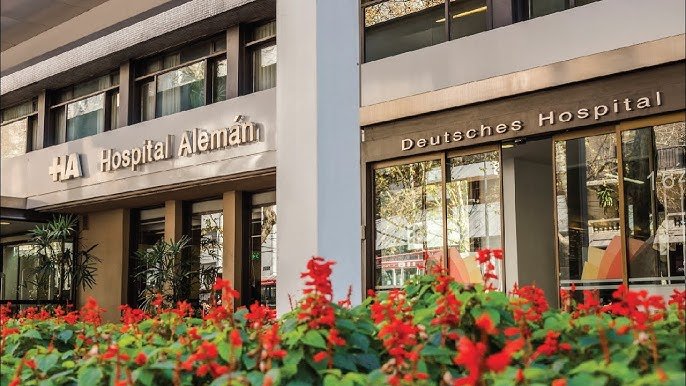
This is the first hospital I recommend to every expat. Hospital Alemán (literally “German Hospital”) has a long history of serving Buenos Aires’s international community and it shows — English communication is genuinely good here, the facility is modern after a major recent expansion, and the medical standards are consistently reliable.
Personal experience: when I cut my hand badly enough to need stitches, I went to Hospital Alemán’s Guardia (emergency department). The staff handled everything smoothly, the wait was reasonable, and the English-speaking nurse made the whole process significantly less stressful. For an emergency room visit in a foreign country, it went about as well as it possibly could.
Address: Av. Pueyrredón 1640, Recoleta (easy to reach from Palermo)
Other Reliable Options
- Hospital Italiano — another large, well-regarded private hospital with good specialist coverage and some English support
- Clínica Bazterrica (Recoleta) — smaller, high-quality private clinic popular with the Recoleta expat community
- Centro Médico Palermo — convenient for Palermo residents, good for general and specialist appointments without crossing to Recoleta
A note on Swiss Medical: I’ve used it, and while it’s a legitimate insurer with decent coverage, the experience for English-speaking expats is less smooth than Hospital Alemán. Not a dealbreaker, but worth knowing.
How to Use the Emergency Room (Guardia) in Buenos Aires
The emergency department in Argentina is called the Guardia. Walk in, explain your situation at the front desk, and triage will assess you. Here’s how to think about which type of facility to use:
| Situation | Where to Go |
|---|---|
| Minor injury or illness (cut, mild fever, stomach issues) | Nearest private clinic Guardia — faster, less crowded |
| Serious emergency | Hospital Alemán or Hospital Italiano Guardia — better equipped for complex cases |
| Life-threatening emergency | Call SAME (Buenos Aires emergency medical service): 107 |
Avoid public hospital Guardia departments unless you have no other option — wait times can stretch to many hours for non-critical cases. Private clinic emergency rooms are significantly faster and, with insurance, the cost difference is manageable.
Pharmacies (Farmacias) in Buenos Aires
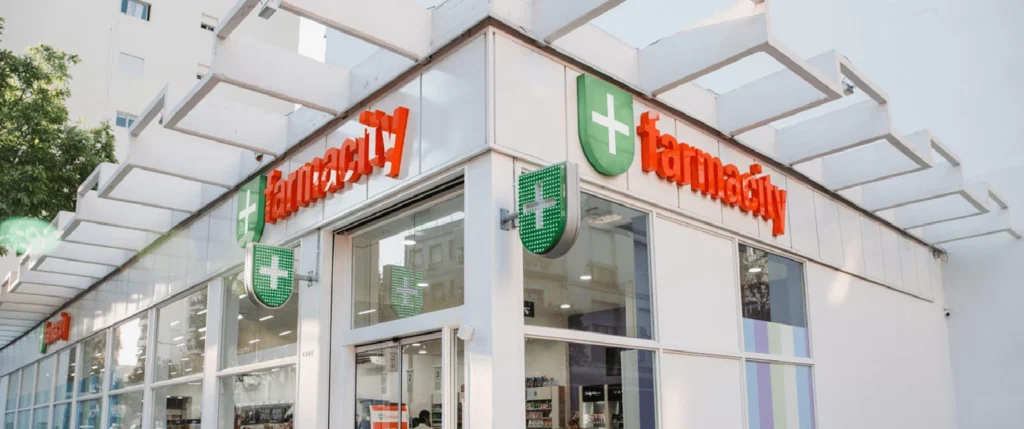
Buenos Aires has an extraordinary density of pharmacies — there’s genuinely almost one per block in Palermo and Recoleta. For most minor ailments, the farmacia is your first stop, not a clinic.
Best Pharmacy Chains
- Farmacity — the most widespread chain, clean, well-stocked, and staff are generally helpful
- Farmacia del Pueblo — reliable, often slightly cheaper than Farmacity
- Independent neighborhood farmacias — often fine, but stock can vary
Important Rules About Prescriptions
Some medications in Argentina require a prescription (receta) and will not be dispensed without one. This is more strictly enforced than in many Latin American countries. If you’re coming from a doctor’s appointment, always get your prescription before leaving — don’t assume you can describe the medication and have it dispensed without documentation.
If you have private health insurance, present your insurance card at the pharmacy — you can receive 40–50% discounts on many medications through your insurer’s pharmacy agreement. This is one of the more immediately useful benefits of having Argentine private insurance.
Useful Spanish Phrases for the Pharmacy
| What You Need | What to Say |
|---|---|
| Headache | “Necesito algo para el dolor de cabeza” |
| Cold / flu | “Necesito algo para la gripe” |
| Stomach problems | “Tengo problemas de estómago” |
| Fever | “Tengo fiebre” |
| Do I need a prescription? | “¿Necesito receta?” |
In Palermo and Recoleta, many pharmacy staff have some basic English. But even minimal Spanish gets you a long way — pointing and using a translation app works for most straightforward requests.
Healthcare Costs in Buenos Aires 2026
| Service | Cost Without Insurance (USD) | Cost With Private Insurance (USD) |
|---|---|---|
| General practitioner visit | $40–$80 | $5–$20 copay |
| Specialist consultation | $60–$120 | $10–$30 copay |
| Emergency room (Guardia) | $100–$250 | $20–$60 copay |
| Dental cleaning (básico) | $80–$150 | Varies by plan coverage |
| Basic medications (cold, pain relief) | $5–$15 | $3–$8 with pharmacy discount |
| Blood test panel | $30–$80 | Covered or small copay |
Compared to US healthcare costs, Buenos Aires is dramatically more affordable — even without insurance, a doctor’s visit or emergency room trip is a fraction of what it would cost in the United States. With private insurance (OSDE mid-tier at $150–$200/month), your out-of-pocket exposure for most situations is very low.
Before You Get Sick: A Healthcare Setup Checklist
- Enroll in private health insurance (OSDE, Swiss Medical, or Galeno) within your first month
- Get your insurer’s list of covered clinics and identify 2–3 near your apartment
- Register your preferred clinic with your insurer — don’t just have the card, actually complete the registration
- Save Hospital Alemán’s number and address: Av. Pueyrredón 1640, tel. 4827-7000
- Save the Buenos Aires emergency line: 107 (SAME — emergency medical service)
- Find your nearest 24-hour Farmacity location
FAQ: Healthcare in Buenos Aires for Expats
Do doctors in Buenos Aires speak English?
At Hospital Alemán and Hospital Italiano, English communication is reasonably good — enough to handle most consultations comfortably. At smaller private clinics, English coverage is more variable. In public hospitals, expect little to no English. If you’re not yet confident in Spanish, stick to Hospital Alemán for anything more than minor pharmacy purchases.
Can foreigners use Argentine private health insurance?
Yes. OSDE, Swiss Medical, Galeno, and other prepagas accept foreigners with a valid visa and CUIL (Argentine tax ID number). You don’t need permanent residency or a DNI to enroll, though requirements vary slightly by insurer. Contact the insurer directly or use a broker who specializes in expat enrollment — the process is straightforward once you have your CUIL.
What is the emergency phone number in Buenos Aires?
For medical emergencies: 107 (SAME — Sistema de Atención Médica de Emergencias, Buenos Aires city ambulance service). For police: 911. For fire: 100. Save all three in your phone before you need them.
Is it safe to buy medication at Argentine pharmacies without a prescription?
For basic over-the-counter medications (pain relievers, cold medicine, antacids, antihistamines), yes — these are dispensed freely at any farmacia. For antibiotics, stronger medications, or controlled substances, a prescription is required and will be asked for. If you arrive in Buenos Aires with regular prescriptions from your home country, bring documentation and ideally get a local doctor to reissue them through the Argentine system.
The Bottom Line
Healthcare in Buenos Aires is genuinely better than most expats expect — particularly if you come from the United States and are used to long waits, high costs, and insurance complexity. Private care here is fast, affordable, and at the better hospitals, English-friendly. The system rewards people who set it up proactively: get your insurance, register your clinic, know your emergency numbers. Do that in your first month and you’re well positioned for whatever comes.
Related Reading: