
Last updated October 21, 2026. Figures and links were rechecked on October 20, 2026. Prices are in US dollars first, with pesos alongside, converted at the official Banco Nación (BNA) rate of ARS 1,545 per dollar on October 20, 2026, unless another date is given.
On the western side of Buenos Aires, in the barrio of Flores, there’s a street called Avenida Avellaneda. On a weekday morning it’s full of people carrying huge plastic bags in both hands. Most of them aren’t tourists. They’re shop owners up from the provinces and people who sell clothes on Instagram.
I lived in Buenos Aires from 2017 to 2024, and I walked this neighbourhood more often than I’d planned to. It was cheap, fast, loud and always crowded. From 2025, though, the mood changed. Empty shopfronts started to appear, and the busloads of wholesale buyers thinned out.
There are several reasons: people are spending less, and rents and taxes are high. But if I had to pick the one that matters most, it would be this: Shein and Temu have arrived, and they are very likely to take exactly the place Flores used to hold. This post walks through that story with the numbers.
The key numbers at a glance
- USD 894M: Argentina’s courier (international express) imports in 2025, up 274% on the year before (CACE, reported by La Nación on 2026-02-05)
- USD 855M: courier imports in January–August 2026, already close to the full 2025 total (Analytica, La Nación 2026-09-22)
- About 40%: August 2026 courier imports (USD 104M) as a share of clothing, sports, electronics, furniture and toy sales at roughly 70 shopping malls. In 2024 it was under 10%
- 23% / 20%: share of shoppers who used Temu / Shein for their latest cross-border online purchase (CACE–Kantar, first half of 2026; 10% / 8% in 2025)
- 45.3%: textile industry capacity use in July 2026 (Pro Tejer)
- 28,322 / 1,042: registered textile, clothing, leather and footwear jobs / businesses lost between December 2023 and June 2026 (Pro Tejer)
- 10 → 26: empty shops on Avenida Avellaneda, November–December 2025 vs January–February 2026 (CAC survey)
1. What the Flores wholesale district really is
Made nearby, sold straight away
The heart of Avenida Avellaneda is simple: make it, then sell it right away. Behind the shop, in a building nearby or out in the suburbs there’s a taller, a sewing workshop. Clothes made there can be on the rail within days. Some brands choose their own fabric and cut their own patterns; other shops simply resell stock from someone else.
It’s bigger than it looks. In 2023 the traders’ association said there were more than 10,000 shops across 65 blocks, roughly along Avenida Avellaneda from Gualeguaychú to Condarco, plus Nazca and the side streets in between. That’s the association’s own estimate, not an official statistic.
Who buys here?
The main customers aren’t individual shoppers. They’re people who resell.
- Shopping-tour buses: buyers rode overnight from the provinces, and in the past from Uruguay and Brazil too, spent the whole day buying, then rode home.
- Small resellers: neighbourhood boutique owners, street vendors, and people selling on Instagram and WhatsApp.
- Remote orders: the catalogue arrives on WhatsApp, payment goes by bank transfer, and a freight company (transporte) carries the goods to the provinces.
That’s how clothes made here end up in small shops all over Argentina. A T-shirt bought in a provincial town very often started life in Flores.
The links to La Salada and Once
Flores doesn’t work alone. Much of the fabric and trimmings comes from wholesalers around Once, and the cheapest end of the market is covered by La Salada, the giant market in the suburbs.
A CONICET study by researcher Gustavo Ludmer found that about two-thirds of Argentina’s clothing is made and sold through two informal wholesale circuits, La Salada and Flores. He estimated that, as of November 2018, around 211,700 people made the clothes sold in these two places, about 193,000 of them informally employed. It’s an old estimate and today’s numbers will be different, but it shows how many livelihoods depend on this market.
There’s an uncomfortable fact here too. This circuit includes unregistered workshops, the so-called talleres clandestinos. Long hours and cramped spaces where people both live and work keep turning up in the records of PROTEX, the federal prosecutors’ unit on trafficking and exploitation. That doesn’t mean every shop is like this. But I think it’s right to know where part of the “cheap price” comes from.
The slowdown in numbers, 2025–2026
- In a survey by the Chamber of Commerce (CAC), Avellaneda was the shopping street where vacancies grew the most in January–February 2026: empty shops went from 10 to 26 in two months (+160%), and were up 73.3% on the same period a year earlier. In El Cronista’s report, a property broker says a quick recovery is unlikely “because Chinese platforms are selling the same products”.
- In a May 2026 TN street report, traders said about 30% of the shops were empty. Rent for a small unit inside a galería was about USD 1,600 (ARS 2.5 million) a month, and with rent, building fees and other fixed costs the total could reach about USD 3,200 (ARS 5 million). One trader said covering that rent meant selling 70–80 pairs of jeans a day, while these days they were selling 20–30. (Peso amounts as reported in May 2026; dollar conversions at the BNA rate of 1,545 on 2026-10-20.)
- The city also restricted shopping-tour buses from entering the area, citing traffic. With buses now stopping several blocks away, fewer wholesale buyers come with their heavy bags, and traders rank this as big a problem as Shein and Temu.
2. How Shein and Temu are taking that demand
The rules changed
From late 2024 the courier rules were loosened a lot. This is how small personal imports work now, according to ARCA’s (customs) courier page:
- No import duty or statistics fee up to FOB USD 400 per shipment
- The exemption can be used five times per person per year
- The cap for a single courier shipment is USD 3,000
- But VAT (IVA, 21%) still applies. It isn’t fully tax-free
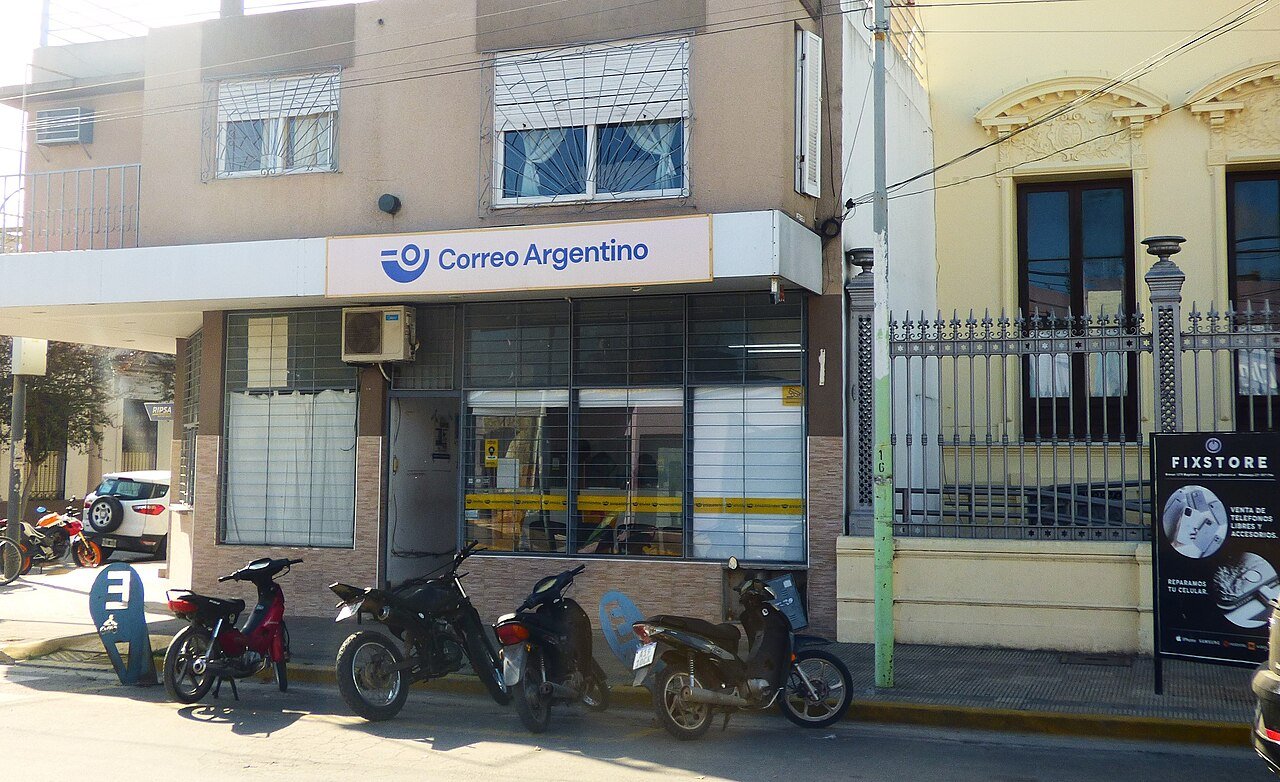
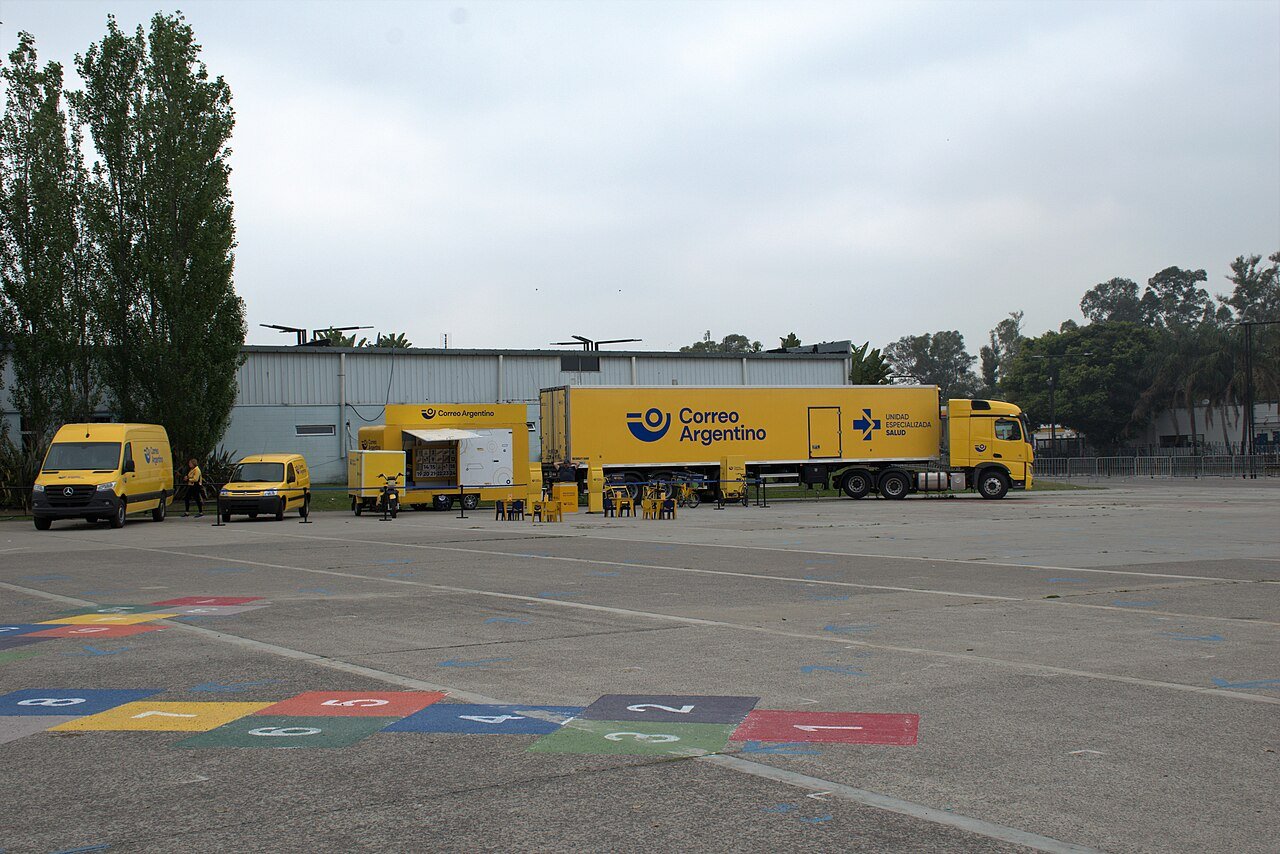
In July 2026, Decreto 604/2026 brought parcels sent through the state post office, Correo Argentino, onto the same terms (USD 400, five times a year). Postal imports used to follow different rules, such as twelve shipments of USD 50. For buyers, it simply means one more route has opened.
How much is coming in?
- Courier imports reached USD 894M in 2025, up 274% on the year before.
- January–August 2026 already adds up to USD 855M, 71.1% more than the same period a year earlier. The monthly figure peaked at USD 125M in June, then eased to USD 108M in July and USD 104M in August.
- According to La Nación (2026-09-22), August’s courier imports were equal to about 40% of what the roughly 70 malls tracked by INDEC sold in clothing, sports, electronics, furniture, home goods and toys. At this pace, 2026 could pass USD 1,200M.
One honest caveat: there’s no official figure for how much of the courier total is clothing alone. CACE itself said clothing and cosmetics make up a large share but there’s no exact breakdown. There are indirect signs, though. In the CACE–Kantar survey for the first half of 2026, non-sports clothing and footwear rose from fourth to second place (17%) among categories bought abroad, with sportswear and sports footwear right behind at 16%.
Who is winning the orders?
In the CACE–Kantar survey reported by Forbes Argentina, Mercado Libre’s international listings are still the top choice for cross-border online shopping at 31%. Next come Temu at 23% and Shein at 20%, up from 10% and 8% a year earlier. Temu grew especially fast among people over 65, and Shein among women.
Why it hits Flores so precisely
Flores was good at three things: low prices, catching trends quickly, and reaching the whole country. Shein and Temu go after all three at once.
- Price: a CIS report from UADE university found that Shein’s final prices are often “equal to or lower than wholesale prices in Flores and Avellaneda”, and that’s for a single item delivered to your door.
- Trends: new items go up every day, with glossy photos, reviews and measured sizes.
- Reach: shoppers in the provinces used to pay more because of the middlemen in between. Now they skip the reseller and get the parcel directly, which collides head-on with Flores’ core customers, the provincial resellers.
To be fair, the same report also points to Shein’s thin fabrics, high polyester content and weak finishing, and delivery takes around 20–25 business days. Looking cheap and fast is not the same as being good quality.
3. Squeezed from below and above: local producers under double pressure
Pressure from below: courier parcels
As we’ve just seen, single-item orders now compete directly with the cheapest end of the wholesale street.
Pressure from above: international chains and formal imports
- Lower tariffs: under Decreto 236/2025, from late March 2025 import duty on finished clothing and footwear fell from 35% to 20%, and on fabric from 26% to 18%.
- Mango is back: in early October 2026 it opened a store of more than 500 m² at Alto Palermo. Its operator, Grimoldi, said Mango has no plans to produce in Argentina, so the business is 100% imported.
- H&M: reported to be opening its first store in 2027, at the same Alto Palermo mall.
When the middle class decides to “pay a bit more and get something decent”, it now has more places to go. Flores is losing customers at the cheap end and at the slightly-pricier end at the same time.
And people are simply buying less
The numbers in Pro Tejer’s September 2026 bulletin are heavy. I rechecked them:
- Textile industry capacity use was 45.3% in July 2026 (down 17.9 points from July 2023). The January–July average was 40%, the lowest on record apart from the 2020 pandemic.
- Between December 2023 and June 2026, registered jobs in textiles, clothing, leather and footwear fell by 28,322 (-23.4%), about a third of all manufacturing job losses in that period.
- Over the same period the sector lost 1,042 businesses (-17%), 498 of them in clothing alone.
Keep in mind these figures count registered (formal) jobs only. A large part of Flores runs on informal work, so the real impact doesn’t fully show up here. At the same time, it would be wrong to blame the whole decline on Shein and Temu. Analytica and Pro Tejer both see weaker spending after falling incomes as the biggest cause, with courier imports pouring fuel on the fire.
Costs make it worse. Rents rarely come down, the tax burden is heavy, and the more formally a business operates, the harder it is to compete on price with informal neighbours or online sellers working from home. That’s why traders say, “When we import, we pay a pile of taxes, and they don’t.”
There’s another side, too
Not everything points the same way.
- Imported fabric got cheaper. With lower duty on fabric, small workshops that buy cloth and only do the sewing have seen some of their costs fall.
- Some shops are holding on online. Many keep trading with provincial resellers through WhatsApp catalogues, their own web shops and parcel delivery. Fewer people walk in, but the orders keep coming.
- Clothing prices have calmed down. That’s good news for shoppers: clothing and footwear prices rose just 4.5% in January–August 2026, against 21.3% for inflation overall (INDEC data, reported by Clarín).
4. Why Flores clothes often didn’t suit foreign shoppers
From here on, this is my opinion, based on my own experience. It comes from years of buying and wearing clothes from these shops and tagging along when friends went shopping. It doesn’t apply to every shop.
You could always find cheap clothes in Flores. But for a foreign shopper they often just didn’t quite work. Here’s why, as I saw it.
- Fabric: even at the same price, pieces were often thin, stretched out after one wash, or pilled quickly. Then again, I sometimes found a surprisingly thick, decent knit. Quality varied a lot.
- Finishing: loose threads, crooked seams, sleeves that weren’t quite the same length. Pricing for resellers seemed to leave little time for quality checks.
- Sizing: this was the big one. The same “M” changed from shop to shop, and even from season to season in the same shop. Talle único (one size) was common. And many wholesale shops didn’t let you try things on. The head of the traders’ association has said as much: it’s a wholesale district, so there are no fitting rooms.
- Style: Flores followed local trends very quickly, which is a strength. But those trends were quite local, so if I was looking for the basics I knew from abroad, there wasn’t much to choose from.
The sizing problem isn’t just my impression.
- Argentina passed a national sizing standard law (Ley 27.521, SUNITI) in 2019, but the standard size chart still hasn’t been properly put into practice.
- In the NGO AnyBody’s 2024 national sizing survey, 54% of respondents said they struggle to find clothes in their size, and 64.6% said the clothes they wanted came only in “one size”.
- A 2025 study of brands selling online found that 93% didn’t comply with the City of Buenos Aires sizing law (Salud Pública, the journal of the Buenos Aires Province health ministry, 2026).
And Shein and Temu? They catch trends incredibly fast and offer a wide size range (the UADE report mentions a “curvy” line going up to 5XL). Each listing has a measurement chart, model photos and reviews with buyers’ own photos, so you get much more information about whether something will fit before you buy. Still, what arrives often looks different from the photos or is made of thin fabric. Having more information isn’t the same as getting better quality.
Flores still has real strengths
To be fair, Flores was never built for foreign visitors, and it isn’t right to judge it by that standard.
- Prices that work for resellers: if you buy several pieces to resell, it’s still competitive.
- Fast restocking: a model that sells well can be remade and back in the shop within days. No waiting three weeks for delivery.
- You can see and touch it: you can feel the fabric and walk out with it the same day.
- Local jobs: sewing, cutting, transport, street stalls. A whole neighbourhood economy hangs on this street.
- Real bargains exist: if you choose carefully among basics such as knitwear, outerwear, kids’ clothes, underwear and socks, you can find good pieces. Some brands that make their own clothes also finish them well.
Comparison: Flores wholesale vs Shein and Temu vs mall chains
All prices are approximate. Dollar figures are converted at the BNA rate of ARS 1,545 on 2026-10-20.
| Item | Flores wholesale (Avellaneda) | Shein and Temu (courier) | Mall chains (e.g. Mango at Alto Palermo) |
|---|---|---|---|
| Basic T-shirt | About USD 5–8 (about ARS 7,500–12,000). Estimate: prices listed in wholesale online catalogues, October 2026 | About USD 4–10 + 21% IVA. Estimate: range of platform listing prices | From USD 26 (from ARS 40,000). Source: Clarín |
| Jeans | About USD 7–15 (about ARS 10,000–23,000). Estimate: same catalogues as above | About USD 15–30 + IVA. Estimate | About USD 78 (about ARS 120,000). Source: Clarín |
| Quality | Very uneven; choose carefully and some pieces are good | Thin fabric and weak finishing often reported (UADE) | Fairly consistent |
| Sizing | Varies by shop, one-size common, trying on often impossible | Wide range (up to 5XL), size charts and reviews | International size charts, fitting rooms |
| Speed | Buy on the spot, restocks in days | Delivery in about 20–25 business days | Buy on the spot, seasonal collections |
| Main buyers | Resellers, provincial traders, price-sensitive local shoppers | Broad: provinces, young people, women, older shoppers | Middle class and up, brand-minded shoppers |
| Payment | Cash discounts common; bank transfer, Mercado Pago | Card, international payment | Card, instalments |
The T-shirt and jeans prices don’t compare like-for-like quality. The table shows the price range you typically see in each channel.
Practical box: should you shop in Flores as a visitor?
Short answer: for a look around and some basics, it’s well worth a visit. Just don’t expect “easy” shopping, or you may come away disappointed.
- When to go: weekdays are mostly wholesale. On Saturday mornings (roughly 8 a.m. until a bit after 2 p.m.) many shops sell retail. Lots of shops close on Sundays. Hours vary, so check each shop’s Instagram.
- Expect minimum purchases. Weekday wholesale prices often came with conditions like “three pieces or more” (as reported in 2023). Some shops set a minimum spend instead; one brand, for example, had a minimum order of about USD 39–52 (ARS 60,000–80,000). Others will sell you a single piece at the retail price.
- Cash is easiest. Many shops give a 5–10% discount for cash or bank transfer. If you don’t have a local bank account, cash is the most realistic option. Some shops don’t take cards, or only take them for wholesale orders.
- Many shops have no fitting rooms. Bring a tape measure, or note down the measurements of clothes that fit you well. Don’t count on exchanges or refunds.
- Safety basics: it’s crowded and the pavements are narrow. Don’t keep your phone out in your hand for long, and wear your bag in front. Split up larger amounts of cash, and once the shopping bags pile up, call it a day early. This is common-sense advice for any busy shopping street in the city.
- Getting there: it’s within walking distance of the Flores end of Subte Line A (San José de Flores and Carabobo stations).
- Data for the day: finding shops on a map or checking a price against Shein is easier with mobile data, and planning your route before you set off means less time with your phone out on a crowded street. If roaming on your home plan is expensive, an option is a data-only travel eSIM (it gives you no local +54 number). I’d look at Simsima’s Argentina plans, from about USD 5 for 1 GB/7 days as of November 2026. That’s an affiliate link, so I may earn a commission at no extra cost to you. Check that your phone is unlocked and eSIM-capable first.
FAQ
Q. Is buying from Shein or Temu really tax-free?
No. Up to USD 400 per shipment you’re exempt from import duty and the statistics fee, but you still pay VAT (IVA, 21%). The exemption can be used five times per person per year. Since 2026, postal shipments through Correo Argentino follow the same rules.
Q. Does this mean Flores is closing down?
No. Vacancies have clearly gone up, but the street is still working. It’s more accurate to say sales are moving from the shop floor to online orders.
Q. Is Avenida Avellaneda OK for a tourist to visit alone?
In the daytime, especially on Saturday mornings, it’s busy and good for browsing. Just keep an eye on your belongings as you would in any crowded market.
Q. Are Flores clothes really more expensive than Shein?
It depends on the item. The UADE report found that Shein’s final prices are often equal to or lower than Flores wholesale prices. Still, being able to see what you’re buying and take it home the same day is a real advantage for Flores.
Q. Will Mango and H&M compete with Flores?
They don’t share exactly the same customers. But shoppers who want “clothes with consistent quality and sizing, even if they cost a bit more” may head that way. That’s why people say Flores is being squeezed from above and below at once.
Wrapping up: which futures are possible?
Putting it all together, I can see a few paths.
- Adapt: Flores survives through online wholesale, fast restocking, better finishing and proper size charts. Some shops are already on this path.
- Shrink: the street survives, but smaller. Reports already describe Chinese-run household goods shops, supermarkets and gyms moving into former clothing shops.
- Rules change: if the courier rules tighten again, or loosen even further, the game changes again. For now, the direction is towards opening up.
- Spending recovers: if incomes recover, the whole neighbourhood’s shops could get some breathing room, courier imports or not.
Shoppers have gained cheaper, wider choices. At the same time, tens of thousands of jobs and the character of a whole neighbourhood are being shaken. How you weigh those two things will depend on you, and I’ll leave that judgement to you.
Rules, tax rates, exchange rates and prices here were checked on October 20–21, 2026, unless another date is given. In Argentina they can change overnight by decree, so check ARCA and the Boletín Oficial before you buy. This is general information, not tax or legal advice.