
Last updated November 11, 2026. Dollar amounts come first; pesos are converted at the Banco Nación (BNA) selling rate of ARS 1,570 per dollar on November 11, 2026.
The question arrives every year, usually from someone packing in a northern winter: how bad is summer in Buenos Aires? Is it “brutally hot,” or is that just something people say?
I lived in the city from 2017 to 2024, and the honest answer is that the thermometer is only half the story. Average afternoon highs sit around 26°C in November and about 30°C in January — uncomfortable, not exotic. What wears you down is the humidity, the way apartments hold the heat overnight, and the fact that when a heat wave lands, the air conditioning you are counting on can stop with the power.
Quick answer: A Buenos Aires summer (roughly November through March) is hot and sticky rather than extreme on paper. January is the hardest month: many residents leave, some shops and restaurants run shorter hours, and a long heat wave can bring power cuts. Pack light clothes and comfortable trainers, use repellent, and plan indoor time in the early afternoon. This is not a reason to cancel a trip. It is a reason to arrive with a clearer picture than the average high.
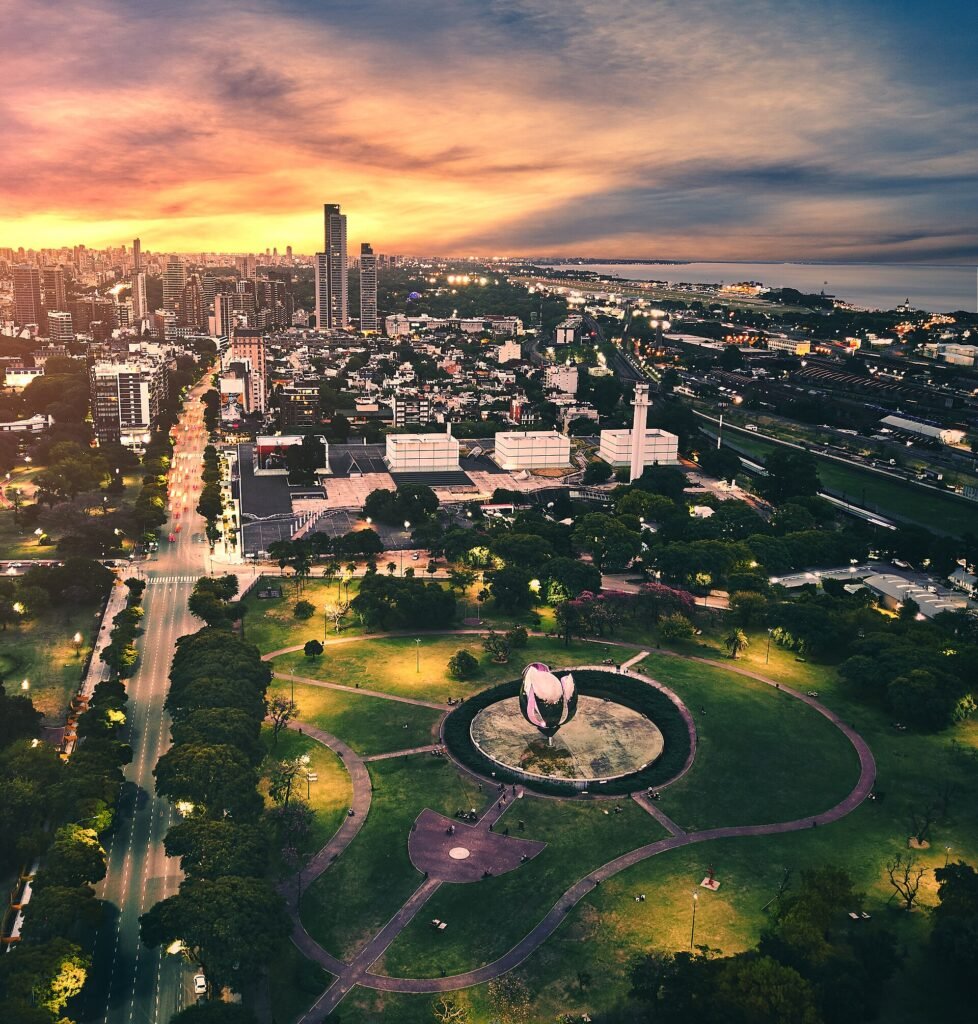
What a Buenos Aires summer actually feels like
At the city’s Observatorio, average daily highs are about 25.6°C in November, 28.5°C in December, 30.1°C in January, 28.6°C in February and 26.8°C in March. January nights still average around 20°C, which is why a bedroom that baked all afternoon does not magically recover after dark (SMN Observatorio series, compiled on Wikipedia).
Those numbers confuse people who have lived through hotter, drier summers. I used to hear the same objection: if the average high is only around 30°C, why does everyone call it unbearable? Humidity is a large part of it. So is the city itself — dense buildings, not much breeze on many afternoons, and the river adding moisture to the air. On a still day you feel sticky stepping outside, and you feel it again walking back into an apartment whose floors are tile or concrete. Those floors are a relief in a brief way; they do not stop a flat from holding heat.
A simple month-by-month picture, from the years I was there and from those averages:
- November. Summer is starting, not peaking. Pleasant mornings, warm afternoons, and a good month to walk more than you will in January.
- December. Heat and humidity build. The holiday season starts to change opening hours toward the end of the month.
- January. The hardest stretch. Average highs around 30°C, many residents away at the coast or in the interior, and a quieter city that can also feel emptied-out.
- February. Still hot, usually a touch less fierce than January, with the same afternoon rhythm.
- March. The heat eases. Mornings feel usable again.
If you are choosing months for nightlife or for a first stay, February is often a little easier than January — slightly milder, and more of the city is back. That is a pattern, not a guarantee about any one week.
The part nobody warns you about: AC, bills and power cuts
Buenos Aires apartments are built with summer in mind, but “in mind” usually means an air-conditioning unit in the main rooms, not a building that stays cool on its own. During the summers I spent there, a day in the low thirties was manageable if the AC ran. It was a different afternoon if the power went out.
That is not a historical footnote. On 15 January 2026, in the middle of a heat wave with the thermometer around 35°C, a large outage in the metro area left hundreds of thousands of households without power at the same time — on the order of 600,000 users at the peak, according to the national regulator’s figures reported that day (La Nación, 15 January 2026). Cuts of this kind have also shown up in earlier heat waves, and they are not evenly spread. Service quality has recently been weaker in parts of the Edesur area, in the south of the city and the southern suburbs, than in much of the Edenor area to the north (IAETES review of April 2025–May 2026, reported 19 June 2026). Former energy official Emilio Apud has already said that this coming summer can still bring interruptions if high temperatures last several days, even if they are not as long as in worse years (BAE Negocios).
I cannot quote a 2026 electricity bill from my own kitchen — I left in 2024 — and you should not trust a blog that invents one. What I can say is that running AC all day will show up on the bill, and after the 2025–2026 tariff review, electricity in the metro area is no longer the cheap line item it once was. If you are renting, ask whether the unit has AC that actually works, and whether electricity is included. If you are visiting, a hotel or short-let with a working unit and a backup plan (water, a charged phone, some cash, a cooler bag) matters more than it would in a dry, reliably powered city.
Practical habits that helped in the years I was there: close shutters or curtains against the afternoon sun, cool the room you are actually in, and do errands early. Keep some drinking water on hand that does not depend on an electric pump if your building has one. I would not plan a work-from-home day that assumes the internet and the AC will both hold through a 35°C afternoon.
What to wear in Buenos Aires in summer
“What to wear in Buenos Aires?” is one of the first questions visitors ask, sometimes in the same breath as a Patagonia packing list. For the city in summer, the useful version is simpler than a style guide.
Light, breathable fabrics — cotton or linen rather than tight synthetics — and clothes you can walk in for hours. Trainers or other flat, comfortable shoes beat heels. Visitors complain, fairly, that a lot of pavements are uneven or cracked; that was true in the years I lived there, and it has not magically improved. A hat, sunglasses and sunscreen are not optional at midday. A very light layer is worth the space in your bag, because indoor air conditioning, when it is working, can be fierce.
People do wear shorts, dresses and T-shirts. You do not need formal “travel outfits” for ordinary days in Palermo or downtown. What I would still avoid is looking obviously expensive on the street — flashy jewelry, a conspicuous camera strap, a bag left open on a café chair. That is the same advice I give in the safety guide, and it does not change because the weather is hot.
Mosquitoes and dengue — what is worth doing, and what this post is not
Every summer, someone asks whether dengue is “going to return,” and whether they should cancel. Dengue transmission is a seasonal risk in Argentina, including in the metro area, and the City of Buenos Aires has already launched its prevention, control and surveillance campaign for the 2026/2027 season — emptying standing water, reporting breeding sites, and using repellent (CABA Health Ministry campaign).
The sensible visitor habits are ordinary ones: use repellent, especially around dawn and through the day (this mosquito is not only a dusk insect), don’t leave water sitting on a balcony, and be more careful after rain and near large parks. I would not cancel a trip solely because it is summer. I also would not pretend the risk is zero.
This is not medical advice. I am not a doctor, and I am not going to tell you whether to get a vaccine, which product to use, or how to treat a fever. If you have questions about vaccination or symptoms, ask a clinician who can look at your own situation. If you feel seriously unwell, use the healthcare guide as a starting point for how the system works, then get proper care.
January closures, and when the city goes quiet
One thing visitors underestimate is the calendar, not the heat. A lot of people who live in Buenos Aires leave in January. Some restaurants, shops and smaller offices run shorter hours, or close for a week or two. Christmas Eve, Christmas Day, New Year’s Eve and 1 January are in a category of their own: large parts of the city go very quiet, supermarkets are often shut on the 25th and the 1st, and late-night taxis get scarce and expensive. I will write a separate holiday-hours piece closer to December; the summer point is that January is both hotter and less fully staffed.
That is also why, in the day-trips guide, I already suggest avoiding January and February for Tigre, Colonia and the other usual escapes if you can. The heat makes the day harder, and half the city is trying to leave at the same time.
Where to go when the heat is the point of the day
Do the outdoor walking early. Buenos Aires rewards a 8 a.m. start in January in a way it does not at 2 p.m. Save the afternoon for places with a roof and air conditioning: museums, bookshops, cinemas, shopping malls, and cafés you actually want to sit in. The Palermo Chico guide already covers MALBA as a calm indoor stretch; the four-day itinerary has other indoor stops if you are only here briefly. For getting between them in the heat, the SUBE, Uber and Subte guide is more useful than a long walk down a treeless avenue.
If you would rather book indoor tickets in one place — a Teatro Colón visit, MALBA, or another museum — Tiqets lists Buenos Aires attractions. That’s an affiliate link, so I may earn a commission at no extra cost to you. Official box offices and museum sites exist too, and they are often cheaper; use Tiqets when the convenience of a single English-language booking is what you want, and check the date and what’s included before you pay.
When you need to leave the city for a night or a weekend, think about a flight more than a same-day outing in January. The coast, Córdoba, or a longer jump up to Iguazu will feel like a different climate, not just a different café. I compare fares on Kiwi. That’s an affiliate link, so I may earn a commission at no extra cost to you. For how domestic flights actually work in Argentina right now, including the mess after Flybondi’s collapse, see the domestic flights guide rather than this page.
A short summer checklist
- Pack light clothes, trainers, a hat, sunscreen and a light layer for indoor AC.
- Ask about working air conditioning if you are renting; don’t assume the building will stay cool on its own.
- Keep drinking water, a charged phone and some cash in case a heat-wave cut lasts a few hours.
- Use repellent and don’t leave standing water on a balcony. For anything medical, talk to a clinician, not a blog.
- Walk early, go indoors in the early afternoon, and treat January as a quieter, hotter month — not a normal week with better weather.
FAQ
How bad is summer in Buenos Aires? Is it brutally hot?
It can feel that way, mostly because of humidity, still air and apartments that hold the heat, not because everyday highs are desert-like. January is the hardest month. Plan around the afternoon, and it is manageable.
What should I wear in Buenos Aires in summer?
Light, loose clothes you can walk in, trainers rather than heels, a hat and sunscreen, plus a light layer for indoor air conditioning. You do not need formal outfits for ordinary city days.
I heard that January can be very hot and that many locals leave. Is February better?
February is usually a little milder, and more of the city is back. January is hotter and quieter. Both are proper summer. If your main aim is nightlife and a full restaurant calendar, February is the kinder of the two.
Is the dengue virus going to ruin a summer trip?
It is a seasonal risk, not a reason by itself to cancel. Use repellent, avoid standing water, and see a clinician if you have symptoms or questions about vaccines. This post is not medical advice.
Is Buenos Aires worth visiting in summer?
Yes, if you like long evenings, and if you accept slower afternoons and a quieter January. It is a different city from the June–August version I described in the winter survival guide — not a worse one, if you pack and plan for it.
Related reading: Buenos Aires Winter Survival Guide · Day Trips and Weekend Getaways · Buenos Aires 4-Day Itinerary · Buenos Aires Safety · Getting Around Buenos Aires · Healthcare in Buenos Aires
Weather averages, public-health notices and power-system reports were checked on November 11, 2026, and they change. This is not medical, legal or financial advice.