
Last updated November 6, 2026. Dollar amounts come first; pesos are converted at the Banco Nación (BNA) selling rate of ARS 1,570 per dollar on November 6, 2026.
The first time I paid for a coffee in Buenos Aires by scanning a sticker taped to the counter, I thought it was a gimmick. A few years later, it was the bank branch that felt like the gimmick. I’d stand in a queue with a numbered ticket for something small, while the kiosk next door took payments from a dozen phones in the time it took me to reach the front.
During my years in Buenos Aires, from 2017 to 2024, I watched apps like Mercado Pago quietly do the job banks never quite managed. This post is my attempt to explain why that happened, using current 2025–2026 data rather than nostalgia: why bank accounts feel hard and expensive, why dollars are still awkward, what Mercado Pago actually is, who else is in the game, and the fight now going on between banks and fintechs.
If you want the practical “how do I use it” guide, I’ve written a separate one on Mercado Libre and Mercado Pago in Argentina. This one is about the why.
Quick answer: Fintech works in Argentina because banks are slow, fee-heavy and still carry the memory of 2001, while the Central Bank built open, interoperable payment rails (CVU accounts, universal QR codes) that let apps compete on equal terms. By the end of 2025, 81% of Argentines with an account had one at a digital-only provider. Mercado Pago is the giant, but Ualá, Naranja X, Brubank, Personal Pay, Prex, Lemon, MODO and Cuenta DNI are all big. Two caveats for readers outside Argentina: tourists usually cannot open Mercado Pago without a DNI (a foreign Visa/Mastercard or Apple Pay/Google Pay is the everyday workaround), and even in 2026 you still need a bank for some things, including a local salary and buying official dollars.
Why a bank account in Argentina feels hard (and costs money)
On paper, it should be easy
This surprised me when I looked it up properly. Argentine rules are quite generous on paper. Every bank must give you a free peso savings account with a free debit card if you ask for one, and it can’t force you to buy anything else with it (BCRA). People with no bank account at all can ask for a Cuenta Gratuita Universal. Even migrants with only a temporary precaria residence permit are officially allowed to open a free peso account with their passport (Argentine government, “Cuenta para migrantes”).
In practice, it’s a different story
The reality I lived through, and that I described in my Argentina vs Paraguay bank account comparison, was another thing entirely. Branch staff often wanted a full DNI (the national ID card), a CUIL or CUIT tax number, proof of address and proof of income, and some simply said no to foreigners with a precaria. Two small updates to what you might read elsewhere: the CUIL comes from ANSES, the social security agency, and the old tax agency AFIP no longer exists. It was replaced by ARCA in October 2024.
That gap between the rule and the branch desk still shows up in English-speaking expat threads in 2026. People with a precaria and a CUIL report being turned away at Galicia, Santander, Banco Nación and Banco Ciudad because staff want a plastic DNI, then succeeding only after asking for the manager or trying another private-bank branch. Persistence is part of the process, not a failure of yours.
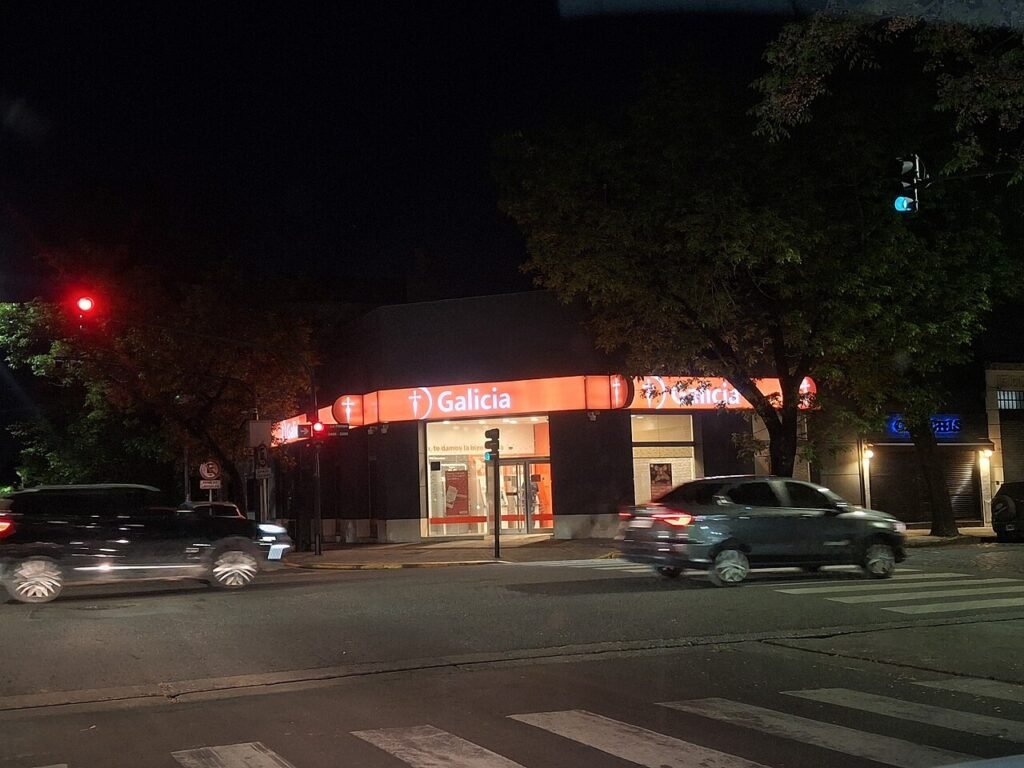
Then there’s the cost. That free account is real, but it’s basic. The moment you want a credit card, a dollar account or a current account, you’re usually pushed into a “package”. In November 2026, according to the BCRA’s fee data, a basic package cost:
| Bank | Monthly fee (Nov 2026) |
|---|---|
| Galicia | about USD 21 (ARS 33,000) |
| Banco Nación | about USD 22 (ARS 34,636) |
| Banco Provincia | about USD 20 (ARS 32,000) |
| BBVA | about USD 22 (ARS 34,000) |
| Santander | about USD 26 (ARS 40,222) |
| Supervielle | about USD 26 (ARS 41,000) |
Source: BCRA fee comparison via elcotizador.com.ar. Fees are often waived if your salary is paid into the bank.
That’s roughly USD 240–310 a year (ARS 384,000–492,000) just to have the account most people actually want. A wallet app charges nothing to open.
Branches are also shrinking. The number of bank branches fell 6.3% in 2025, and the average adult now takes cash out of an ATM 1.7 times a month, down from 2.7 in 2024 and the lowest since 2016 (BCRA Financial Inclusion Report, published April 2026). The same report notes that banks give generous withdrawal limits to their own clients and “very low” ones to everyone else. That rang true. I remember queuing for cash because the ATM limit was a joke.
The memory that never left: 2001
You can’t talk about banks in Argentina without the corralito. In December 2001, a decree limited cash withdrawals to $250 a week per person per bank, while the country’s economy fell apart (Decree 1570/2001). People who were adults then remember it vividly, and their children grew up hearing about it. Add decades of high inflation and years of currency controls, and you get a population that keeps a healthy distance from banks.
Even the Central Bank says so. In a February 2026 note, the BCRA and the financial intelligence unit (UIF) openly acknowledged the country’s “historically high levels of informality, recurrent macroeconomic instability, high inflation, exchange restrictions and distrust in the traditional financial system”.
When banks argued in early 2026 that salaries were safer with them than with apps, one lawyer on X joked that it was rich to hear banks explain reliability “after what happened in 2001” (@luisfkenny, February 2026). That one line sums up the mood better than any report I read.
Why dollars are still awkward, even without the cepo
For years, getting dollars in Argentina meant the cepo: a USD 200 monthly cap, extra taxes, and a thriving street market. On April 14, 2025, the government ended the cepo for individuals. Residents can now buy unlimited official dollars, and the gap between rates has almost vanished (La Nación).
That’s a huge change from my years there. But read the fine print in the Central Bank’s current rules (BCRA exchange regulations, updated September 2026) and you’ll see the catch:
- The purchase must be debited from your own account at a local bank. Pay with peso cash and you’re capped at USD 100 a month.
- The bank must see income or assets consistent with saving in dollars.
- After buying official dollars, you agree not to buy dollar-settled securities (the MEP/CCL route) for 90 days.
In other words, the “free” dollar is free only if you already have a bank or wallet account with traceable pesos. The dollar problem leads you straight back to the bank problem.
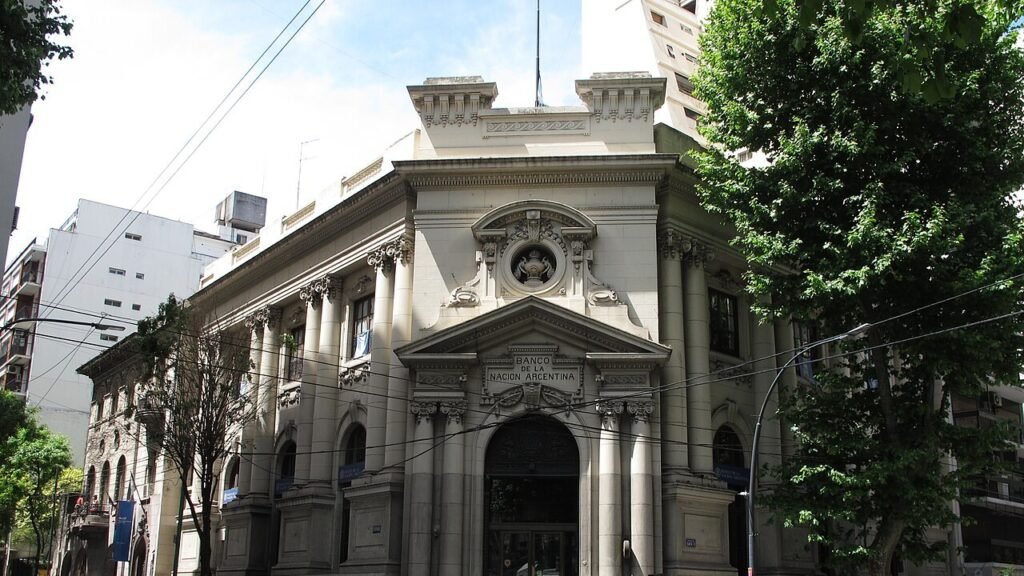
Foreigners and dual nationals. The rules depend on where you live, not your passport. Foreign residents with a DNI and a local account follow the same rules as Argentines. Non-residents need Central Bank approval to buy dollars, with one small exception: tourists can buy back up to USD 100 if the bank can see they sold at least that much in the previous 90 days (BCRA). As far as I can tell from the regulations, a dual national living abroad counts as a non-resident even with an Argentine passport. That’s my reading of the rules, not legal advice, so check with your bank.
The “dollars” you’ll hear about (November 6, 2026)
| Rate | ARS per USD | What it is |
|---|---|---|
| Official (BNA) | 1,570 | The bank selling rate |
| MEP | ~1,580 | Legal dollar bought via bonds; what wallets like Mercado Pago sell |
| CCL | ~1,670 | Legal dollar settled abroad |
| Blue | 1,555 | Informal cash market (today slightly below the official rate) |
| Card / “tourist” | 2,041 | Residents’ card spending abroad: official rate plus a 30% tax withholding |
Sources: BNA billete venta via InfoDolar / MonitorArgy, Nov 6, 2026; blue and financial dollars via El Cronista and La Nación same day. Crypto/USDT moves fast, so I left it out of the table rather than freeze a stale number.
What stands out to me is how the old story flipped. On November 6, 2026 the blue sat slightly below the official bank rate. Back when I lived there, the gap was often enormous and the blue was the expensive one. I wrote about those days in my blue dollar post, and the advice there about cuevas belongs to that era.
Cuevas, arbolitos and informal transfers: what they are, and why to avoid them
If you walked down calle Florida a few years ago, you heard it every few metres: “cambio, cambio”. Those were arbolitos, street touts who walked you to a cueva, an unlicensed exchange office somewhere upstairs or behind a shop. The dólar blue is simply the price of cash dollars in that market. The same informal networks also moved money across borders without anything actually crossing a border. Someone paid an operator abroad, a partner in Buenos Aires handed over cash, and the two settled up later.
Some things worth knowing:
- It’s illegal for the operators. Running an exchange without Central Bank authorisation breaks Argentina’s foreign-exchange criminal law (Law 19.359). In January 2025, a federal appeals court confirmed that Milei’s deregulation decree didn’t change that: operating a cueva “was, is and will remain” a crime (iProfesional).
- You have zero protection. No receipt and no one to complain to. Fake notes, short counts, being followed after a cash exchange, or a counterparty who simply vanishes with your transfer are all real risks.
- The reason to use them has mostly gone. After the cepo ended, the arbolitos “practically disappeared” from Florida, El País reported in May 2025. The gap is now tiny, and a new 2026 law (“Inocencia Fiscal”) tells banks not to ask about the origin of cash at the counter, requiring only ID for deposits above roughly USD 9,800. That makes it far easier to bring mattress dollars into the system legally. As one X user put it bluntly, people now mostly use cuevas when they can’t justify where their pesos came from (@JoseMar21616519, December 2025).
This is background, not a how-to. If you’re visiting, a foreign card or a service like Wise is simpler and legal. My exchange rates, cards and cash guide covers the visitor side.
Western Union and crypto dollars
Western Union still works, but it pays out in Argentina in pesos only: as cash, into a bank account, or into a Pago Fácil wallet using a CVU (Western Union Argentina). In the cepo years, people used it because its rate was close to the blue. With today’s tiny gap, that advantage has mostly gone. That’s my read, so compare the final peso amount before you send.
Crypto dollars (USDT) are where a lot of people now keep a “digital mattress”. Apps like Lemon (5.5 million+ users, according to its CFO in February 2026) are registered with the securities regulator, the CNV, as virtual-asset providers. Their own risk disclosures are clear that USDT isn’t a bank deposit and that yields aren’t guaranteed. Chainalysis counted USD 93.9 billion of crypto received in Argentina between mid-2024 and mid-2025, with stablecoins making up more than half of exchange purchases in pesos (Chainalysis, October 2025). One finance account on X noted in October 2026 that USDT was trading about 4% above the MEP dollar: that’s the premium people pay for dollars available 24/7, outside banking hours (@emprendedesdec1). A remote worker on X described going from being paid in dollars through Deel to a cueva for cash, to invoicing properly and converting through crypto apps instead (@Tonkio4, June 2026). That shift, from informal to app-based, is the whole story in miniature.
How Mercado Pago stepped in
I cover the practical side in my Mercado Pago guide, so here’s just the short version of why it works:
- A real account number without a bank. Every account gets a CVU, the wallet equivalent of a bank CBU, so money moves instantly between apps and banks, usually by sharing a word-based alias.
- QR payments everywhere, from supermarkets to the empanada stall.
- Money that earns something. Balances go into a money-market fund credited daily: about 19% a year in pesos in October 2026, similar to Ualá, Naranja X and Personal Pay (TN, Oct 13, 2026). Be honest with yourself, though. Inflation was 1.9% in September, and 19% a year works out to roughly 1.6% a month, so you’re still slightly behind.
- Cash in and out without a branch. You top up or withdraw at Pago Fácil and Rapipago counters using a code and your DNI, for a small fee.
- Dollars in the app. Since February 2025 you can buy MEP dollars inside Mercado Pago and leave them in a dollar fund.
- Credit for people banks ignored. Across Latin America, Mercado Pago’s loan book passed USD 16 billion in mid-2026.
Argentines vote with their thumbs. One investor on X wrote in June 2026 that his mother told him she’d bought dollars in Mercado Pago and “won’t buy at the bank any more” (@MisterPlanero). Another said people move money out of Banco Provincia into Mercado Pago simply because it pays interest daily (@CristianDuval, August 2026).
It isn’t all love. The news site Cenital ran a piece arguing Mercado Pago is “becoming the toughest bank for the poor” (@cenitalcom, August 2026), and in August Banco Provincia publicly disputed a viral claim that Mercado Pago’s loans were cheaper than its own. Its credit isn’t cheap, and across the region more than 18% of its loan book was over 90 days late in Q2 2026, according to the company’s own figures. Treat its loans like any expensive credit.
Is it a CBDC? My honest view is that, in practice, it felt like one. People got paid into Mercado Pago and paid out of it, and walked into a Pago Fácil when they needed cash. The balance worked like digital pesos. Technically, though, it isn’t. It’s a private company regulated by the BCRA as a payment service provider. Under those rules, the pesos in your account must be held in full at Argentine banks, and they aren’t covered by the deposit guarantee the way a bank account is.
For Mercado Libre’s business, the scale is striking. In Argentina it earned USD 1.84 billion in the second quarter of 2026, and almost two-thirds of that (USD 1.18 billion) came from Mercado Pago rather than shopping (El Cronista). The company says it has more than 25 million users in Argentina (its own figure).
It’s not just Mercado Pago
What people outside Argentina often miss is how crowded the field is:

| App | What it is | Latest figure I could find |
|---|---|---|
| Ualá | Digital bank (has a full banking licence) | 11M+ customers across the region; “nearly 1 in 5” Argentine adults has an account; raised USD 195M at a USD 3.2B valuation (Mar 2026) |
| Naranja X | Grupo Galicia’s fintech | 9.2M deposit accounts, 8.3M credit cards (Q2 2026) |
| Cuenta DNI | Banco Provincia’s wallet | 10M users, ~180,000 merchants (Aug 2026) |
| MODO | The banks’ shared wallet, built into 35+ bank apps | 7.5M monthly active users (Mar 2026) |
| Personal Pay | Telecom-owned wallet (Banco Macro bought 50%) | 5M+ customers (Oct 2026) |
| Lemon | Crypto/USDT wallet | 5.5M+ users (Feb 2026) |
| Brubank | Digital bank | 4.2M+ users (end of 2025) |
| Prex | Uruguayan wallet, preparing a bank-licence application | 3.2M+ users in Argentina (Oct 2026) |
Figures are each company’s own, reported in their press releases or in the Argentine press. User definitions differ, so don’t add them up.
The Central Bank’s own numbers explain why this works. By December 2025, 37.8 million Argentines had an account; three in four had both a bank account and a wallet; and the average person had six accounts. In 2025, 2.8 million people opened their first-ever account at a digital provider, more than double the 1.1 million who started at a traditional bank (BCRA Financial Inclusion Report). Argentines don’t pick one; they use whichever app is best for each job.
The plumbing that made it possible
This is the part I underestimated while I lived there. Fintech didn’t win only because banks were bad. The Central Bank deliberately built open rails.
Under a scheme called Transferencias 3.0, completed on November 29, 2021, any bank or wallet app can pay any QR code, the buyer never pays a fee, and merchant fees are capped (BCRA). Since 2024, QR codes have had to accept credit cards from any wallet too, which ended a long standoff between Mercado Pago and the banks’ MODO.
The result in August 2026 (BCRA retail payments report):
- 779 million instant transfers in pesos in a single month, 77% of them involving a wallet (CVU) account
- 117 million QR payments, up 67% in a year
- 92 interoperable wallets registered with the Central Bank
And the rails keep growing. Since August 31, 2026, a new system called Cobro con Transferencia lets lenders collect loan instalments straight from your account, with your one-time consent, a cap of three attempts per instalment, and the lender liable for fraud. It’s Argentina’s version of Brazil’s Pix Automático.
The banks strike back
The rivalry got loud in 2025–2026, mostly over one prize: salaries. Argentina has more than 10 million salary accounts, according to Clarín, and by law salaries must be paid into banks.
- In December 2025, the bank associations warned of a “corralito digital” if salaries were allowed into wallets. The fintech chamber replied that 100% of wallet money already sits inside banks.
- In February 2026, the government removed the article from its labour reform. The headline on Clarín’s X account: “The banks beat Galperin” (@clarincom). Salaries still have to be paid into banks.
- From April 2026, the Central Bank doubled the bank deposit guarantee to ARS 50 million (about USD 31,850 at today’s BNA rate), and banks were quick to point out that wallet balances aren’t covered (Infobae).
- Banks are also copying the wallets: at least 12 now pay interest on everyday savings accounts.
The next round is fintechs becoming banks. Mercado Pago applied for a banking licence in May 2025. On September 23, 2026, a Central Bank director said it and Revolut would be banks before the end of the year. On October 29, 2026, the BCRA’s banking superintendent confirmed Mercado Pago had cleared the technical reviews and that the file was heading into the final legal and board steps — still short of a formal licence (Infobae; also La Nación). As of November 6, 2026, the board had not announced final approval. Revolut already got approval to buy Banco Cetelem and plans to launch in 2027, and Prex is preparing its own application. If Mercado Pago gets its licence, the salary argument largely disappears.
What this means for you
Visiting for a few weeks. You can’t normally open Mercado Pago without a DNI — the registration screen still asks for a DNI or CUIT, not a passport. A foreign Visa or Mastercard works at most Mercado Pago Point terminals and other card machines; Apple Pay and Google Pay are what locals keep recommending to visiting friends. American Express is the one that often fails at smaller shops. Paying in pesos at the terminal is almost always the better choice than hoping for a tourist wallet. Your phone does a lot of the work here, from maps to rides, so sort out mobile data before you land.
Staying connected from day one: wallets, maps, ride apps and QR menus all need mobile data. If roaming on your home plan is expensive, an option is a data-only travel eSIM (it gives you no local +54 number). I’d look at Simsima’s Argentina plans. That’s an affiliate link, so I may earn a commission at no extra cost to you. Check that your phone is unlocked and eSIM-capable first.
Moving there. Start the DNI process early. With a precaria you’re legally entitled to a free peso account with your passport, so ask for the cuenta para migrantes by name. Once your DNI arrives, wallets open in minutes. My first-month guide and South America bank account guide go through the steps. Expect to end up like most Argentines: a bank for salary and official dollars, plus one or two apps for everything else.
Already living there. Remember that wallet yields change daily, that a 19% yield is below current inflation, and that wallet balances don’t have the bank deposit guarantee. Spread things around if your balance is large.
My take
When I first arrived, I thought Argentines used apps because they liked technology. I don’t think that anymore. They used apps because the alternative was a queue, a fee and a memory of 2001. The Central Bank then did something unusual and good: it built open plumbing that let anyone compete. Mercado Pago simply executed best.
The irony of 2026 is that the cepo’s end made a bank account more useful again, because official dollars need one. And the biggest fintech is expected to become a bank itself. In a few years, the line between “bank” and “app” in Argentina may simply disappear. Whether one company holding that much of everyday money is healthy is a fair question, and one I’ll be watching.
FAQ
Why is Mercado Pago so popular in Argentina?
Because it’s free to open with a DNI, works at almost every shop via QR, pays daily interest on balances, and lets you move cash in and out at Pago Fácil and Rapipago without visiting a bank. Argentina’s open QR and transfer rules let it plug into the whole system.
Can a foreigner open a bank account in Argentina in 2026?
Yes. Officially, migrants with a precaria or other residence permit can open a free peso savings account with a passport. In practice, many branches still ask for a DNI and CUIL, so persistence helps. Tourists without residency generally can’t.
Can foreigners buy US dollars in Argentina?
Foreign residents with a DNI and a local account can, under the same rules as Argentines. Non-residents need Central Bank approval, except tourists re-buying up to USD 100 of what they previously sold in the past 90 days.
Can a tourist open Mercado Pago?
Usually no. Argentina’s Mercado Pago registration asks for a DNI or CUIT. Visitors should plan on a foreign Visa/Mastercard, Apple Pay or Google Pay, or cash in pesos — not on opening a local wallet account on day one.
Is the dólar blue still a thing?
Yes, but barely. On November 6, 2026 it was slightly below the official BNA selling rate. Unlicensed exchange houses (cuevas) are still illegal and offer no protection.
Is my money safe in Mercado Pago?
Pesos in payment accounts must be held in full at Argentine banks under BCRA rules, but they aren’t covered by the bank deposit guarantee. Money in the yield option sits in a money-market fund, which isn’t guaranteed either.
Is Mercado Pago a bank?
Not yet. As of November 6, 2026, it was still a payment service provider. It applied for a banking licence in May 2025; the BCRA confirmed technical clearance on October 29, 2026, but the board had not announced final approval.
Related reading: Mercado Libre and Mercado Pago in Argentina: An Honest Guide · Argentina vs Paraguay Bank Account · Argentina Exchange Rates 2026 · Getting Around Buenos Aires (SUBE and paying by QR)
Rates, fees and rules were checked on November 6, 2026, and change often. This isn’t financial or legal advice. Check the BCRA, ARCA or your bank before relying on any of it.