
Published September 7, 2026 · economy figures are current as of early September 2026.
Javier Milei’s 1,000th day in office was September 5.
Every time this kind of anniversary rolls around, I wonder how the economy has changed. “So — is Argentina actually better now?”
Short answer first: on the macro numbers, there isn’t much of an argument. Yes, clearly. But that answer needs two footnotes, and most of this piece is about them.
One: the improvement has more or less stalled in 2026. Two: how much of it you actually feel depends entirely on whether your income is in dollars.
I should say upfront — I didn’t verify these thousand-day numbers by grocery shopping. They come from INDEC and local reporting. What I can add is the other half: what those numbers actually mean day to day.

The 1,000 days, at a glance
| Indicator | Around inauguration (late 2023) | Latest |
|---|---|---|
| Annual inflation | 211.4% (2023) | 33.8% (July 2026) |
| Monthly inflation | 25.5% (Dec 2023) | 2.1% (July 2026) |
| Poverty rate | 52.9% (peak, H1 2024) | 28.2% (H2 2025) |
| Country risk | 2,000+ bps | 496 bps (Sept 2, 2026) |
| Fiscal balance | Chronic deficit | First annual surplus in over a decade |
| Blue-official exchange gap | 100%+ | Under 1% (Sept 4, 2026) |
On paper, that reads like a different country. It mostly feels like one to me too.
The one that still doesn’t feel real, even now
It isn’t prices; it’s the exchange rate that drives the economy.
On September 4, 2026, the blue dollar traded at 1,540 pesos. The official rate was 1,530. Less than a 1% gap.
To explain why that sentence is strange, I need to back up. When I first moved here, the gap between the official rate and the blue dollar routinely topped 100%. Change money at a bank and you got half of what you’d get on the street. So everyone followed the guy on Florida Street murmuring “cambio, cambio” into a back office instead.
I’ve written separately about what that era actually felt like day to day — I won’t repeat it here. Short version: it wasn’t just an inconvenience. It meant the entire economy ran on two different realities at once.
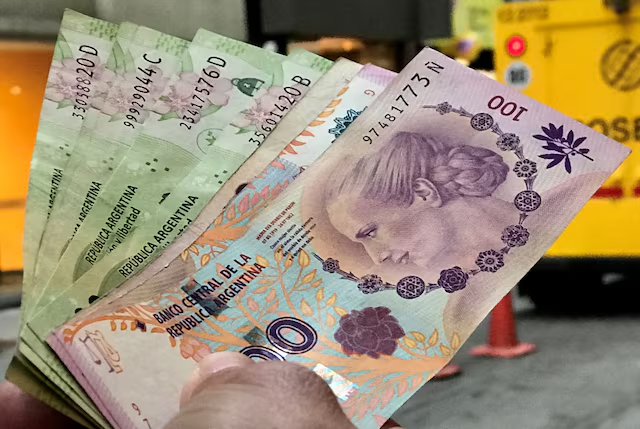
Capital controls (the cepo) came off in April 2025, and the three rates converged. That convergence has now held for a year and five months. In modern Argentine history, that’s not something to take for granted.
Inflation: better, but it stopped improving in 2026
This is where I can’t just cheerlead.
| Year | Annual inflation |
|---|---|
| 2023 | 211.4% |
| 2024 | 117.8% |
| 2025 | 31.5% (lowest in 8 years) |
| 2026 (July, trailing 12mo) | 33.8% |
Inflation bottomed out at 31.5% at the end of 2025, then crept back up to the 33% range in 2026. Not a spike — but the downward trend has clearly broken.
Forecasts are split, too — though not quite in an apples-to-apples way. BBVA Research projects annual inflation near 20% for full-year 2026, contingent on fiscal and monetary discipline holding. Trading Economics, extrapolating from the current trailing-12-month trend, has the rate still sitting near 34% by the end of Q3. Different time horizons, sure — but the underlying disagreement is real: one camp thinks disinflation resumes soon, the other thinks it’s stuck near current levels for a while. Nobody’s placing a confident bet on which.
Still, the meaning of “2% a month” is worth pausing on. Monthly inflation of 25% and monthly inflation of 2% aren’t a difference of degree — they’re a difference of kind. At 25% a month, price tags got reprinted weekly. Some restaurants stopped putting prices on the menu at all. At 2%, you can actually plan next month’s budget.
What investors are actually watching
Two things: the fiscal surplus, and country risk.
The government posted its first annual fiscal surplus in more than a decade. Country risk — the premium markets charge to hold Argentine debt over safe Treasuries, measured in basis points (bps) — is the clearest single number to watch here.
And it’s been more volatile than a simple before-and-after suggests. It bottomed at an eight-year low of 444 bps in June, on the back of an S&P ratings upgrade. It didn’t stay there: at points in August it climbed back above 500, before easing to 496 by September 2. So yes — the drop from over 2,000 bps in 2023 is real and dramatic. But zoom into 2026 alone and the line is choppier than the headline number implies.
That August wobble is worth a second look, too. On a day when Brazilian, Mexican, Chilean, and Peruvian assets all rose, Argentine stocks and bonds fell — which points to a domestic cause, not a global one. Around the same time, the gap on the CCL (the legal exchange rate used for capital transfers abroad) widened past 5%. Retail-level dollar demand has calmed down considerably; institutional money is still moving carefully.
The cost was real
Leaving out the poverty numbers would make this piece dishonest.
In Milei’s first six months, the poverty rate spiked to 52.9% — the shock-therapy bill came due first. It’s since come down: 31.6% in the first half of 2025, 28.2% in the second half. The recovery is real. Extreme poverty still sits at 6.3%.
Employment isn’t a clean win either. Unemployment hit 7.8% in Q1 2026 — roughly 1.7 million people. A meaningful share of new jobs are informal or low-wage. Prices coming under control doesn’t help much if wages don’t keep pace.
Milei’s labor reform bill cleared the Chamber of Deputies and then the Senate over the back half of February 2026, alongside protests and a heavy police response. Whatever you think of the reform itself, the process getting there wasn’t quiet, and that’s worth noting.
Politically, Milei’s La Libertad Avanza (LLA) won a landslide in the October 2025 midterms — bigger than expected, and the reason the labor bill had the votes to pass at all.
What’s actually different if you’re packing a bag
Enough macro. Here’s what changes for someone actually planning a trip or a move.
| 2023 | 2026 | |
|---|---|---|
| Changing money | Blue market was mandatory — skip it and lose half your money | Card payments are basically your best option now |
| Cash | Bringing large amounts of USD cash was standard practice | A small reserve is plenty |
| Budgeting | Impossible to calculate until you landed | Mostly predictable now |
| How it feels, price-wise | Dirt cheap in dollar terms | No longer cheap |
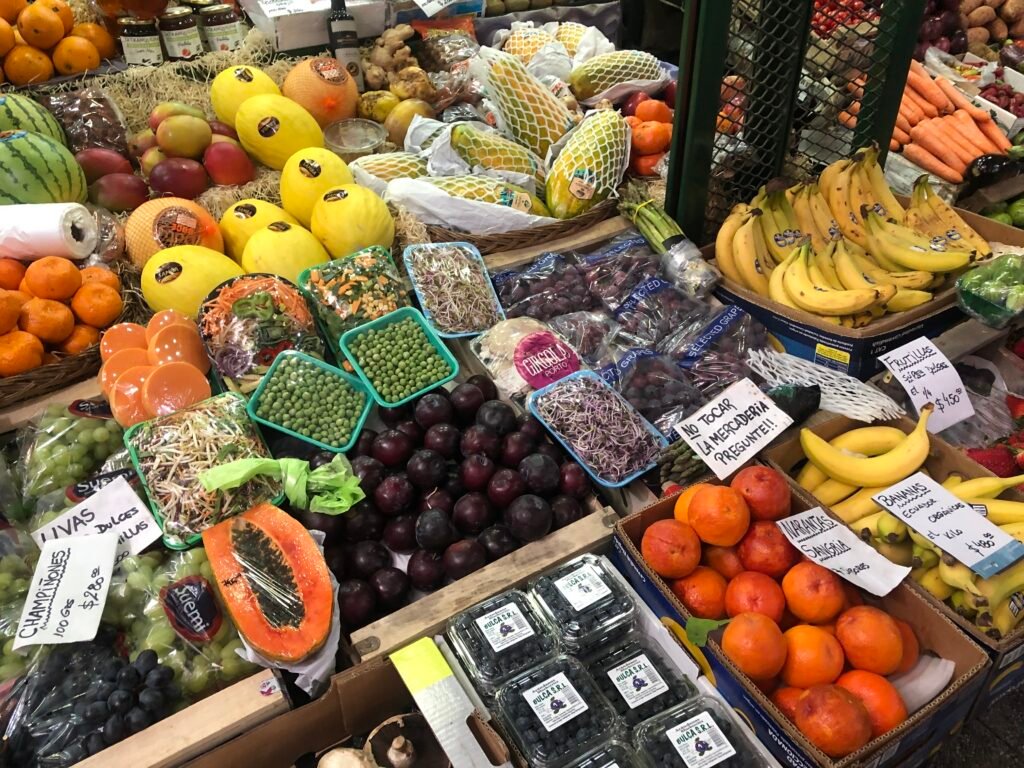
That last line is the real story. Traveling in Argentina got a lot easier, and the “insanely cheap” factor mostly disappeared with it. Normalizing the exchange rate also erased the accidental discount foreigners used to get.
I’ve laid out the actual payment mechanics and exchange tips in Money in Argentina 2026, and the real monthly numbers in my cost-of-living breakdown.
So what do you actually do with this
Planning a trip? Stop worrying about exchange strategy — that problem is basically solved. Pay with a foreign card, carry a little cash as backup, and move on. But don’t budget off an old post. Anything written on prices from 2023 or 2024 is close to useless now.
Considering a move? Price stability is good news, but it’s a separate question from the local job market. Between the unemployment rate and the share of informal work, building a life on a local salary is still genuinely hard. If you’re keeping dollar or other foreign-currency income while based here, the calculation changes completely.
Looking at this as an investor? The improvement in the numbers is real. Whether it holds is largely a political question now. The next real inflection point is October 2027, when Argentina votes for president again. Weigh the stalled disinflation in 2026 against how choppy country risk has been since June — it’s a lot easier to see a straight downward line if you only check the number twice a year. I’ll say plainly that I support the direction of these reforms — but supporting a direction and forecasting an outcome are two different things, and I try to keep them separate.
On the number itself
Back when Milei took office, the most common thing people said was “let’s see how long this lasts.” That bet has been wrong so far.
At the same time — 1,000 days in, this is still a country running 33% annual inflation with 28% poverty. This isn’t a normalized economy. It’s an economy moving toward one.
The next checkpoint is the August inflation print, due September 10. Whether it resumes falling from 33%, or settles in around there, will shape the picture for the next year more than anything else here.
A note on timing
Exchange rates in this piece reflect September 4, 2026. Inflation is the July figure (released August 13). Country risk is as of September 2. Argentine numbers move fast — check the current rate yourself before actually traveling or transferring money, and treat the labor-reform dates above as approximate pending a check against the official legislative record.
This piece is for informational purposes only and isn’t investment, legal, or tax advice. Any decisions you make based on it are your own.
Related reading
- Money in Argentina 2026 — Exchange Rates, Cards, Cash
- Buenos Aires cost of living: a real monthly budget
- Business opportunities in Argentina, 2026
About the author
I’ve been based in Palermo, Buenos Aires, since 2017 — about 10 years across Argentina and Paraguay combined, including two years in Asunción. I’ve met the president by chance when he was on the ground for the 2023 presidential campaign.
Sources
INDEC (inflation, poverty, unemployment), El Cronista (exchange rates, Sept 4, 2026), Trading Economics (inflation time series and forecast), BBVA Research (2025 annual inflation and 2026 forecast), Buenos Aires Herald (country risk’s June low), Misiones Online (country risk, Sept 2, 2026), Rio Times, Buenos Aires Times, and Al Jazeera (labor reform and midterm election coverage).