
If you are booking domestic flights in Argentina for this coming summer, the shortlist is shorter than it was a year ago. Two airlines now carry almost everyone: Aerolíneas Argentinas and JetSMART. Flybondi, which used to be the cheap third option, has effectively stopped flying. That single fact changes how you should plan — book earlier, pay more, and stop building an itinerary that depends on one flight arriving on time.
Here is what actually matters, with the numbers behind it.
Quick answer: Fly Aerolíneas Argentinas or JetSMART. Leave from Aeroparque (AEP) if you can, but check your ticket, because some flights go from Ezeiza (EZE) instead. Book December–February seats now, not in November. Leave a full day between a domestic flight and an international one.
alt: Aeroparque Jorge Newbery departures hall in Buenos Aires, passengers checking in for domestic flights
Who actually flies domestic routes in Argentina right now
Cabotaje — the Spanish word you will see on booking sites for a domestic sector — is now a two-airline market with a couple of footnotes.
| Airline | Domestic passengers, August 2026 | Buenos Aires airport | What to know |
|---|---|---|---|
| Aerolíneas Argentinas | 930,736 (+9% YoY) | Mostly Aeroparque (AEP) | Full service, SkyTeam, widest network. Usually the most expensive, and usually the one that operates. |
| JetSMART | 410,120 (+16% YoY) | Aeroparque, some flights Ezeiza | Low cost. Fare excludes bags and seat choice. Expanding hard this season. |
| Andes Líneas Aéreas | 48,153 (+16% YoY) | Aeroparque | Small. Mostly charter work for tour operators, not a scheduled network you can plan around. |
| Flybondi | 1,865 — down from 254,533 in August 2025 | Aeroparque | Grounded since August 6, 2026. Treat as unavailable until proven otherwise. |
| JOY Airline | New entrant | Aeroparque | First flight scheduled September 30, 2026. Jujuy–Aeroparque and Jujuy–Córdoba only. One 50-seat jet. |
Those August figures come from Argentina’s civil aviation statistics. They are not estimates, and the Flybondi line is not a typo: the airline went from a quarter of a million passengers a month to under two thousand.
What Flybondi’s cancellations changed for your trip
Flybondi mattered because it was the price anchor. When it was healthy it carried around 20% of the domestic market. By July 2026 that was 1%.
The collapse was slow and public. Between June 2025 and May 2026 the airline cancelled more than 2,500 flights, affecting over 350,000 passengers. By May 2026 its on-time performance was around 27% and roughly 47% of its scheduled flights were suspended. It grounded 11 of about 13 aircraft, two of them stuck in Mexico over roughly USD 5.5 million in unpaid bills. Scheduled flying stopped on August 6, 2026. The website reopened ticket sales on August 23 for departures from September 10, but selling a ticket is not the same as having an aircraft, a lessor and a fuel supplier — and as of September 17 there was no evidence of a restored, reliable schedule. A restructuring is under way, with a successor brand, OCA Air, reportedly in the plans.
Three consequences you will feel:
Fares went up. With the cheap operator gone, Aerolíneas Argentinas went from 57% of the domestic market in July 2025 to 69% in July 2026. JetSMART went from 23% to 28%. Less competition, higher prices — especially on routes Flybondi used to serve alone.
Some provincial airports lost their connection. Traffic fell sharply where Flybondi was the main or only carrier: Corrientes down 46%, Santiago del Estero down 36%, Córdoba down 23%, Mendoza down 19%. If your plan involves a secondary city, check that a flight still exists before you book a hotel.
The whole domestic market shrank. August 2026 domestic traffic was 2.79 million passengers, down 8% year on year, while international traffic hit a record. Long-distance buses — micros de larga distancia — picked up some of the slack, which tells you how real the gap is.
Aeroparque vs Ezeiza: which Buenos Aires airport your flight leaves from
This is the single most expensive mistake a first-time visitor makes here, and it costs a flight.
Aeroparque Jorge Newbery (AEP) sits about 2 km from downtown Buenos Aires, on the river, and handles almost all domestic flights. It is the country’s busiest airport: 17,738,000 passengers in 2025, up 19% on 2024. From Palermo or Recoleta you are looking at a short taxi ride.
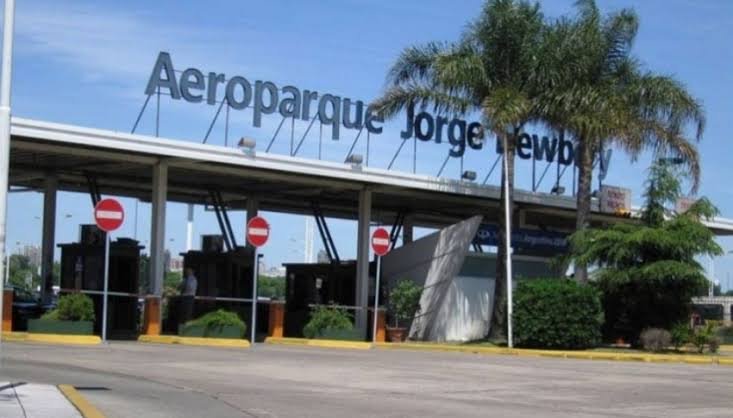
Ezeiza (EZE) is roughly 32 km out and is where long-haul international flights land. It has a domestic capability too, and JetSMART has moved flights there when Aeroparque was short on slots or shut down. In traffic, allow two hours from the city.
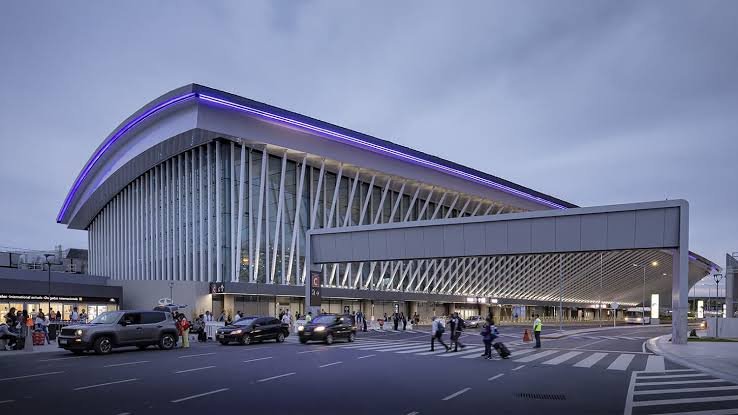
Three rules that follow from that:
- Read the airport code on your own ticket, every time. Not the city name. AEP and EZE are both “Buenos Aires” to a booking engine.
- Never connect between them on the same day if you can avoid it. There is no airside transfer. You collect your bags, cross the city, and check in again. Any traffic, protest or rain and you miss the second flight.
- Assume Aeroparque can close. It shut for 55 hours between August 25 and 27, 2026 for runway maintenance, and flights were moved or cancelled. It is a single-runway airport in the middle of a city.
If you are arriving from abroad and heading straight to Patagonia, give yourself a night in Buenos Aires. You will see the city and you will not lose the trip to a two-hour taxi ride.
Getting Around Buenos Aires 2026 — SUBE, Uber & Subte Guide
Aerolíneas Argentinas vs JetSMART: what you actually get
Aerolíneas Argentinas is the default. Snacks and a drink are included, it is a SkyTeam member so miles work, it flies the most routes, and it is the one most likely to still be operating when something goes wrong elsewhere. For summer 2026–27 it is adding capacity rather than cutting: roughly 1.51 million seats in January alone, up 13% year on year, with the domestic network up 13% and regional up 16%. The cheapest fare buckets do not include a checked bag. Its privatisation has been discussed since early 2026 and is currently postponed, which for a passenger changes nothing this season.
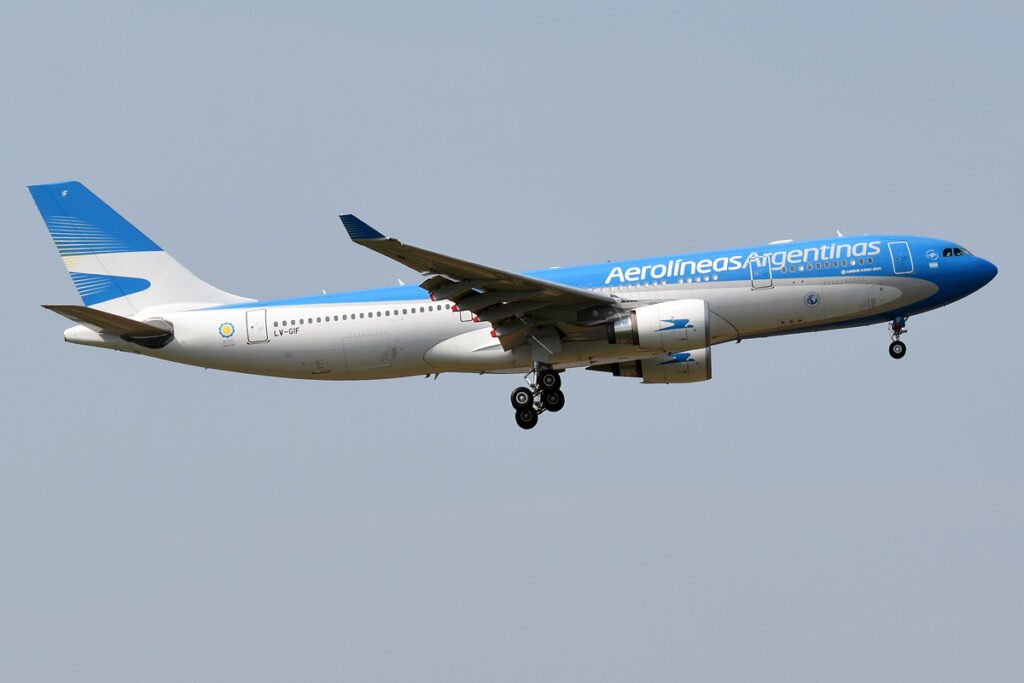
JetSMART is the genuine low-cost option and the one to watch. It is going from 13 aircraft to 17 in October 2026, 19 in December, and 23 for the 2026/27 summer, on a stated investment of more than USD 550 million — roughly 40% more capacity than last season. Five new routes open in October and November: Buenos Aires to Posadas, San Juan, Santiago del Estero, Jujuy, and Maceió in Brazil. The headline fare is genuinely cheap and genuinely bare: bags, seat selection and refreshments all cost extra, and gate agents do check bag sizes.

Andes is mostly flying charters for tour operators, including Caribbean and Brazilian beach packages. Do not build a domestic itinerary around it.
JOY Airline is the newest name and the strangest one. It launches September 30, 2026 from a base in Jujuy, not Buenos Aires, with a single 50-seat CRJ-200 and a second aircraft expected: 12 weekly flights Jujuy–Aeroparque and 7 weekly Jujuy–Córdoba. Its opening fares caused a public argument — an Aeroparque–Jujuy round trip listed above ARS 800,000 when Aerolíneas was around ARS 300,000. The province reportedly guarantees 30 paid seats per flight. Interesting for the northwest; not yet a national option.
Flights to Patagonia from Buenos Aires: the summer 2026–27 map
Aerolíneas published its summer schedule on August 27, 2026. These are weekly frequencies from Buenos Aires, which is the number that actually tells you how flexible your dates can be:
| Destination | Weekly flights from Buenos Aires |
|---|---|
| Bariloche | 70 |
| Córdoba | 70 |
| Mendoza | 56 |
| Iguazú | 56 |
| Ushuaia | 55 |
| Salta | 45 |
| El Calafate | 42 |
| Neuquén | 42 |
| Tucumán | 40 |
| Mar del Plata | 31 |
| Jujuy | 26 |
Read it this way: Bariloche has ten flights a day, so a cancellation costs you hours. El Calafate has six, so a cancellation can cost you a day — and in El Calafate a lost day is usually the glacier day.
You can also skip Buenos Aires entirely. Aerolíneas runs inter-regional services including Córdoba–Ushuaia, Córdoba–El Calafate, Rosario–Bariloche and Tucumán–Mar del Plata. If you are flying in via Córdoba or Rosario, check these before routing yourself through Aeroparque.
The season itself is crowded. Argentina received 3.36 million foreign visitors between January and July 2026, and July alone was up 17.9% year on year. Airports handled 21.4 million passengers from January to May, 3% above the previous record. You are not the only person with this plan.
Best Day Trips from Buenos Aires
What domestic flights in Argentina cost, and why the dollar price keeps creeping up
Two things are pushing fares up in dollar terms at the same time.
The peso is strong in real terms. On September 17, 2026 the wholesale rate was 1,510 pesos per dollar, Banco Nación was quoting 1,535, and the parallel rate was 1,555. The peso has moved 3.8% against the dollar so far in 2026 while retail inflation has run near 22% accumulated. Domestic costs are set in pesos; when the peso barely moves and prices rise 22%, everything gets more expensive measured in your currency. This is the mechanism behind every “Argentina isn’t cheap anymore” comment you have read, and it applies directly to airfares.
Taxes went up. Resolution 565/2026, published June 24, 2026, raised the domestic airport security fee (tasa de seguridad aeroportuaria) from ARS 260 to ARS 1,725 per passenger — a 563% increase on a figure untouched since January 2023. The international fee stayed at USD 1.40. On its own it is small money; stacked on earlier increases, it is part of why flying out of Argentina costs more in taxes than comparable routes in Brazil or Chile.
For a reference point: in mid-September 2026, an Aerolíneas Aeroparque–Jujuy round trip was reported around ARS 300,000 — roughly USD 195 at the Banco Nación rate that day. Use that as a shape, not a quote. Fares here move weekly, and both the exchange rate and the taxes in this section change by decree.
Money in Argentina 2026 — Exchange Rates, Cards, Cash & What Actually Changed
How to book without getting burned
Book the December–February peak now. Aerolíneas is adding 13% more seats and JetSMART about 40% more capacity, but demand is at record levels and Flybondi’s seats are gone. Waiting does not help you this year.
Buy direct from the airline when the price is close. If a flight is cancelled you deal with the carrier, not an intermediary that is closed on a Sunday.
Price the bag, not the fare. A JetSMART fare plus a checked bag often lands near an Aerolíneas fare that includes one. Compare the total.
Leave a full day, not three hours, before an international departure. Especially if your domestic flight lands at Aeroparque and you are leaving from Ezeiza.
Check that the route still exists if you are going anywhere Flybondi used to serve on its own.
Keep the bus as a real plan B. The overnight cama buses on major corridors are decent, and they gained passengers this year precisely because flights failed. On a route like Buenos Aires–Córdoba or Buenos Aires–Mendoza, a bus is a working substitute rather than a punishment.
Packing for a carry-on-only Patagonia itinerary
That last point about baggage deserves its own section, because on a multi-city Argentine itinerary the bag is not a one-time cost. It is charged per sector. Buenos Aires to El Calafate to Ushuaia to Bariloche and back is four sectors, and four checked bags on a low-cost fare can quietly outgrow the ticket. The people who fly this country often do it with a cabin bag and a personal item, and they get away with it because of what they pack, not because they pack less.
The problem is that Patagonian summer is not one climate. December to February runs warm in the afternoon and cold once the wind comes up, and on the water — the Perito Moreno boat approach, the Beagle Channel — it is cold and wet regardless of what the forecast said at breakfast. Pack for that honestly and you end up with a bulky bag. Pack for it cleverly and you do not.
Three categories do the heavy lifting:
A battery-heated vest instead of a thick insulating layer. This is the single biggest volume saving available. A heated vest packs down to roughly the size of a folded shirt, runs off a power bank, and you switch it on only for the two hours a day you actually need it — the boat deck, the early start, the estancia dinner outdoors. Compared with carrying a heavyweight down jacket you will wear three times, it buys back real space in a cabin bag.
A genuinely waterproof outer shell, and waterproof footwear. Patagonia does not do gentle rain; it does horizontal rain. A water-resistant jacket is not the same thing as a waterproof one, and this is the item where people most often find out the difference at the worst moment. Rubber or fully waterproof boots matter on the boat excursions and the muddy approach trails, and they are the one bulky item worth wearing rather than packing on the flight.
A chest pack or small sling as your personal item. Low-cost carriers here are strict on the cabin bag and relaxed about a small personal item. A chest pack that holds documents, a power bank, a camera and a water bottle sits on your front, goes through the gate uncounted, and keeps your passport off the overhead bin.
Disclosure: the TideWe links below are affiliate links. If you buy through them I may earn a commission, at no extra cost to you. I have not tested these specific products and this is not a review — it is a description of the gear categories that solve the packing problem above, plus one place that sells them cheaply.
If you are buying rather than borrowing, TideWe is worth a look for all three. It is a hunting and outdoors brand rather than a travel label, which is exactly why the prices are what they are: heated vests, jackets and gloves generally sit in the USD 80–200 range, and packs, boots and accessories start around USD 30. For the same three items, alpine travel brands typically ask considerably more for equivalent warmth ratings.
Two honest caveats before you click. First, much of the range is camouflage-patterned, because that is who the brand sells to — if you would rather not arrive in El Chaltén dressed for duck season, filter for the plain colourways, which do exist across most lines. Second, ignore the waders. They are the brand’s flagship category and they have no business in a Patagonia suitcase; you want the shells, the heated layers, the boots and the packs.
One practical note on timing: this is a US retailer, so order at least three to four weeks before you fly, and check what your own country charges in import duty before you commit. A jacket that arrives after your departure date is not a bargain.
AFFILIATE CTA: Browse TideWe heated layers, shells and packs
Your rights if the flight is cancelled
Argentina’s passenger rules (Resolution 1532/98) are less generous than the EU’s, but they exist and airlines here do honour them when you ask at the counter.
For delays the airline is responsible for: nothing is owed up to four hours, except meal support for overnight delays between midnight and 06:00. From four to eight hours you are owed meals and refreshments. Over eight hours you are owed meals, accommodation and transfers to the hotel, plus rebooking of any onward connection.
For a cancellation the airline must offer one of: the next available flight in the same fare class; endorsement to another carrier it has an agreement with; rerouting by another route or another mode of transport; or a full refund if none of that works for you.
The big exceptions: weather and force majeure, and any cancellation you were told about at least 15 days before departure. This is exactly why travel insurance is worth buying for an Argentine domestic itinerary — there is no automatic EU-style cash compensation to fall back on.
What I would do booking a December trip today
- Pick Aerolíneas Argentinas or JetSMART, and check both. Ignore the others for planning purposes.
- Book the Patagonia sector first — El Calafate and Ushuaia have the fewest weekly flights and sell out first.
- Take the earliest flight of the day. When a single-runway airport has a problem, the first departures are the ones that leave.
- Confirm AEP or EZE on the ticket, and never connect between them the same day.
- Decide now whether you are checking a bag on every sector or packing to avoid it — that choice is worth more than the fare difference between airlines.
- Buy insurance that covers cancellation and a missed connection.
- Keep a bus timetable for the mainland legs, in case the flight does not happen.
Do those seven things and the current mess costs you money but not your trip. Skip the fourth one and it costs you both.
Fares, taxes, schedules, exchange rates and retail prices in this article were checked on September 17, 2026. All of them change frequently — the Argentine ones often by decree and with little notice. Confirm current prices and flight status directly with the airline or retailer before you book or buy.
[…] Argentina — exchange rates, cards and cash. If you’re planning to move around the country, Argentina domestic flights guide covers getting between cities. And if you’re looking for somewhere to live, there’s […]