
Last updated November 16, 2026. Dollar amounts come first; pesos are converted at the Banco Nación (BNA) selling rate of ARS 1,570 per dollar on November 16, 2026.
The question comes up as soon as a summer itinerary starts to sprawl. People see El Chaltén, Bariloche, Ushuaia, Torres del Paine and Perito Moreno on the same list, and then ask how realistic it is to do all of that in one trip. A more immediate version of the same problem is narrower, and more useful: if you can only add a few days from Buenos Aires, should you choose between El Calafate and El Chaltén, or spend time in both?
I lived in Buenos Aires from 2017 to 2024. I am not going to write this as a walk I took on the ice last week. The point of this page is to answer the time-budget question with official 2026 park fees, the usual bus link between the two towns, and the visitor consensus that has been stable for years.
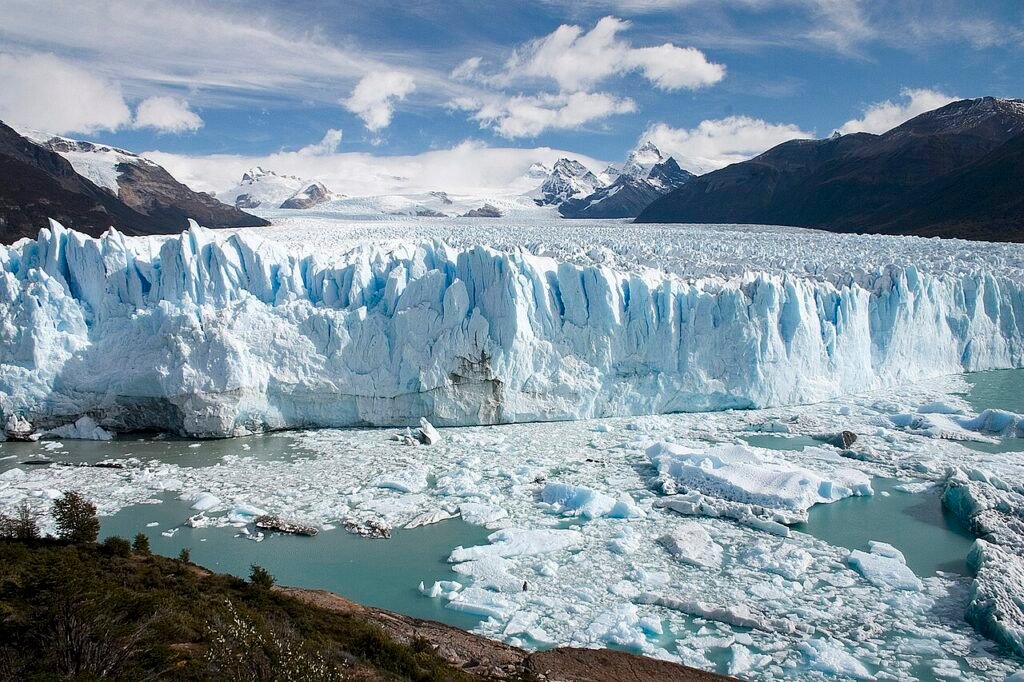
Quick answer: If you have the days, spend time in both. El Calafate is the base for Perito Moreno Glacier; El Chaltén is the base for the Fitz Roy and Cerro Torre trails. One full day is enough for the glacier walkways. Chaltén is where the time adds up — a comfortable version is two full hiking days, not one rushed afternoon. Three days for the whole pair is possible but tight, because you still have to fly into El Calafate (FTE) and sit a bus of about two hours and 40 minutes each way. Official general park entry is ARS 50,000, about USD 32, from 1 June 2026, and it is a separate ticket from any ice-trek or boat tour.
Should I choose between El Calafate and El Chaltén, or spend time in both?
Spend time in both if you can. They are not two versions of the same day.
El Calafate is a service town on the shore of Lago Argentino. People stay there because the road to Perito Moreno starts from here, and because the airport is here. The glacier walkways, and any boat or ice-trek that begins at the park, are the main event. The town itself is useful — beds, food, tour desks — and not the reason to have flown south.
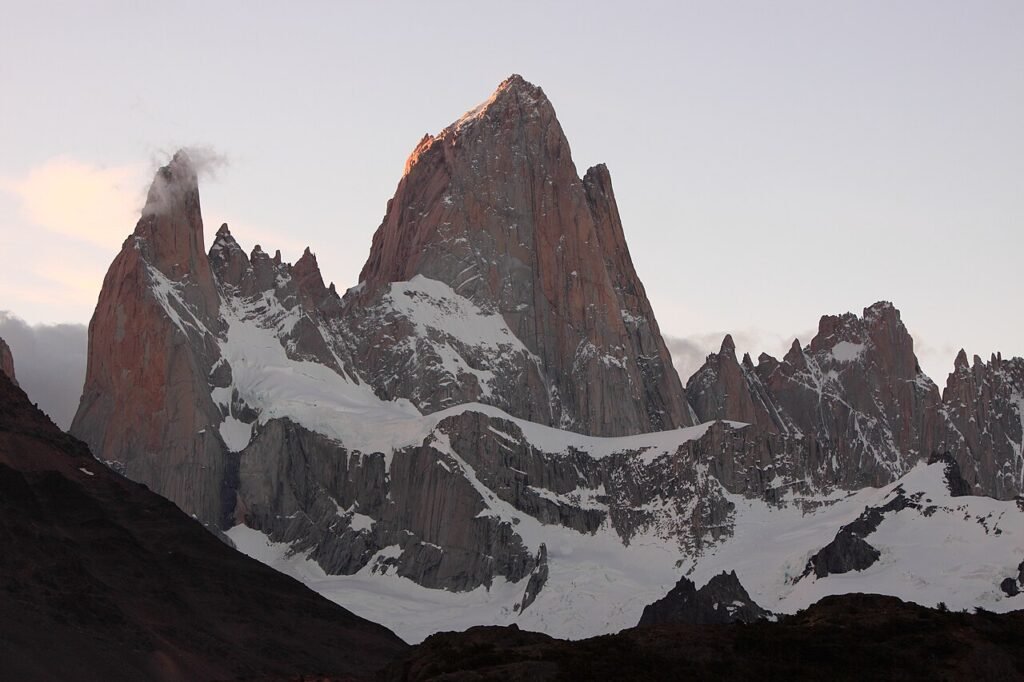
El Chaltén is a small hiking village at the northern end of the same national park, under Fitz Roy. The well-known day trails, including Laguna de los Tres and Laguna Torre, start in or very near town. You go there to walk. The bus ride from Calafate is part of the trip, not a footnote.
If you really have to choose, choose by the day you want. A visitor who mainly wants the glacier can stay in Calafate and skip Chaltén. A visitor who mainly wants to hike will be happier in Chaltén, and should still try to keep one day for Perito Moreno on the way in or out. Cutting the glacier entirely is the more serious miss of the two, but treating Chaltén as a two-hour photo stop is how three-day plans start to feel cramped.
How many days for each town? Is 4 nights in El Chaltén too long?
A simple split that matches how most people actually use the place:
- El Calafate: one full day for Perito Moreno is enough for the walkways, plus whatever overnight you need because of the flight. A second Calafate day only pays off if you have booked a longer boat day or an ice trek, or if you want a buffer around the airport.
- El Chaltén: two full hiking days is the comfortable minimum if you want both of the classic trails and a chance to wait for a clearer morning. Laguna de los Tres is a long day, and the last stretch is steeper than the rest of the walk. Four nights is not too long for a casual hiker who wants a weather buffer, a rest afternoon, or a third trail. It is long if you only planned one short walk and have other regions left on the same trip.
Weather is the hidden day. December is summer in the south, and it is often milder than people packing for Patagonia expect, but wind, cloud and a closed-in Fitz Roy are normal. I will not promise a view. Build one loose day into a Chaltén stay if you can, and save the longest hike for the clearer morning.
Is 3 days enough?
It is enough to see the glacier and get a taste of Chaltén. It is not a relaxed version of both.
A tight three-day sketch looks like this: fly into FTE, spend the first full day at Perito Moreno, take an afternoon or evening bus to Chaltén, hike one trail the next day, and bus back toward the airport. That works if flights and buses line up, and it leaves almost no room for a delay or a socked-in morning. A more comfortable reading of “a few days” is closer to four or five, with two full days in Chaltén.
If your Argentina trip is also trying to include Iguazu, Bariloche, Ushuaia and a crossing into Chile, three days in this corner will feel like a raid, not a stay. Iguazu is a different trip, with its own 2026 closures and ticket rules; that comparison is in the Iguazu Argentina vs Brazil guide. Bariloche, Ushuaia and Torres del Paine each need their own days and, in the Chilean case, a border crossing. They are not add-ons you squeeze into a Calafate weekend.
Park tickets and 2026 prices
Perito Moreno and the Chaltén trails sit in the same park, Parque Nacional Los Glaciares, but they are entered through different portals, and you pay at the portal you use.
From 1 June 2026, the official general tariff — the one that applies to most foreign visitors — is ARS 50,000, about USD 32, for both Zona Sur (the Perito Moreno / Punta Bandera portals) and Zona Norte (the Chaltén portals, including Los Cóndores, Cerro Torre–Fitz Roy and Río Eléctrico). Argentine residents pay ARS 25,000 (about USD 16); Santa Cruz provincial residents pay ARS 8,000 (about USD 5); students with a valid Argentine student document pay ARS 15,000 (about USD 10). Young children, some other exempt categories, and people with a recognized disability certificate are set out on the official page (Parques Nacionales, tarifas, Los Glaciares).
Payment rules are not the same at both ends. In Zona Sur, the park says you can buy a ticket in person with a Visa or Mastercard credit or debit card, in Argentine pesos in cash, or online. In Zona Norte, tickets are sold only online or by scanning a QR code at the portal, and only by card; cash is not accepted. If you are going straight to a Chaltén trailhead, do not arrive with only banknotes in your pocket. The same official page mentions promotional Flexipass options for several days and an annual pass; I am not quoting those prices here because I want you to read the current figures on the park site before you pay.
The glacier trek — is it the same ticket as the walkway?
No. The park entrance gets you into the national park and, at Perito Moreno, onto the public walkways. Walking on the ice is a separate, guided excursion, long associated with the park concessionaire Hielo y Aventura (the “minitrekking” and related products). The walkways are already a full visit. The ice trek is an extra day, an extra booking, and usually an extra cost that does not replace the park ticket.
I am not going to print a 2026 ice-trek price in this draft. The operator’s own tariff page exists, and it is the place to check (Hielo y Aventura, tarifas). Press figures published in 2026 have not been consistent with one another, and the operator notes that prices and dates can change. What you can usefully plan around, and should still confirm with the operator, is the general shape of the day: it is a long outing, often described as roughly nine to ten hours door to door, with an age range that is commonly stated as 8 to 65, and it is now offered year-round rather than only in summer. Book ahead in December and January. Park entry is typically not included.
If you would rather browse packaged glacier days — a walkway tour with transport from El Calafate, a boat, or an ice trek — in English, Tiqets lists Perito Moreno tickets and tours. That’s an affiliate link, so I may earn a commission at no extra cost to you. Read the inclusions carefully, and treat the official park ticket as the thing you buy first unless the tour page states, in so many words, that park entry is already included. Official walkways do not require a guide. A tour is for transport and, if you want it, the ice or the boat.
How to get between the two towns, and how to fly in
Almost everyone flies into El Calafate’s airport, FTE (Comandante Armando Tola), from Buenos Aires. Aeroparque (AEP) is the usual domestic starting point; some connections also use Ezeiza (EZE). I compare those fares on Kiwi. That’s an affiliate link, so I may earn a commission at no extra cost to you. For how domestic flights in Argentina actually work in 2026, including the post-Flybondi landscape, use the domestic flights guide. This post will not repeat that airline map, and I will not invent a 2026 timetable or a typical fare.
Between El Calafate and El Chaltén, regular buses run every day. A destination timetable updated on 14 October 2026, compiled from the companies that operate the route — including Chaltén Travel, TAQSA and Cal Tur — puts the ride at about 2 hours and 40 minutes between terminals (215 km), including a short stop at the La Leona roadhouse, and the fare at ARS 70,000 per person, per leg, about USD 45. There is also a municipal terminal tax, listed there as ARS 2,000 in El Chaltén and ARS 4,000 in El Calafate. Several departures run through the day in each direction, and some services call at the airport. Confirm the time and the price when you buy; I am not pasting a full timetable that will age in a week (El Chaltén, buses and shuttles, updated 14 October 2026).
Door-to-door shuttles exist as well, and they can drop you at a hotel rather than the terminal. They are not the same product as the regular bus, and the same page notes that some of them may not run in winter. In summer, the ordinary bus is the straightforward option if you are happy to use the terminals.
If you lean on your phone for maps once you leave Buenos Aires, an Argentine eSIM is the simple approach, and it is more useful in the two towns than on every ridge. Simsima sells a data-only Argentina eSIM (plans started at USD 1.50; a 5 GB / 30-day plan was USD 16.66 when I checked on November 16, 2026). That’s an affiliate link, so I may earn a commission at no extra cost to you. The company describes coverage on tested Argentine networks, including Claro. Treat that as coverage in towns such as El Calafate and El Chaltén, not as a guarantee of a strong signal on every trail. Check that your phone is unlocked and supports eSIM first.
Summer packing for this trip is not the same as packing for a sticky Buenos Aires afternoon. You still want sun protection, but you also want layers and a windproof shell. The city’s heat is a different problem, and it is in the Buenos Aires summer guide.
FAQ
How realistic is it to do El Chaltén, Bariloche, Ushuaia, Torres del Paine and Perito Moreno in one trip?
Only if you have weeks, not a long weekend. Calafate and Chaltén already want several days between them. Bariloche, Ushuaia and Torres del Paine are separate legs, and the Chilean park is a different country. Pick a region, then add another only if the flights and the days are real.
Should I choose between El Calafate and El Chaltén, or spend time in both?
Both, if you can. Calafate for the glacier, Chaltén for the trails. If you must cut one, keep the glacier day and shorten Chaltén, or skip Calafate town time — not the glacier itself — so you can hike.
How many days for each town? Is 4 nights in El Chaltén too long?
One full day in Calafate for Perito Moreno is enough for most visitors. Two full days in Chaltén is the comfortable hiking minimum. Four nights there is not too long if you want a weather buffer or an extra trail. It is long if you only wanted one walk.
Is 3 days enough for casual hikers?
Enough for the glacier and one Chaltén hike, if the buses and the flight cooperate. Not enough to feel unhurried. Four or five days is the kinder reading of “a few days.”
Do I need a guided glacier trek, or is the walkway enough — and is that ticket the same as the park entrance?
The walkway is already a full visit, and it is what the park ticket is for. The ice trek is optional, separately booked, and usually priced on top of park entry. Check the operator for 2026 dates, the age range and the current price before you pay.
How do I get between El Calafate and El Chaltén, and is the town of Calafate itself worth extra time?
Regular buses take about 2 hours 40 minutes and, as of 14 October 2026, were listed at ARS 70,000 one way, about USD 45, plus a small terminal tax. Confirm when you buy. Calafate town is a useful base, not a second destination in its own right.
Related reading: Iguazu Falls: Argentina vs Brazil · Domestic Flights in Argentina · Buenos Aires in Summer · Money in Argentina, 2026
Park fees, bus fares and product pages were checked on November 16, 2026, and they change. This is not legal or booking advice. Confirm tickets, buses and any ice-trek rules before you pay or travel.